
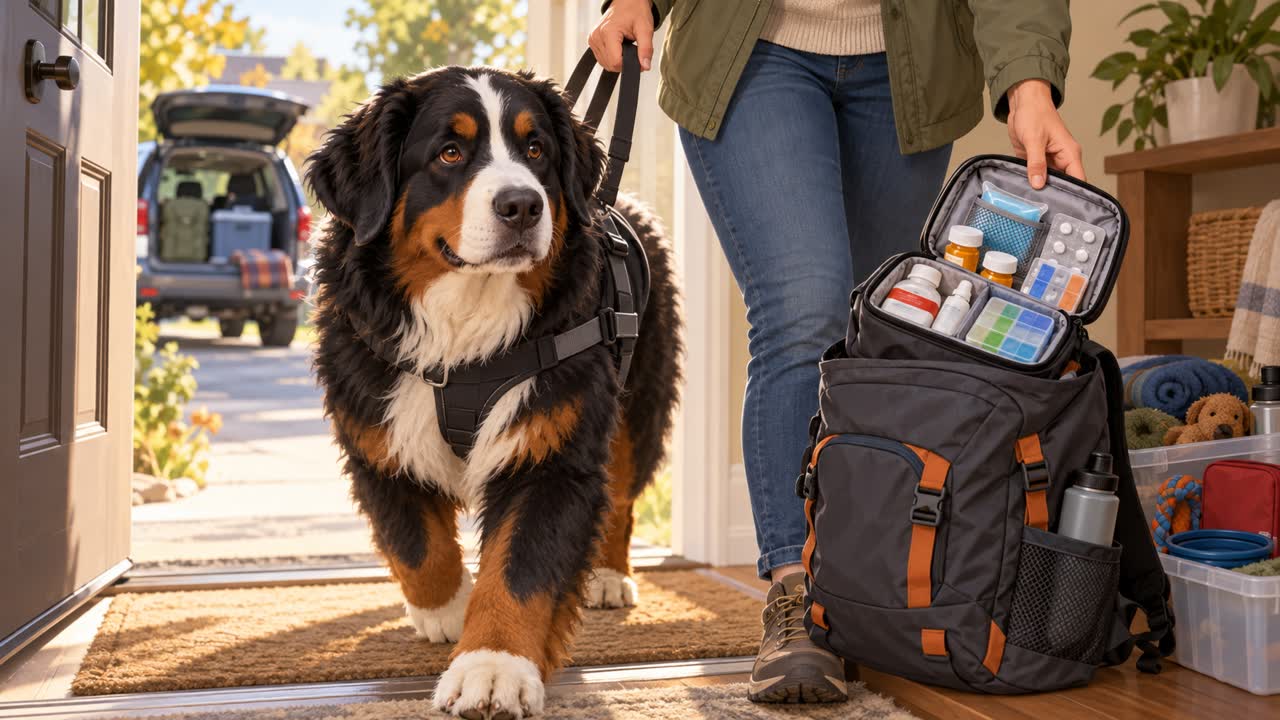
Service dog medication storage during evacuation needs a plan that protects the dog’s medication from heat, moisture, loss, and dosing mistakes while keeping it easy to reach.
This is different from ordinary travel packing. An evacuation may involve traffic, shelters, power outages, temporary lodging, changing caregivers, and limited access to veterinary care. Prepare the medication kit before an emergency rather than trying to gather supplies after an evacuation order is issued.
For medication-specific storage, missed doses, or a damaged product, follow the prescribing veterinarian’s instructions. Do not change a dose, stop medication, or use a replacement product without appropriate veterinary guidance.
Quick Overview
- Keep medication in original labeled containers whenever possible.
- Pack a current medication list, prescription details, and veterinary contacts.
- Use an insulated container only when the medication requires temperature control.
- Protect medication from direct sun, car heat, moisture, and accidental access.
1) Build a Medication Kit before an Evacuation
Keep a dedicated medication pouch or waterproof container with the service dog’s emergency supplies. Store it near the evacuation bag so you can grab it quickly without searching through cabinets during a stressful departure.
Include each medication in its original pharmacy or veterinary container, along with a written list of the medication name, strength, dose, schedule, prescribing veterinarian, refill information, and the reason it is prescribed.
Also pack a dosing tool if one is needed, such as an oral syringe, pill cutter, measuring spoon, or gloves. Keep these items clean, clearly labeled, and separate from food or cleaning chemicals. General preparedness resources in the Knowledge Center can help place the medication plan within a broader emergency routine.
2) Follow the Medication’s Storage Instructions
Read the label and follow the veterinarian’s storage instructions for each item. Keep many medications at controlled room temperature and protect them from heat, humidity, and light. Do not refrigerate or freeze a product unless its label or veterinarian says to.
For refrigerated medication, use a small insulated container with cold packs separated from the medication by a towel or barrier. The goal is to keep the medication within its required range, not to freeze it. A compact thermometer can help when traveling, in traffic, or when a power outage lasts longer than expected.
Do not leave medication in a hot vehicle, in direct sunlight, in a glove compartment, or in an unventilated tent. Heat can quickly damage some medications, while moisture can affect tablets, capsules, strips, and labels. Keep the container closed until it is time to give the dose.
If a medication gets wet, overheated, frozen, discolored, cracked, or separated, contact the prescribing veterinarian or an emergency veterinary clinic before using it. Avoid guessing based only on how the medication looks.
3) Plan Service Dog Medication Storage During Evacuation Travel
During evacuation travel, keep the medication kit with the handler or designated caregiver, not in checked luggage, a moving truck, or the far back of a packed vehicle. Keep it reachable during an unexpected stop, overnight delay, or emergency handoff.
Use a waterproof bag inside the larger evacuation kit. Label the outside with the dog’s name and the handler’s contact information, but do not display private medical details where strangers can easily see them. If the dog’s medication must remain cold, use an insulated carrier that can travel with the team.
Before leaving, check the current time against the next scheduled dose. Set phone alarms or use a paper schedule if cellular service is unreliable. Record each dose as you give it so a tired handler or caregiver doesn’t accidentally repeat or miss one.
A voluntary service check may help organize information about the dog’s working needs, but it is not a substitute for medication instructions or veterinary care.
4) Prepare for Shelters, Hotels, and Temporary Housing
Call ahead when possible to ask whether an evacuation shelter, hotel, or temporary housing site has refrigeration access, charging outlets, secure storage, or a staff contact who can help with emergency logistics. Keep medication under the handler’s or caregiver’s control rather than leaving it in a shared refrigerator without clear labeling.
If a shared refrigerator is the only option, place medication in a sealed container marked with the dog’s name and storage instructions. Keep food, medication, and cleaning products separate. Ask staff where the container can be stored without freezing or being moved accidentally.
A qualifying service dog may generally accompany its handler in public-facing spaces, but medication storage is a practical care issue, not proof of service-dog status. Public access rules provide general context for access questions, but shelter operators may still need to coordinate a safe storage arrangement.
For a long displacement, contact the prescribing clinic early about refills, transfers, replacement medication, or local veterinary options. Don’t wait until the final dose is gone if you may need a refill.
5) Create a Power-Outage and Caregiver Backup Plan
Power outages can make refrigerated medication especially difficult to manage. Keep a written plan stating the medication’s storage range, what to do if refrigeration is interrupted, how long the medication can remain outside that range if known, and which veterinary contact to call for product-specific advice.
Designate a backup caregiver who knows where the medication kit is stored, how to read the dosing chart, and when to contact the veterinarian. The caregiver should not alter the prescription or rely on memory. They should use the written instructions and record every dose given.
Include the dog’s veterinary clinic, emergency veterinary clinic, pharmacy, poison-control resource, and a trusted emergency contact. If the handler becomes separated from the dog, this information helps the caregiver continue safe, consistent care.
A tracking app may help keep a current medication list, emergency contacts, and dose records organized. Still, a printed copy remains useful if the phone battery, service, or app access fails.
6) Know When to Seek Urgent Veterinary Guidance
Contact a veterinarian promptly if your dog misses an important dose, receives an extra dose, vomits after medication, has a suspected reaction, takes another medication, or shows a significant change in breathing, consciousness, balance, behavior, or mobility.
Tell the clinic the medication name, strength, amount given, scheduled dose time, the dog’s approximate weight, symptoms, and whether the medication was exposed to heat, freezing, water, or another contaminant. Bring the original container or a clear photo of its label if care is needed away from home.
Do not share human medication with the dog unless a veterinarian specifically prescribed it for that dog and gave current dosing instructions. Common human products can be dangerous to dogs, and an evacuation setting makes dosing errors more likely.
After the emergency, replace used supplies, update records, discard medication only with veterinary or pharmacy guidance, and review what made the plan difficult. A short post-evacuation update can make the next emergency safer.
FAQs
How much medication should I pack for an evacuation?
Ask the prescribing veterinarian what reserve supply is appropriate for the dog’s medication and likely evacuation risks. Pack enough to cover the expected trip and reasonable delays whenever possible.
Can I move pills into a weekly organizer?
A labeled organizer may help with short-term dosing, but keep the original containers with the medication kit. Original labels provide the prescription details a veterinarian or caregiver may need.
What if refrigerated medication gets warm?
Do not assume it is safe or unsafe based only on appearance. Note how long it was outside the recommended range and contact the prescribing veterinarian or pharmacist for product-specific advice.
Should medication stay in the car during an evacuation stop?
No. Cars can become dangerously hot or cold. Keep the medication kit with the handler or caregiver whenever possible.
Can a shelter store my service dog’s medication?
Ask the shelter about secure refrigeration or storage. Keep the medication clearly labeled and retain a written dosing and contact plan in case staff or caregivers need to help.
Sources
- ADA.gov: Businesses Open to the Public
- ADA.gov: Service Animals
- ADA.gov: Service Animals FAQ
- CDC: Dogs
- CDC: Pet Travel Safety
- U.S. DOT: Service Animals
Takeaway
A reliable medication plan keeps the service dog’s prescriptions protected, documented, and available even when evacuation conditions change quickly.
- Keep original containers, current instructions, and contact details together.
- Protect temperature-sensitive medication from heat, freezing, and moisture.
- Use written dose records and a backup caregiver plan to prevent mistakes.