
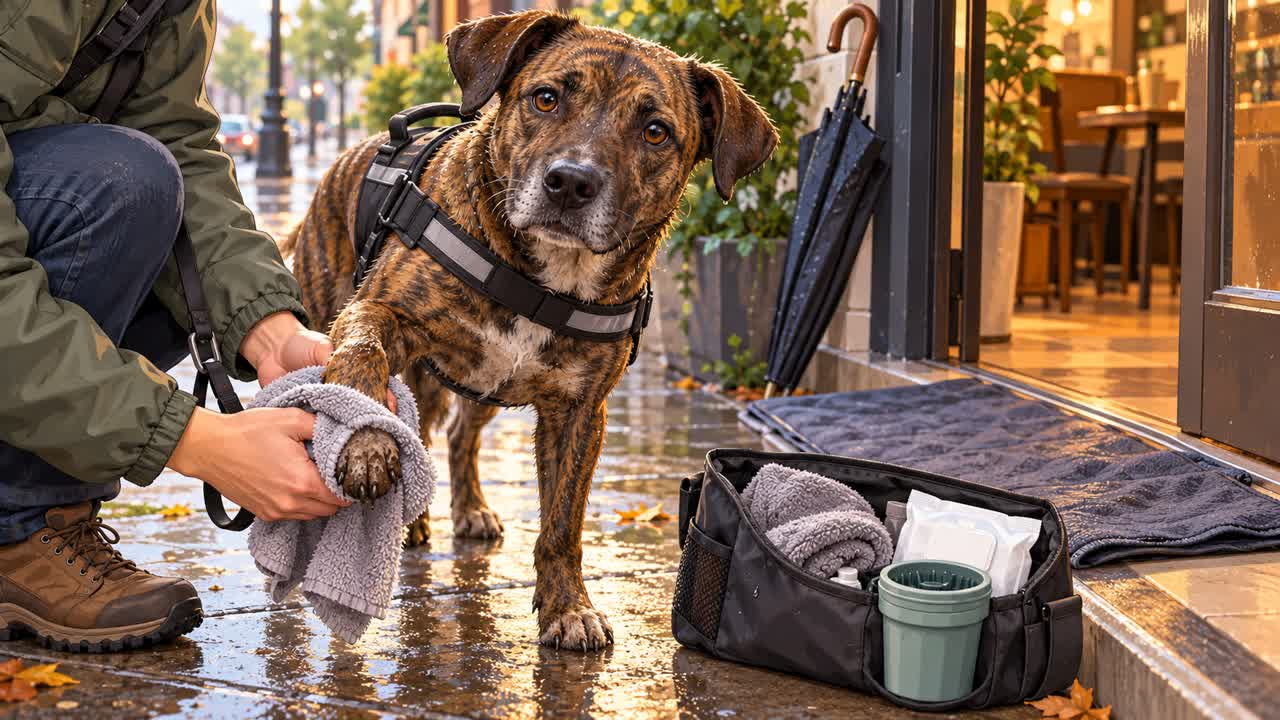
A wet weather cleanup routine for service dogs helps protect the dog’s comfort, prevent slips, and reduce the spread of mud, road salt, standing-water residue, and moisture through the home or workplace.
Rainy-day cleanup is more than wiping muddy paws. A service dog may need to enter stores, offices, medical settings, housing common areas, or public transportation soon after being outside.
This guide provides practical general care suggestions. Contact a veterinarian promptly if the dog has an injured paw, persistent skin irritation, limping, repeated licking, or signs of illness after exposure to contaminated water or chemicals.
Quick Overview
- Set up one consistent cleanup station near the usual entry point.
- Dry paws, lower legs, belly, chest, and equipment before moving indoors.
- Check for road salt, chemicals, cuts, debris, and irritation between the toes.
- Use clean towels and dog-safe products rather than harsh household cleaners.
1) Set Up a Wet Weather Cleanup Routine for Service Dogs
Choose a cleanup spot just inside or outside the normal entrance. A small mat, towel basket, paw towel, water bowl, waste bags, and a container for dirty gear can prevent the handler from carrying mud through the home before the dog is cleaned.
Keep the area simple enough to use when tired, in pain, carrying groceries, or returning from a long workday.
A basic setup may include absorbent towels, a non-slip mat, a shallow bowl of clean water for rinsing when needed, a soft brush, and a clean, dry cloth for the dog’s face and ears.
General information about service-dog access is available through the site’s regulations, but the cleanup routine should focus first on the dog’s welfare and the practical conditions of each outing.
2) Dry the Areas that Collect the Most Moisture
Start with the paws, including between the toes and around the pads. Then dry the lower legs, belly, chest, tail area, and any feathering on a longer coat. These areas often collect grit, salt, leaves, and water from sidewalks, grass, curb edges, and puddles.
Use a calm, predictable sequence so the dog learns what to expect. Many handlers begin with a cue to stand on the mat, then dry one paw at a time before moving up the legs and body.
Be gentle around joints, paws, skin folds, and areas affected by mobility work or medical equipment. A dog that repeatedly pulls away, licks a paw, flinches, or resists drying may be uncomfortable, not uncooperative. Pause and inspect the area instead of forcing the routine.
For a dog with a thick or long coat, towel drying may not be enough after sustained rain. Use a dog-safe drying method that does not overheat the skin, frighten the dog, or leave the coat damp for hours.
3) Inspect Paws for Salt, Debris, and Injury
Wet pavement can carry road salt, de-icing products, fuel residue, cleaning chemicals, sharp gravel, and broken glass. After a walk, inspect the paw pads and spaces between the toes for grit, cuts, swelling, redness, or stuck material.
Rinse paws with clean, lukewarm water if the dog has walked through salt, slush, contaminated puddles, or chemical residue. Dry thoroughly afterward, especially between the toes, where trapped moisture can contribute to irritation.
Do not apply human creams, disinfectants, essential oils, or chemical cleaners to your dog’s skin unless a veterinarian says they are appropriate. Dogs may lick products from their paws, and some common household ingredients can be unsafe when swallowed.
If the dog is limping, bleeding, suddenly reluctant to bear weight, or repeatedly licking one area, contact a veterinarian. For a working dog, a small paw issue can quickly affect mobility, task performance, and safe travel.
4) Clean Harnesses, Leashes, and Work Gear
Wet equipment can trap dirt and develop odor, while damp straps may rub or irritate the dog’s skin. Wipe down a leash, harness, collar, raincoat, boots, and other task equipment after a wet outing. Follow the manufacturer’s cleaning instructions for specialty gear.
Remove mud before it dries into seams, buckles, handles, or attachment points. Check metal hardware for grit and make sure clips, rings, and adjustment points still move correctly. Let items air-dry fully before the next use, rather than storing them wet in a closed bag.
A vest, patch, or other optional identification does not establish service-dog access. Still, clean and functional gear can make the team easier to manage in busy settings. Public access rules provide general context, but the dog’s trained work and controlled behavior remain central.
A voluntary service screening may help organize task and readiness information, but it does not replace routine grooming, paw care, or responsible equipment maintenance.
5) Protect Floors, Furniture, and Shared Spaces
Place washable mats at entry points and keep a spare towel near the door, car, or mobility equipment. This allows the dog to pause briefly before moving through a home, apartment hallway, office, or shared building area.
For a car ride, use a washable seat cover or designated floor mat and dry the dog before it settles in. This can reduce moisture on seats and help prevent the dog from sliding during turns or stops.
In shared housing, keep cleanup supplies contained and remove used towels promptly. If the issue concerns access to a residence or shared property area, applicable housing guidance may be relevant.
Use non-slip mats where the dog regularly rests after coming inside. Wet floors can be difficult for a dog with joint, mobility, or balance concerns, and they can create a fall risk for the handler.
6) Adjust for Seasons, Health Needs, and Repeated Outings
A light drizzle may only require paw drying, while prolonged rain, snowmelt, or icy sidewalks may require rinsing and a more detailed inspection. Create a shorter routine for quick relief breaks and a fuller routine for longer walks, commutes, or outdoor work.
Watch for changes in the dog’s skin and coat over time. Repeated dampness can worsen itching, matting, odor, or irritation in some dogs. Dogs with allergies, skin conditions, mobility limitations, or dense coats may need a veterinarian’s individualized grooming plan.
Keep spare towels and a backup drying option in the car, work bag, or emergency kit. If weather is severe, choose safer routes, shorten unnecessary exposure, and give the dog a chance to rest and dry fully between outings.
Review the routine after any problem: a slipped paw, wet equipment failure, skin irritation, or repeated indoor mess. Small adjustments—such as a larger mat, a better towel location, or a simpler gear setup—often make the routine more reliable.
FAQs
How often should I clean a service dog after rain?
Dry the dog after each wet outing, especially the paws, lower legs, belly, and equipment. Rinse more thoroughly when the dog may have contacted salt, chemicals, dirty standing water, or heavy mud.
Can I use baby wipes on my service dog’s paws?
Use only products appropriate for dogs, and follow veterinary guidance if your dog has sensitive skin. Avoid products with fragrances, alcohol, or ingredients the dog may lick and swallow.
What should I do if my dog steps in road salt?
Rinse the paws with clean water, dry between the toes, and watch for licking, redness, soreness, or limping. Contact a veterinarian if irritation continues or the dog may have swallowed a concerning amount.
Do service-dog harnesses need to be washed after rain?
Wipe off dirt and moisture after wet outings, then let the equipment dry fully. Wash as needed, following the manufacturer’s instructions, especially if it becomes soiled, smelly, or irritating to the dog.
How can I keep my dog from slipping on wet floors?
Use absorbent entry mats, dry the paws promptly, keep walkways clear, and avoid rushing the dog across smooth wet surfaces. Ask a veterinarian for guidance if slipping or balance problems are frequent.
Sources
- ADA.gov: Businesses Open to the Public
- ADA.gov: Service Animals
- ADA.gov: Service Animals FAQ
- CDC: Dogs
- CDC: Pet Travel Safety
- U.S. DOT: Service Animals
Takeaway
A consistent wet-weather cleanup routine keeps a service dog comfortable, protects paws and equipment, and makes the next outing easier for the whole team.
- Dry the dog and inspect the paws after every wet outing.
- Rinse away salt, chemicals, and dirty standing-water residue when needed.
- Keep the cleanup station simple enough to use every day.