
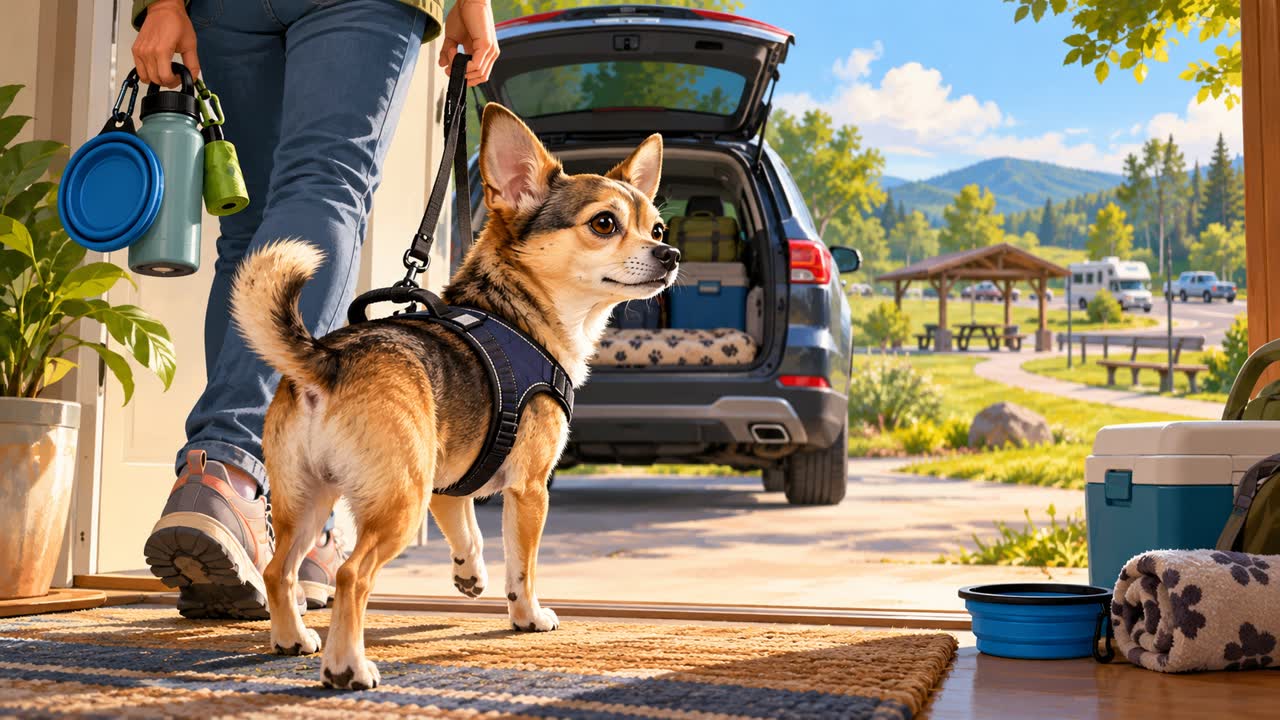
A service dog at rest stops needs the same calm control and practical planning as any other part of a road trip.
Unlike a short neighborhood walk, a highway rest stop may involve unfamiliar terrain, other dogs, food waste, trucks, distracted drivers, and limited relief areas. Planning for those conditions can reduce stress and help the dog stay focused on trained work.
This guide covers general U.S. road-trip preparation. Local facility rules, weather conditions, and the dog’s individual health and training needs may affect the best approach for a particular stop.
Quick Overview
- Choose well-lit, active rest stops when possible and avoid stopping when the area feels unsafe.
- Park away from traffic lanes, truck movement, and busy fuel-pump areas.
- Keep the dog leashed or otherwise under effective control from the moment the vehicle door opens.
- Use a designated pet-relief area when available, but inspect it for hazards first.
1) Plan for a Service Dog at Rest Stops before the Drive
Build regular breaks into the route rather than waiting until either the handler or dog is uncomfortable. Timing depends on the dog’s age, health, medication schedule, weather tolerance, feeding routine, and trip length.
Before departure, identify likely stops along the route and keep a backup option in mind. A rest area may be closed, crowded, poorly maintained, or unsafe because of weather, construction, or a vehicle problem. Flexibility matters more than following a rigid schedule.
Pack a small, accessible stop kit with water, a bowl, waste bags, a leash or harness, needed medication, towels, and any supplies required for the dog’s health or trained tasks.
General access information is available through the site’s regulations, but a successful road-trip stop depends primarily on safe handling, current conditions, and the dog’s welfare.
2) Choose a Safe Parking and Walking Route
Park where the handler can safely unload the dog without stepping directly into traffic. Avoid narrow spaces beside moving vehicles, truck-only areas, blind corners, and places where the dog could be exposed to exhaust, loose debris, or a sudden vehicle movement.
Before opening the door, secure the dog with the usual control equipment. Even a well-trained dog may react to an unfamiliar sound, another animal, or an unexpected person. A controlled exit protects the team and gives the handler time to assess the surroundings.
Look for a clear path to the restroom building or relief area. Watch for potholes, broken glass, dropped food, fuel residue, sharp landscaping material, standing water, and icy or slick pavement.
If the stop doesn’t feel safe, stay in the vehicle and, when possible, continue to another location. A quick, controlled stop at a better facility is preferable to forcing the team into an isolated or hazardous setting.
3) Use Relief Areas Carefully and Clean Up Promptly
Many rest stops offer a designated dog-relief area, but its condition can vary. Check for broken fencing, waste, standing water, foxtails or burrs, discarded food, hazardous plants, and other animals before allowing the dog to use the space.
Keep the dog under control even in a marked relief area. The dog may need a little room to relieve itself, but an unfamiliar dog, child, bicyclist, or maintenance vehicle can appear quickly. Avoid relying on a fence as the only form of control.
Pick up waste immediately and discard it in an appropriate receptacle. Carry extra bags in case dispensers are empty. Good cleanup practices reduce friction in shared facilities and help keep the next stop safer for other travelers and working teams.
After the break, inspect paws and lower legs for mud, road salt, sticky residue, sharp debris, or insects. Wipe or rinse the dog when needed before returning to the car, especially after exposure to contaminated puddles or treated pavement.
4) Keep the Dog Safe around Food, Crowds, and Distractions
Rest stops often have picnic tables, vending machines, food waste, dropped snacks, and people who may want to greet the dog. Keep the dog close and do not allow it to sniff bags, eat discarded food, approach wildlife, or investigate another traveler’s vehicle.
A calm boundary statement can prevent distraction: “The dog is working, so please give us space.” The handler does not need to explain a diagnosis or discuss private medical information with strangers.
A service dog should remain controlled in public areas such as restroom corridors, visitor centers, and vending spaces. The dog should not occupy a seat, block an entrance, bark repeatedly, jump on people, or create a tripping hazard.
The public access rules provide general context for service-dog behavior in shared spaces. They do not remove the handler’s responsibility to manage the dog safely around actual highway and rest-area hazards.
5) Manage Heat, Cold, Fatigue, and Long Travel Days
Never leave the dog unattended in a vehicle. Temperatures inside a car can become unsafe quickly, even on days that don’t feel hot at first. Cold weather can also create risks, especially for dogs with short coats, mobility limitations, or health conditions.
Offer water regularly and monitor your dog for signs of overheating, stress, exhaustion, limping, shivering, or unusual behavior. Long drives can be tiring even when the dog is resting in the vehicle, particularly if travel includes traffic, noise, unfamiliar lodging, or frequent stops.
Keep stops calm rather than turning every break into an extended activity. The goal is for the dog to relieve itself, hydrate, stretch safely, and return to the car ready to settle.
Bring towels or a blanket for wet weather, but avoid wrapping the dog in equipment that could overheat it or interfere with movement. Check the dog’s paws after winter stops, because road salt, ice-melt chemicals, and icy surfaces can cause irritation or injury.
6) Prepare for Access Questions and Overnight Changes
Calm, controlled behavior and a short, factual response usually resolve most rest-stop questions. When a dog’s role is unclear, staff may ask whether it is required because of a disability and what work or task it is trained to perform.
A purchased certificate, registry entry, vest, or ID card does not itself determine access. Optional materials may help the handler organize information or feel prepared, but trained disability-related work and responsible behavior remain the important factors.
A voluntary service check may help organize task and readiness information for travel. It is not government approval and does not replace safe driving decisions, veterinary care, or a particular facility’s rules.
If an unexpected overnight stay becomes necessary, check the lodging location’s current procedures before arriving. Questions about access to a hotel or other temporary lodging are different from longer-term residential questions. However, general housing guidance may help explain why housing-related rules should not be assumed to govern every travel setting.
FAQs
Can I bring a service dog at rest stops?
Yes, a trained service dog may generally accompany its handler in public rest-stop areas. Keep the dog controlled, clean up after it, and follow any site-specific safety directions.
Should I use the designated dog-relief area?
Use it when it is safe and suitable, but inspect it first for hazards such as broken glass, waste, standing water, aggressive animals, or damaged fencing.
Can I leave my service dog in the car while I use the restroom?
Do not leave the dog unattended in a vehicle. Temperature changes, theft risks, emergencies, and the dog’s trained role can make this unsafe.
What should I do if another dog approaches?
Increase distance, keep your dog controlled, avoid a confrontation, and return to the vehicle or choose another route if needed. Do not assume every other dog is friendly or under control.
Does my service dog need a vest or certificate at a rest stop?
No particular vest, purchased certificate, registry entry, or ID card generally determines access. The dog’s trained, disability-related work and controlled behavior matter more.
Sources
- ADA.gov: Businesses Open to the Public
- ADA.gov: Service Animals
- ADA.gov: Service Animals FAQ
- CDC: Dogs
- CDC: Pet Travel Safety
- U.S. DOT: Service Animals
Takeaway
A safe rest-stop routine combines route planning, controlled handling, clean relief breaks, and careful attention to traffic, weather, and unfamiliar surroundings.
- Choose visible, well-maintained stops and park away from active traffic lanes.
- Keep the dog close, hydrated, and clear of food waste, other animals, and vehicle hazards.
- Use a backup stop or revised route when conditions don’t feel safe.