
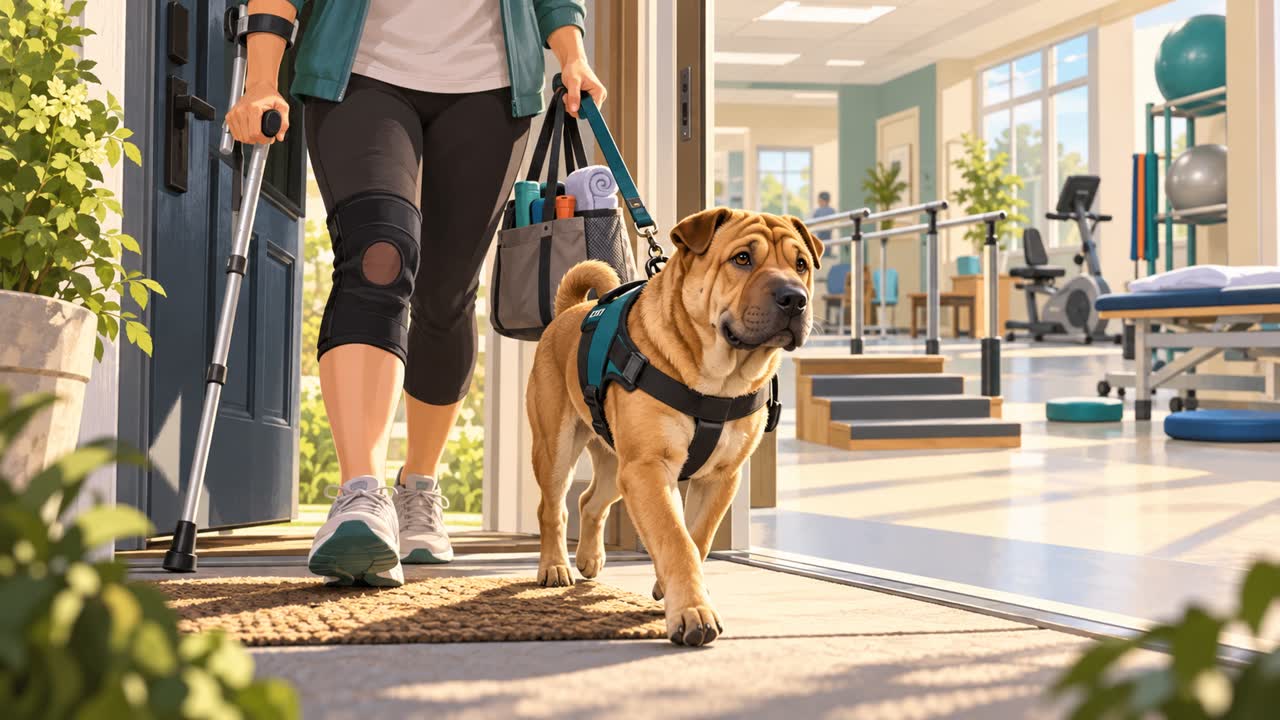
A service dog at an outpatient rehab gym may require advance planning because therapy spaces often include treadmills, resistance machines, treatment tables, balance equipment, moving staff, and patients with limited mobility. A safe arrangement should support the patient’s disability-related needs without creating avoidable hazards during rehabilitation.
Outpatient rehabilitation is different from an ordinary waiting-room visit. The dog may need to remain close enough to perform trained tasks while the patient exercises, transfers, walks, uses equipment, or works with a therapist.
This guide provides general information for U.S. patients and rehabilitation providers. It does not replace the therapist’s treatment plan, clinic safety procedures, veterinary advice, or individualized accommodation guidance.
Quick Overview
- Contact the clinic before the first appointment and explain the practical accommodation need.
- Review the gym layout, equipment, exercise plan, and emergency routes with the therapy team.
- Choose a controlled resting spot outside equipment paths and transfer areas.
- Keep the dog clear of moving belts, weights, cables, rolling stools, and other patients.
1) Plan for a Service Dog at an Outpatient Rehab Gym Visits
Contact the clinic manager, therapist, patient-access coordinator, or front desk before the first session. Explain that you use a trained service dog because of a disability and need the dog to accompany you during treatment, waiting periods, or both.
Keep the conversation practical. Ask about the clinic entrance, check-in process, waiting area, exercise floor, treatment rooms, accessible restroom, relief area, and any equipment that may affect where the dog can safely settle.
Share information that helps the team plan your treatment. For example, explain whether the dog performs a task during dizziness, mobility changes, panic symptoms, medical episodes, or another disability-related event. You do not need to volunteer a diagnosis or complete medical history to every staff member.
General information about service-animal access is available in the rules guide, but a rehabilitation clinic should consider the space, treatment goals, and safety conditions for each visit.
2) Review Equipment and Movement Hazards before Therapy
Rehabilitation gyms can be busy and change quickly between appointments. Treadmills, stationary bikes, resistance bands, cable machines, parallel bars, exercise balls, balance platforms, free weights, walkers, and treatment tables all create different risks for a dog resting nearby.
Before treatment begins, ask the therapist to identify areas where the dog should not be positioned. The dog should remain away from moving treadmill belts, machine cables, stacked weights, electrical cords, transfer paths, rolling equipment, and any area where a patient could lose balance or fall.
Consider the activities planned for that day. A quiet seated exercise may allow the dog to settle beside the patient, while gait training, stair practice, aquatic therapy, or a crowded group session may require a different location or a support person to manage the dog.
Do not assume that a plan from one session will work for every appointment. As therapy progresses, exercises, equipment, room assignments, and the patient’s physical abilities can change.
3) Choose a Safe Resting Position for the Dog
A safe resting position should keep the dog close enough to perform trained work without blocking the therapist, another patient, emergency equipment, accessible routes, or equipment controls.
A clean mat may help define the dog’s space if the clinic permits it and the mat does not create a trip hazard. Keep the leash, harness, and personal items tucked close to the dog rather than stretched across the floor.
The dog should stay on the floor, not on treatment tables, chairs, exercise benches, mats used by other patients, or equipment platforms. It also should not approach other patients, investigate bags, lick surfaces, or move into staff-only areas.
The public access rules provide general context for controlled service-dog behavior. In a rehabilitation gym, access planning must also account for the dog’s precise location during active treatment and emergency response.
4) Coordinate Exercises that Require Both Hands or Close Supervision
Some exercises require a patient to use both hands, focus on balance, wear a safety belt, or accept physical support from a therapist. If you cannot safely maintain control of the dog during an activity, discuss the arrangement before beginning the exercise.
A support person may be able to hold the dog’s leash, or the therapist may identify a safe nearby settle position. The best option depends on the dog’s training, the patient’s needs, the activity, and whether the support person can maintain effective control without interfering with clinical care.
Do not expect the dog to brace, pull, counterbalance, or physically support the patient unless that specific work has been safely trained and is appropriate for the dog and handler.
Tell the therapist if the dog may perform a visible trained task during treatment, such as retrieving a phone, interrupting a disability-related behavior, alerting to a change, or getting another person’s attention. A brief operational explanation can prevent confusion while protecting private medical information.
5) Address Hygiene, Allergies, and Shared-Space Concerns
Rehabilitation clinics serve people with varied health conditions, mobility limitations, and sensitivities. Keep the dog clean, housebroken, dry, and under control before arrival. Bring waste bags and arrange relief breaks outside the treatment area.
Another patient’s allergy or fear does not automatically require excluding the service-dog team. The clinic may be able to use distance, different appointment times, a separate waiting location, an alternate therapy station, or another practical arrangement that addresses both patients’ needs.
At the same time, a dog that is ill, has open wounds, is not housebroken, or cannot remain controlled may create a legitimate health or safety issue.
A voluntary service check may help a handler organize information about trained tasks and readiness. It is not government approval and does not replace clinic safety procedures, medical care, or responsible public behavior.
6) Build a Backup Plan for Difficult Sessions
Rehabilitation can be physically and emotionally demanding. A patient may become fatigued, dizzy, sore, overstimulated, or unable to safely travel home after a session. Arrange transportation and identify a trusted person who can help with the dog if needed.
Keep emergency contact information accessible and tell the clinic how to reach the person if the patient needs unexpected medical care. Do not leave the dog unattended in a vehicle, waiting room, hallway, or gym while the patient receives treatment.
For recurring appointments, keep a brief record of what works: the dog’s resting location, exercises that require a different arrangement, relief timing, and any equipment or routes to avoid. Our app may help organize visit notes and contact information, but it does not determine legal access or replace a clinic’s individualized discussion.
If the clinic limits access, ask for the specific safety concern and whether another effective arrangement is available.
FAQs
Can I bring a service dog at an outpatient rehab gym appointments?
You may request an accommodation for your rehabilitation visit. Contact the clinic in advance so staff can assess the gym layout, planned exercises, and a safe place for the dog to remain.
Can the dog stay beside my treadmill or exercise machine?
Only if the position is genuinely safe and does not place the dog near moving belts, cables, weights, transfer paths, or emergency routes. A wall-side resting place is often safer.
What if I cannot hold the leash during an exercise?
Discuss this before treatment begins. You may need a trained settle position or a trusted support person so the dog stays safely controlled while you exercise.
Does my service dog need a vest or certificate for physical therapy?
No particular vest, purchased certificate, registry entry, or ID card determines access. The relevant issues are trained disability-related work, controlled behavior, and a safe arrangement in the clinic.
Can the clinic exclude the dog from certain activities?
A specific activity or area may present a genuine safety issue, particularly around moving equipment or clinical procedures. The clinic should explain the concern and consider whether another effective arrangement is available.
Sources
- ADA.gov: Businesses Open to the Public
- ADA.gov: Service Animals
- ADA.gov: Service Animals FAQ
- CDC: Dogs
- CDC: Pet Travel Safety
- U.S. DOT: Service Animals
Takeaway
A successful outpatient rehabilitation plan pairs disability access with careful equipment awareness, a controlled dog position, and a backup arrangement for difficult therapy sessions.
- Call ahead and review the actual gym layout and planned exercises.
- Keep the dog clear of machines, transfer paths, cables, and emergency routes.
- Update the plan as your therapy activities and physical needs change.