
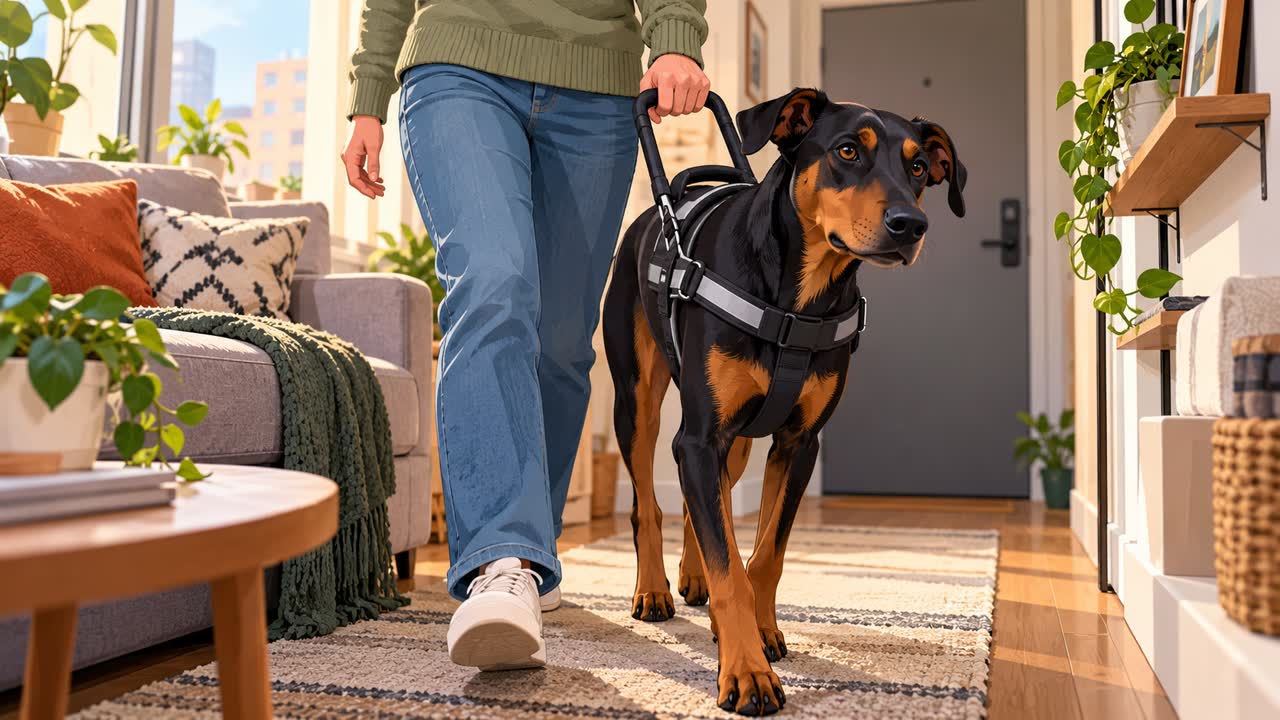
A mobility service dog in a small apartment can work when the home is set up for safe movement, rest, task access, and the dog’s daily needs.
Small-apartment planning differs from general service-dog access questions because the dog may perform mobility-related tasks in narrow spaces. At the same time, the handler may use a cane, walker, wheelchair, or other equipment.
This guide provides practical U.S. household planning information. It does not replace guidance from a healthcare professional, occupational therapist, qualified trainer, veterinarian, landlord, or local building-safety authority.
Quick Overview
- Map the routes you use most often before buying new furniture or moving belongings.
- Keep hallways, doorways, and transfer areas clear enough for the handler and dog to move safely.
- Create one dependable resting place for the dog that does not block a path or exit.
- Use nonslip surfaces and secure rugs to reduce falls for both the handler and dog.
1) Plan a Mobility Service Dog in Small Apartments around Daily Routes
Start with the routes used most often: bed to bathroom, bed to kitchen, entry door to elevator or stairs, couch to medication storage, and any route used during a symptom flare or mobility change.
Look for pinch points created by furniture, laundry baskets, cords, open cabinet doors, shoes, pet supplies, or a dog bed placed in a narrow hallway.
Keep the dog’s trained working space in mind. A dog trained to retrieve items, assist with navigation, interrupt a risky movement pattern, or get another person’s attention needs enough room to do that without knocking into furniture or getting tangled.
Practical home-setup ideas are in daily living tips, but evaluate every apartment around the handler’s actual mobility needs and the dog’s specific trained tasks.
2) Create Clear, Nonslip Paths through the Apartment
Clear pathways are especially important where the handler turns, transfers, or changes levels. Keep a direct route to exits, bathrooms, and frequently used furniture. Where possible, avoid storing heavy items on the floor or stacking belongings beside a route the dog uses while working.
Secure rugs with appropriate backing or remove rugs that slide, curl, or catch on mobility devices. Slick floors can increase fall risk for the handler and may make it harder for the dog to move confidently while working.
Consider lighting as part of access planning. Night lights near the bed, bathroom, and entryway can make it easier for the handler to see the dog’s position and avoid stepping on a paw, leash, or resting mat after dark.
Do not create a narrow passage by pushing the dog’s bed into a hallway simply to save floor space. A resting location should be close enough for the dog to respond when needed, but outside routes used for walking, wheelchair travel, emergency egress, and daily transfers.
3) Set Up a Dependable Resting and Task Area
In a smaller home, the dog needs a consistent place to settle when not actively working. Choose an area that is dry, reasonably quiet, and away from heating vents, swing doors, unstable furniture, and traffic paths.
A defined mat or bed can help the dog understand where to rest while the handler cooks, showers, works, or receives visitors.
Store working equipment in one predictable location. Leashes, harnesses, waste bags, medication, booties, towels, and grooming supplies are easier to manage when they are not scattered across a small apartment. A compact storage bin near the exit can reduce last-minute searching before appointments or relief walks.
Use equipment only as it is appropriate for the dog’s training and health. A dog should not be expected to brace, pull, or support a handler unless that work has been safely trained and suits the dog’s body and veterinary needs.
4) Plan Apartment-Building Access and Relief Routines
Apartment living often adds practical barriers beyond the unit itself: elevators, stairs, shared hallways, locked doors, parking lots, waste stations, narrow sidewalks, and busy common areas. Build enough time into the routine for the dog to relieve itself without rushing the handler through an unsafe route.
If the dog needs a relief break during bad weather, illness, or a mobility flare, identify the shortest safe route and a backup route. Keep weather gear, towels, waste bags, and any mobility aids near the door so the team can leave safely without searching through closets.
In shared spaces, keep the dog under control and clean up promptly. Good routine care can reduce friction with neighbors and property staff while protecting the dog’s public behavior and working readiness.
Questions about a disability-related animal in a rental unit or common area may involve housing rules. Those discussions should focus on the disability-related need, the specific accommodation requested, and the property’s actual safety or operational concerns.
5) Keep Records Practical and Avoid Paperwork Myths
A purchased certificate, registry listing, vest, or ID card does not itself determine whether a mobility service dog is appropriate for a home or whether a housing accommodation should be granted.
If a housing provider requests information, consider what is relevant to the accommodation discussion and avoid sharing more private medical detail than necessary. When a disability-related need is not obvious, documentation from an appropriate healthcare professional may be relevant under applicable housing rules.
An emotional support animal and a task-trained mobility service dog can involve different practical and legal questions. A voluntary ESA check may help organize information for an emotional support animal, but it does not establish trained service-dog tasks or replace an individualized housing discussion.
Keep a simple emergency folder or digital record with the dog’s veterinarian, medication details, feeding routine, emergency caregiver, and housing contact information. Our app may help organize those details, but it does not replace professional advice or the dog’s training and welfare needs.
6) Prepare for Visitors, Maintenance, and Emergencies
Small apartments can become crowded quickly when maintenance workers, delivery staff, family members, home-health aides, or emergency responders enter. Practice a reliable settle position that keeps the dog out of the doorway while allowing the handler to communicate and move safely.
Before a planned maintenance visit, remove trip hazards, secure loose equipment, and decide where the dog can rest during the work.
Review emergency exits regularly. The dog’s bed, food station, crate, and stored supplies should not block doors, hallways, stair access, or fire exits. Keep a grab-and-go bag with basic dog supplies if you must leave the apartment quickly.
Have a backup caregiver who can retrieve or care for the dog if the handler is hospitalized, temporarily unable to manage the dog, or displaced by an apartment emergency. The caregiver should know the dog’s routine, task-related needs, equipment location, and veterinarian contact information.
FAQs
Can a mobility service dog live in a small apartment?
Yes, if the apartment can support safe daily movement, a dependable resting space, appropriate exercise and relief routines, and the dog’s trained tasks. Layout and routine usually matter more than a single square-footage number.
How much space does a mobility service dog need indoors?
The dog needs enough room to settle comfortably and move safely with the handler through essential routes. The required space depends on the dog’s size, trained tasks, the handler’s mobility equipment, and the apartment layout.
Where should the dog’s bed go?
Place it in a quiet, predictable location away from doorways, hallways, bathroom routes, transfer areas, and emergency exits. The dog should be reachable without creating a tripping hazard.
Can my landlord deny a mobility service dog because the apartment is small?
Do I need a certificate or registration for my apartment?
No particular purchased certificate, registry entry, vest, or ID card automatically determines housing access. Focus on truthful, relevant information about the disability-related need and the dog’s actual role.
Sources
- ADA.gov: Businesses Open to the Public
- ADA.gov: Service Animals
- ADA.gov: Service Animals FAQ
- CDC: Dogs
- CDC: Pet Travel Safety
- U.S. DOT: Service Animals
Takeaway
A small apartment can support a mobility service-dog team when the home is arranged around clear routes, reliable routines, safe task space, and the dog’s welfare.
- Clear essential routes before adding storage or furniture.
- Keep the dog’s resting area close but outside walking and emergency paths.
- Plan for building access, relief breaks, visitors, and unexpected emergencies.