
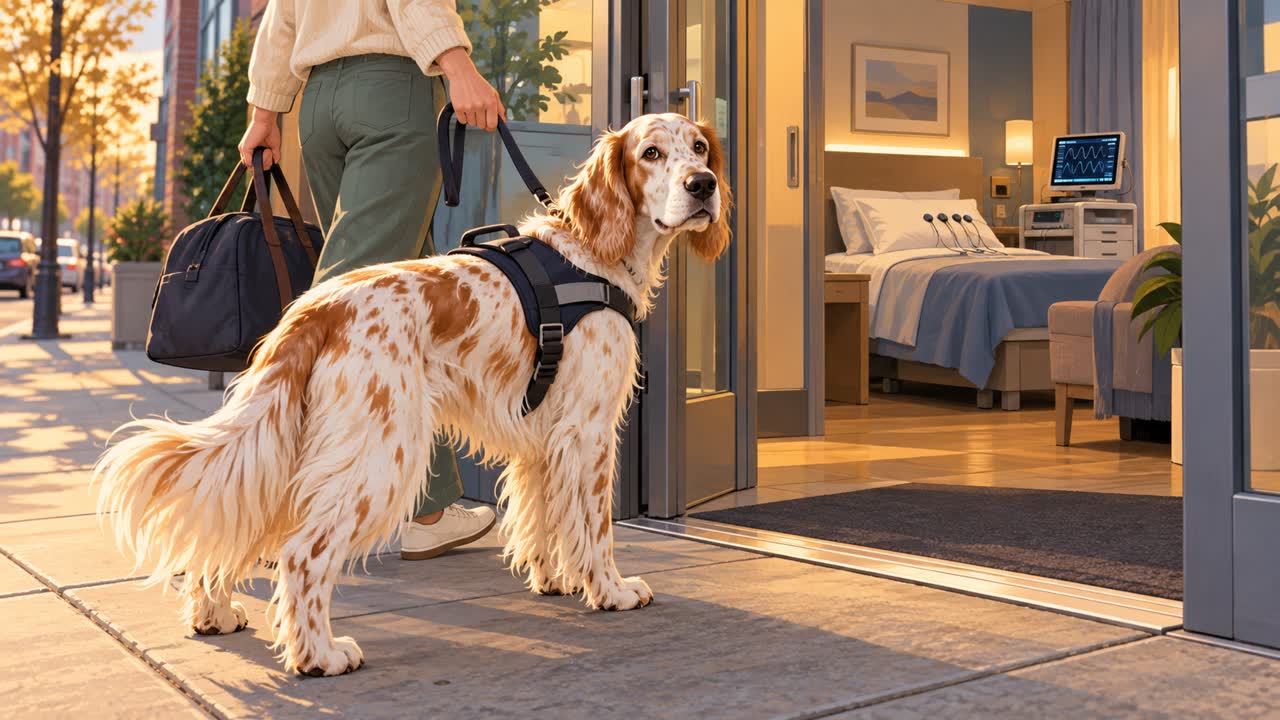
A service dog during a sleep study may require planning because an overnight sleep test involves monitoring equipment, staff observations, a private sleeping room, and a clinical goal of recording the patient’s usual sleep as accurately as possible.
A sleep study is different from an ordinary clinic visit. The patient may be connected to sensors and wires, may need assistance during the night, and may have limited ability to manage the dog after medications, fatigue, or a medical event.
This guide provides general U.S. planning information. Follow instructions from the sleep specialist, sleep technologist, ordering clinician, and facility because testing protocols vary.
Quick Overview
- Contact the sleep center before the appointment and request an accommodation discussion.
- Explain the dog’s trained tasks and practical needs without sharing unnecessary medical details.
- Ask where the dog can settle without interfering with monitoring equipment, staff access, or emergency care.
- Plan for leash control, relief breaks, water, and overnight supplies before checking in.
1) Plan for a Service Dog During Sleep Study before Arrival
Call the sleep center as soon as the study is scheduled. Ask to speak with the sleep-lab manager, patient-access coordinator, or technologist who can explain the facility’s overnight procedures and discuss a safe arrangement for the dog.
Describe the accommodation need in practical terms. For example, explain that the dog performs trained disability-related work during nighttime symptoms, mobility changes, medical episodes, or another condition that affects the patient’s ability to remain safe and independent.
Ask specific questions: Is the room private? Where can the dog sleep? Will the patient need to walk through shared corridors? What happens if the patient needs to use the restroom while connected to sensors? Is a support person permitted to assist with the dog if needed?
General information about service-animal rules is available through the site’s regulations, but the sleep center must consider its actual room design, monitoring process, and safety needs.
2) Separate Access Planning from Sleep-Test Accuracy
A sleep study measures sleep-related information under conditions set by the ordering clinician and sleep laboratory.
Do not assume that the dog must be excluded simply because a test is taking place. At the same time, do not assume the dog can be positioned anywhere in the room without affecting equipment, staff access, or the testing protocol.
For some patients, the dog may settle quietly on a mat beside the bed. In other situations, the center may need to adjust equipment placement, reserve a particular room, arrange a support person, or discuss whether another type of testing is clinically appropriate.
The patient should follow the sleep clinician’s instructions about medications, caffeine, naps, food, sleep schedule, and other preparation steps. A service dog is not a substitute for medical evaluation, sleep testing, prescribed treatment, or emergency care.
3) Set Up a Safe Overnight Space for the Dog
The dog needs a predictable resting place that is close enough to perform trained tasks but outside paths used by the patient, technologist, medical equipment, doors, and emergency responders. A compact, clean mat may help define that space if the facility permits one.
Keep the dog away from monitoring cables, camera equipment, bedside controls, outlets, oxygen equipment, and any supplies the technologist may need overnight.
Bring only essential supplies: appropriate control equipment, water if permitted, waste bags, medication, a resting mat, and any necessary health supplies. Avoid loose toys, food containers, or bulky bags that could create clutter, distract the dog, or interfere with a nighttime response.
A dog that cannot settle quietly, is ill, has open wounds, is not housebroken, or becomes highly distressed may create a legitimate safety or sanitation concern. If that occurs, notify staff and use the backup plan rather than forcing the dog to remain in an unsuitable environment.
4) Prepare for Sensors, Staff Entry, and Nighttime Movement
Sleep studies may involve sensors attached to the patient’s head, face, chest, legs, or fingers. The patient may also have belts, wires, a breathing mask, or other monitoring equipment. Staff may enter the room to adjust a sensor, respond to an alert, or provide instructions.
Tell the technologist if the dog performs a task that may become visible during the study. For example, the dog might retrieve a phone, interrupt a disability-related behavior, alert to a change, guide the patient after waking, or seek help.
The dog should not lick sensors, chew cables, pull on equipment, jump on the bed, or block staff from reaching the patient. Keep the leash and harness controlled so they do not become entangled in wires, furniture, or medical equipment.
The public access guide offers general context about controlled service-dog behavior. A sleep laboratory may still use neutral safety procedures necessary for clinical care and emergency response.
5) Discuss Privacy, Documentation, and Communication
When the dog’s role is unclear, staff may ask whether the dog is required because of an impairment and what work or task it has been trained to perform.
A purchased certificate, registry entry, vest, or identification card does not itself decide whether the dog can accompany the patient. Optional identification may help with organization or recognition, but it does not replace trained disability-related work, controlled behavior, or a safe plan for the study.
If the facility asks for information before the appointment, keep the discussion focused on the accommodation needed, the dog’s practical role, and any task that may affect the testing process.
A voluntary service screening may help organize task and readiness information. It is not government approval, medical documentation, or a substitute for the sleep center’s clinical assessment.
6) Create a Backup Plan for Overnight Changes
Overnight testing can become more complicated than expected. The patient may feel unwell, need additional medical attention, be asked to return for another test, or be unable to handle the dog safely after poor sleep, medication effects, or a change in condition.
Provide the sleep center with the name and phone number of a trusted backup caregiver who can retrieve the dog promptly if needed. That person should know where the dog’s supplies are stored, how the dog travels safely, and how to reach the patient’s usual veterinarian.
Do not leave the dog unattended in a vehicle, lobby, hallway, or shared waiting area while the study is in progress. If the facility cannot safely accommodate the dog for part of the test, arrange the alternative before arrival whenever possible.
If the sleep study requires travel, lodging, or a flight to another city, those issues are separate from the laboratory’s accommodation process. Review the current air travel guide early enough to coordinate the dog’s needs with the medical appointment.
FAQs
Can I bring a service dog during sleep study testing?
You can request an accommodation, but contact the sleep center before the appointment. The facility should discuss the dog’s trained role, room setup, monitoring equipment, and any safety or testing concerns.
Can the dog sleep in the room with me?
That depends on the facility and the study protocol. A sleep center may be able to identify a safe resting position for the dog that does not interfere with equipment, staff access, or test procedures.
Will the dog affect my sleep-study results?
In some situations, the dog’s presence could affect sleep, movement, noise, or staff workflow. Discuss this with the sleep specialist and laboratory before the test so they can explain how it may affect the study.
Does my service dog need a vest or certificate?
No particular purchased certificate, registry entry, vest, or ID card generally determines access. The relevant issues are trained disability-related work, controlled behavior, and a safe clinical arrangement.
What if my dog performs a task during the night?
Tell the technologist in advance what the task looks like and what response is appropriate. This can help staff understand the dog’s behavior while protecting your privacy.
Sources
- ADA.gov: Businesses Open to the Public
- ADA.gov: Service Animals
- ADA.gov: Service Animals FAQ
- CDC: Dogs
- CDC: Pet Travel Safety
- U.S. DOT: Service Animals
Takeaway
A sleep-study plan should preserve disability-related support while respecting the sleep lab’s need to monitor the patient safely and obtain clinically useful information.
- Call ahead and discuss the dog’s trained role, room setup, and testing protocol.
- Keep the dog settled and clear of wires, equipment, staff routes, and emergency access.
- Arrange a reliable backup caregiver before the overnight appointment.