
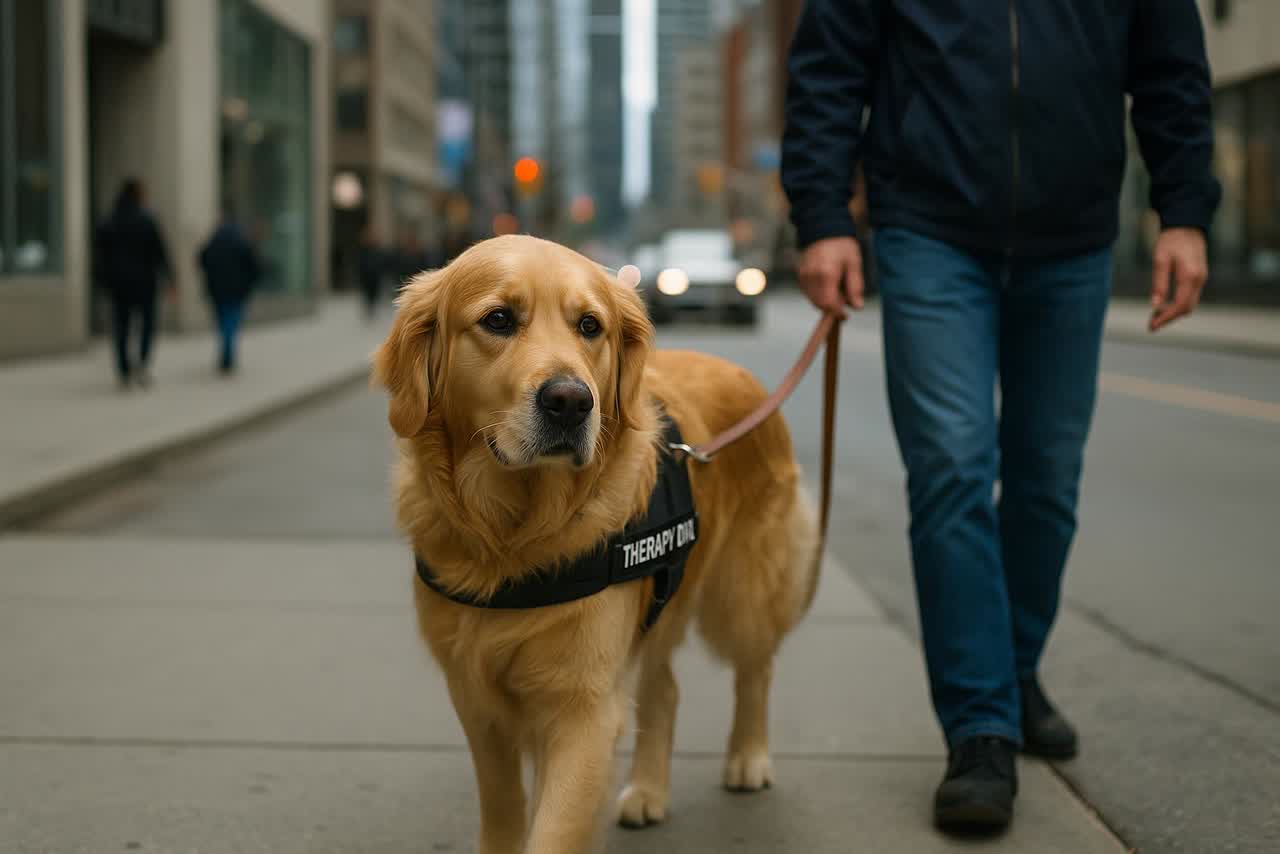
A “therapy dog” in Canada usually means a well-trained, calm dog that visits schools, hospitals, long-term care facilities, or community programs to provide comfort. These dogs can be incredibly helpful — but they are different from service dogs, and access rules can vary depending on the province, the facility, and the program running the visit.
Quick Overview
- Therapy dogs typically work in organized visitation programs and enter places by permission, not by default public access.
- Service dogs are trained to do disability-related tasks and may have broader access protections depending on the jurisdiction.
- Best practice: for smoother entry, carry credible documentation (program ID, training records) and use clear recognition gear.
- Travel & housing rules vary; when in doubt, confirm policies in writing before arrival.
1) Therapy Dog vs. Service Dog (why the difference matters)
In everyday conversation, people sometimes use “therapy dog” to mean “a dog that helps me feel better.” Legally and operationally, therapy dogs are usually understood as visitation dogs working with handlers through a program. Service dogs are trained for disability-related tasks.
If you’re unsure which category fits your situation, start with the basics in the Knowledge hub, then decide which documentation and training proof you want to keep ready for real-world interactions.
2) Access in Public Places (restaurants, stores, events)
Most public-access disputes come down to one question: Is the dog there as a trained service dog team, or as a therapy/visitation dog entering by permission? Therapy dogs commonly enter public places for events (community days, school demos, wellness programs) when the organizer or owner approves it.
For therapy teams, the practical goal is simple: reduce friction. Staff are more comfortable when the dog is calm, controlled, and clearly identified as working with a program or handler.
3) Visiting Hospitals, Care Homes, and Schools in Canada
Facilities often have their own risk-management rules. Even when a therapy dog is welcome, you may be asked about:
- Vaccination status and parasite prevention
- Temperament testing or program certification
- Handler training and conduct standards
- Cleanliness and grooming expectations
To make this smooth, it’s strongly recommended to keep a “visit-ready” packet: program ID (if applicable), training records, and a simple one-page summary of what your therapy dog does during visits.
4) What Questions You can Expect (and how to answer fast)
Even when you’re doing everything right, you can get stopped at the door. The best approach is calm, short, and consistent. If the dog is being presented as a service dog, the key is to know what staff can ask and to keep your answers simple.
If you’re entering as a therapy dog team by permission, the conversation is usually easier: you’re there for a scheduled visit or event. Having documentation ready keeps the interaction professional instead of emotional.
5) Housing in Canada (pets, accommodations, and paperwork)
Housing rules can be confusing because landlord policies, condo rules, and provincial standards can differ. If your dog is a service dog, housing conversations often focus on accommodation processes and what information a landlord can request. For a quick primer, see housing common questions.
For therapy dogs, housing is often handled like a pet policy unless you have a service-dog accommodation basis. Either way, the most effective strategy is to communicate early, keep documentation organized, and get confirmations in writing before move-in.
6) Travel within/into Canada (planes, hotels, and paperwork)
Travel is where documentation is most helpful. Hotels and airlines may have different expectations for service dogs versus pets and visitation/therapy dogs. If you plan to travel with your dog as a working team, it’s strongly recommended to keep clear documentation ready and use recognition gear to reduce confusion at check-in.
If you’re considering any form of “registration,” make sure you understand what it does and doesn’t do in practice. This guide on service dog registration helps set realistic expectations so you don’t waste money or time.
7) Training Standards that Make Therapy Dog Visits Successful
Facilities care less about labels and more about predictable behavior. Strong therapy teams typically train for:
- Neutral greetings: The dog can accept attention calmly without jumping, mouthing, or pulling.
- Settle on cue: Relaxed down-stays beside a chair or bed for several minutes.
- Noise and equipment comfort: Wheelchairs, walkers, hospital carts, alarms, and crowded hallways.
- Hygiene habits: No licking faces/hands on cue, and reliable potty routines before entering.
Keeping a simple training log (dates, environments, skills practiced) is strongly recommended—especially if you visit multiple facilities that ask for reassurance and consistency.
FAQs
Can a therapy dog go anywhere in Canada?
Therapy dogs commonly enter places by permission for organized visits or events. Policies can vary by facility and province, so it’s smart to confirm in advance and arrive with clear documentation.
What documentation is most helpful for a therapy dog team?
Program identification (if you’re part of a recognized visitation program), training records, vaccination documentation, and clear recognition gear. The goal is to quickly make staff feel safe and confident.
Can I use the same dog as a therapy dog and a service dog?
Some dogs do both roles depending on training and the handler’s needs. The key is being honest and consistent about the role the dog is performing in that moment, and ensuring behavior standards remain excellent.
Sources
Takeaway