
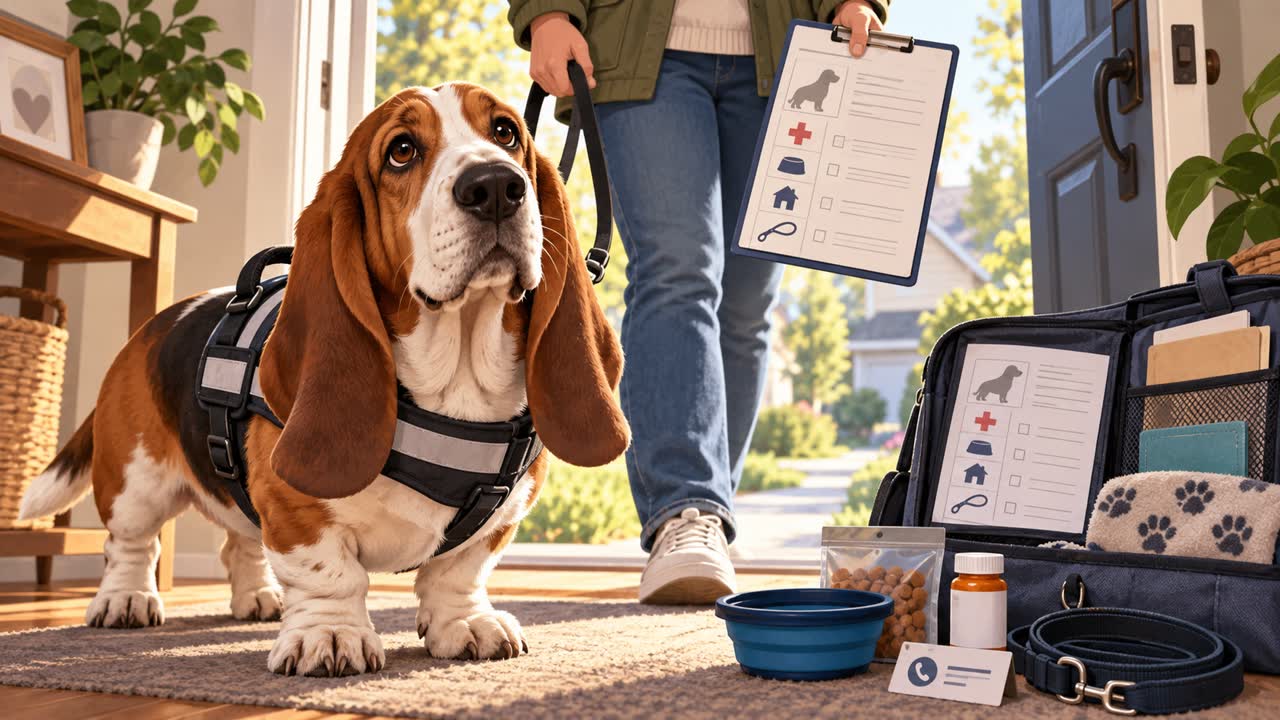
A service dog shelter intake information sheet gives emergency-shelter staff the essential facts needed to place the handler and dog safely without separating the team unnecessarily. It should cover the dog’s trained role, handling needs, food and medication, relief routine, emergency contacts, and any specific risks.
The sheet is a planning tool, not a certificate or legal authorization. Under the Americans with Disabilities Act (ADA), a qualifying service dog may generally accompany its handler in areas of an emergency shelter open to other residents, subject to limited safety- and behavior-based exceptions.
This guide focuses on temporary emergency shelters during evacuations or disasters. Animal-only shelters, transitional housing, hospitals, and airline travel may use different procedures.
Quick Overview
- Keep the intake sheet brief enough to use during a stressful arrival.
- Record the dog’s identity, trained tasks, commands, care routine, and medical needs.
- List a primary and backup caregiver in case the handler becomes unable to provide care.
- Bring food, water, bowls, medication, waste bags, and familiar handling equipment.
1) Create a Service Dog Shelter Intake Information Sheet
Use one clearly labeled page, with a second page only if the dog has detailed medication or veterinary instructions. Write in plain language and leave enough space for shelter staff to add a location, intake number, or assigned contact.
Include:
- Handler’s name, phone number, and emergency contact.
- Dog’s name, description, recent photo, and microchip number.
- Brief description of disability-related work or tasks.
- Primary commands and safe handling instructions.
- Food, medication, allergies, and veterinary contact.
- Relief schedule and cleanup routine.
- Primary and backup temporary caregivers.
Date the sheet and mark sensitive information that should remain confidential. Review current regulations as part of broader preparation, but keep the intake document focused on facts staff needs immediately.
2) Describe the Dog’s Role without Oversharing
Shelter staff may need to understand how the dog assists the handler, particularly when planning sleeping arrangements, mobility routes, or emergency responses. Describe the trained action rather than providing a full diagnosis.
For example, the sheet might state that the dog retrieves medication, alerts to a medical change, guides the handler toward an exit, or interrupts a specific disability-related behavior. It can also explain what staff should do if the dog gives an alert.
When the dog’s role is not apparent, staff may generally ask whether the dog is required because of a disability and what work or task it has been trained to perform. They generally should not require a task demonstration or make access depend on a special vest, ID, purchased certificate, or registry listing.
A voluntary service check may help organize task information, but it is not government approval and does not replace an effective shelter plan.
3) Record Handling and Behavior Information
Note whether the dog should avoid interaction with strangers, children, unfamiliar dogs, food lines, or medical equipment. A service dog does not need to greet other animals in the shelter. Planned separation can protect working focus and reduce conflict.
The dog should remain housebroken and under control. A leash, harness, or tether is generally expected unless it interferes with the dog’s work. In that situation, another effective method of control is required.
A shelter may generally require removal if the dog is unrestrained and the handler does not act effectively, or the dog is not housebroken. The handler should still be offered shelter services without the animal, while staff helps identify a safe alternative arrangement when possible.
4) Add Food, Medication, and Veterinary Details
List the dog’s regular food, measured portion, feeding times, prohibited foods, and known allergies. Bring enough familiar food for the expected emergency period plus a reasonable buffer, following current local preparedness guidance.
For medication, include the name, dose, timing, route, storage requirements, and prescribing veterinary clinic. Keep medication in its original labeled container when practical. If refrigeration is required, tell shelter staff during intake rather than assuming suitable storage is available.
Pack potable water, portable bowls, waste bags, paper towels, and basic cleaning supplies. Do not assume the shelter will stock the dog’s regular food, medication, or equipment.
Include signs that require prompt veterinary attention, such as a known seizure pattern, severe allergy response, collapse, repeated vomiting, or another condition identified by the dog’s veterinarian. Avoid asking shelter staff to make medical decisions beyond their role.
5) Plan Placement, Relief, and Caregiver Backup
Ask where the team will sleep, how the handler can reach restrooms and exits, and where the dog can relieve itself safely. The route should be accessible to the handler and reasonably separated from traffic, waste storage, and animal-only shelter areas.
Another resident may have allergies, fear of dogs, or a disability-related need. Those concerns do not automatically justify separating the service-dog team. Staff can consider distance, sleeping-area placement, ventilation, cleaning, schedules, or alternate routes.
The handler is ordinarily responsible for feeding, supervising, relieving, and cleaning up after the dog. The intake sheet should name at least two people who can assume temporary care if the handler becomes ill, is hospitalized, or cannot safely manage the animal.
Where appropriate, give caregivers written authorization and tell them where supplies are stored. Record every custody transfer so staff can locate the dog and reunite it with the handler.
6) Use the Sheet During Intake and Evacuation Changes
Give shelter staff a copy while keeping the original with the emergency kit. Ask who is responsible for disability access and how to report urgent concerns. Confirm any agreed arrangements, including sleeping placement, relief access, medication storage, and evacuation procedures.
The ADA baseline is summarized in the public access guide, although emergency conditions can require individualized safety decisions. Restrictions should be connected to an actual risk or operating condition rather than a general no-pets rule.
If the shelter relocates residents, update the sheet with the new location and contact information. Keep the dog’s leash and essential supplies immediately available during transport. If relocation involves commercial aviation, consult the applicable air travel guide because airline procedures differ from shelter access rules.
After the emergency, replace used supplies and revise any instructions that proved unclear. A brief practice review with caregivers can reveal missing phone numbers, expired medication, or impractical handling plans.
FAQs
What belongs on a service dog shelter intake information sheet?
Include handler and dog identification, trained tasks, handling cues, food, medication, veterinary details, relief needs, emergency contacts, and two possible caregivers.
Is an intake sheet legally required?
No universal ADA form is required for ordinary public access. The sheet is a practical tool that helps shelter staff support the team during a stressful emergency.
Must I show service-dog certification at a shelter?
A purchased certificate, registration, vest, or ID is generally not required for ADA public access. Optional identification may aid organization, but trained tasks and controlled behavior remain central.
Can a shelter separate me from my service dog?
Generally, a qualifying service dog should remain with its handler in resident areas. A specific safety issue, loss of control, lack of house training, or the handler’s inability to provide care may require an alternative arrangement.
Will shelter staff feed and walk the dog?
Do not assume they will. The handler is ordinarily responsible for routine care and should identify backup caregivers who can help if needed.
What if another resident has allergies?
Staff should evaluate both residents’ needs and consider separation, cleaning, ventilation, scheduling, or different routes rather than automatically excluding the dog.
Should the sheet include my diagnosis?
Usually, detailed diagnostic information is unnecessary. State what the dog is trained to do and provide only the medical information needed for safe shelter arrangements.
Sources
- ADA.gov: Service Animals
- ADA.gov: Service Animals FAQ
- CDC: Dogs
- CDC: Pet Travel Safety
- HUD: Information for Persons with Disabilities
Takeaway
A concise intake sheet helps shelter staff support the service-dog team while preserving privacy and clarifying daily care, safety, and backup arrangements.
- Record only the task, care, and emergency information staff need.
- Bring the dog’s regular supplies and identify two backup caregivers.
- Review the sheet after every emergency or material change.