
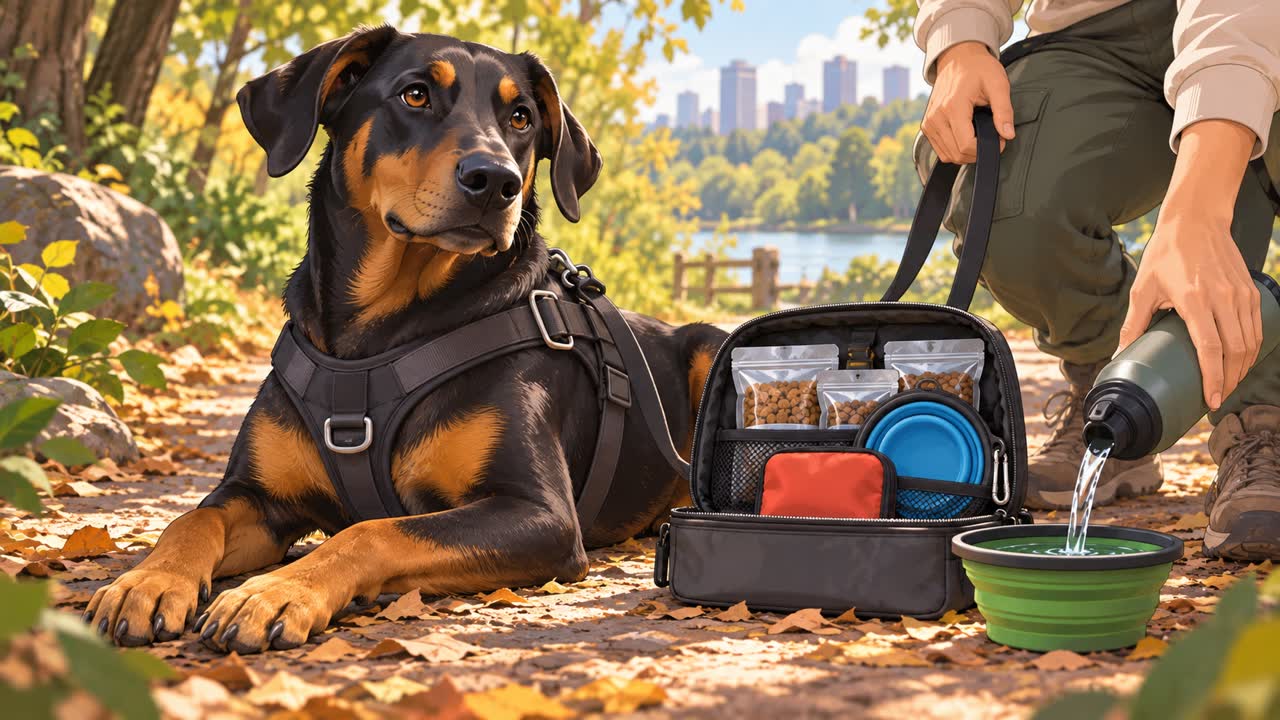
A service dog emergency food and water kit should contain familiar food, safe drinking water, portable bowls, feeding instructions, necessary medication, and basic cleanup supplies. Store it where the handler or a trusted caregiver can reach it quickly during an evacuation, utility outage, hospital trip, or temporary displacement.
The kit should support both the dog’s welfare and its ability to keep working. Sudden diet changes, dehydration, spoiled food, or missing medication can affect health and performance during an already stressful event.
This guide focuses specifically on food, water, storage, and feeding continuity. Leashes, identification, veterinary records, first-aid supplies, and reunification contacts belong in the broader emergency plan as well.
Quick Overview
- Pack several days of the dog’s regular food and rotate it before it expires.
- Store potable water for the dog rather than relying on uncertain local supplies.
- Include lightweight bowls, a measuring scoop, and written feeding directions.
- Protect food and medication from heat, moisture, pests, and contamination.
1) Build a Service Dog Emergency Food and Water Kit
Start with the dog’s normal daily ration. Multiply that amount by the number of days covered by the household emergency plan, then add a modest buffer for delays or spilled food. Follow current guidance from local emergency authorities because recommended preparation periods can vary by hazard and location.
Core supplies include:
- The dog’s usual food in sealed, manageable portions.
- Potable water reserved for the dog.
- Collapsible or lightweight food and water bowls.
- A measuring scoop or clearly marked container.
- A manual can opener if the food requires one.
- Written feeding, medication, and allergy instructions.
- Waste bags, paper towels, and hand-cleaning supplies.
Label the kit with the dog’s name and the packing date. You can review broader service-dog preparedness topics through the knowledge hub, while discussing feeding questions with the dog’s veterinarian.
2) Choose and Store Emergency Food Safely
Use food the dog already tolerates. An emergency is a poor time to introduce a new brand, protein source, treat, or supplement. Familiar food can reduce the chance of digestive upset and make it easier to notice symptoms caused by stress, illness, or exposure.
Protect dry food from moisture, extreme heat, rodents, insects, and torn packaging. When practical, store it in its original labeled package, then place that package inside a secure outer container. This preserves ingredient, lot, and expiration information.
For canned or pouched food, inspect seals and avoid containers that are swollen, leaking, badly dented, or otherwise compromised. Once opened, follow the manufacturer’s storage instructions and discard food that cannot be kept safely.
Rotate supplies on a calendar instead of waiting for an emergency inspection. Use older food in the dog’s regular meals and replace it with a fresh supply. Check special treats and task rewards at the same time.
3) Calculate and Protect the Water Supply
Water needs vary with the dog’s size, diet, activity level, health, temperature, and stress. Ask a veterinarian for an appropriate planning amount, especially if the dog has kidney, heart, endocrine, or gastrointestinal conditions.
Pack enough potable water for drinking and a small amount for cleaning the bowl. Keep the dog’s drinking supply separate from water intended only for sanitation. Do not assume that floodwater, standing water, untreated natural sources, or a disrupted municipal supply is safe.
Use food-grade containers that close securely and the handler or caregiver can carry. Inspect them for leaks and replace stored water according to the container manufacturer’s instructions and local emergency guidance.
On hot days or during extended work, offer water at sensible intervals without forcing the dog to drink too much at once. Signs such as unusual weakness, repeated vomiting, collapse, or severe distress require prompt veterinary attention.
4) Plan for Medication and Special Diets
A dog using prescription food or medication needs a more detailed continuity plan. Ask your veterinarian how much to keep in reserve, how to store it, and what to do if refrigeration or the usual product becomes unavailable.
Keep medication in its original labeled container unless a veterinarian or pharmacist directs otherwise. Add a written schedule listing each medication, dose, route, timing, purpose, and prescribing clinic. Review the expiration date whenever you rotate food.
For refrigerated products, prepare an insulated container and cold packs, but prevent medication or food from freezing unless its instructions permit it. Include the maximum safe time outside controlled storage if the veterinary team provides that information.
A voluntary service check can help organize general task and readiness details, but it does not replace veterinary instructions for medication, hydration, or a therapeutic diet.
5) Make the Kit Portable and Caregiver-Friendly
A large home reserve may be difficult to carry during a rapid evacuation. Divide supplies into a portable go-kit and a larger backup container. The smaller kit should cover the first stage of displacement while the reserve supports a longer shelter-in-place period or later pickup.
Write directions that a caregiver unfamiliar with the routine can follow. Include meal times, measured portions, foods the dog must avoid, medication instructions, emergency contacts, and where additional supplies are located. Add a recent photo and basic description to prevent mix-ups in a shared shelter or veterinary setting.
Keep bowls and the scoop in the food kit so feeding doesn’t depend on finding household items. If the dog refuses food during a stressful event, avoid repeatedly offering unfamiliar alternatives without veterinary guidance.
Store duplicate instructions with a trusted caregiver. If the handler lives in rental or shared housing, incorporate evacuation routes and accessible storage into the broader plan, and review relevant housing guidance.
6) Use the Kit During Evacuation or Displacement
Feed the dog in a controlled location away from unfamiliar animals, traffic, contaminated surfaces, and crowded walkways. Maintain the normal schedule when possible, but adapt around transport, medical treatment, and safe relief opportunities.
The handler remains responsible for feeding, watering, supervising, and cleaning up after the service dog. Emergency shelters and businesses may have procedures for safe placement, but ordinary staff is not generally required to provide animal care.
A qualifying service dog may generally accompany its handler in areas open to the public, subject to limited safety- and behavior-based exceptions. The public access rules explain that access does not depend on a purchased certificate, registration, vest, or ID card.
After using the kit, replace consumed items promptly. Record any food refusal, vomiting, diarrhea, medication delay, unusual drinking, or change in working behavior and share relevant concerns with a veterinarian.
FAQs
What belongs in a service dog emergency food and water kit?
Pack familiar food, potable water, portable bowls, a measuring scoop, feeding directions, necessary medication, a manual can opener when needed, waste bags, and basic cleaning supplies.
How many days of food should I store?
Follow current local emergency guidance and account for likely hazards, evacuation time, and supply disruptions. Add a reasonable buffer, but keep the kit light enough for the handler or caregiver to move.
Can I pack a different food that stores longer?
A sudden diet change can cause digestive problems. Use the dog’s regular food when possible and discuss emergency alternatives with a veterinarian before relying on them.
How much water does a service dog need?
Needs vary by size, diet, activity, weather, and health. Ask the dog’s veterinarian for an appropriate daily planning amount and store extra for delays and bowl cleaning.
Where should the kit be stored?
Choose a cool, dry, accessible location near other emergency supplies. Avoid places exposed to flooding, pests, direct sunlight, vehicle heat, or freezing temperatures.
Should medication go in the same kit?
You can store medication with the kit when its temperature and security requirements allow. Keep it labeled and include written dosing instructions, expiration dates, and veterinary contacts.
Do shelters have to supply dog food?
Don’t assume a shelter or facility will provide the dog’s preferred food, medication, bowls, or routine care. Bring the dog’s supplies and, whenever possible, identify a backup caregiver.
Sources
- ADA.gov: Service Animals
- ADA.gov: Service Animals FAQ
- CDC: Dogs
- CDC: Pet Travel Safety
- HUD: Information for Persons with Disabilities
Takeaway
A useful emergency kit protects the service dog’s normal diet, hydration, medication schedule, and ability to continue working during disruption.
- Pack familiar supplies in sealed, portable containers.
- Rotate food, water, and medication before they expire.
- Give backup caregivers clear written feeding and veterinary instructions.