
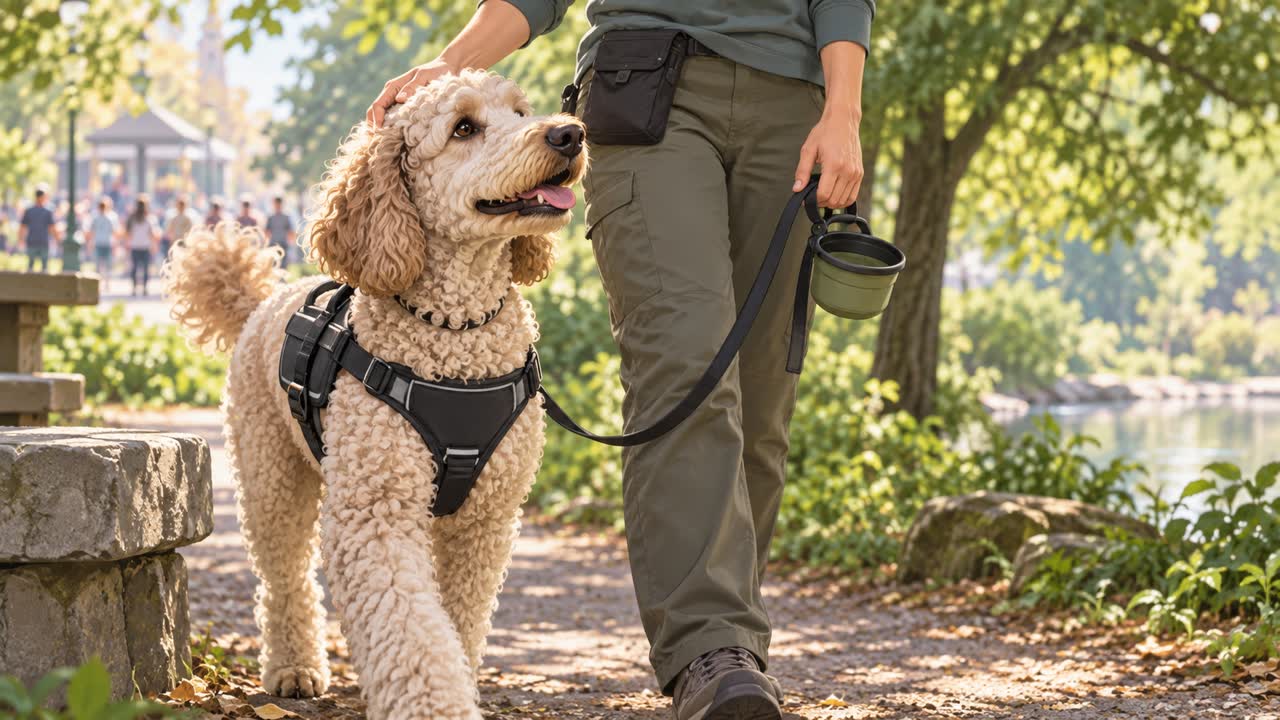
A service dog recovery plan after a stressful outing should include a quiet decompression period, access to water and a relief break, a physical check, and enough rest before returning to demanding work. The goal is not to punish mistakes or immediately repeat the difficult situation.
Stress can come from crowds, alarms, unfamiliar dogs, access disputes, travel delays, slippery surfaces, or an outing that simply lasted too long. One difficult day does not automatically mean a dog can no longer work, but repeated or severe stress deserves careful review.
This guide focuses on recovery and readiness after the outing. It does not replace veterinary care or individualized advice from a qualified service-dog trainer or behavior professional.
Quick Overview
- Move to a quiet, familiar environment and reduce demands.
- Offer water, an appropriate relief break, and the dog’s normal routine.
- Check paws, equipment-contact areas, appetite, movement, and behavior.
- Avoid correcting stress behaviors after the dog is home.
- Record triggers, early warning signs, and what helped the dog recover.
- Resume demanding public work only when the dog appears physically and behaviorally ready.
1) Start a Service Dog Recovery Plan after a Stressful Outing
Once the team reaches a safe location, stop nonessential work and remove unnecessary stimulation. Choose a familiar room or quiet outdoor space where the dog can settle without visitors, other animals, loud media, or repeated handling.
Do not immediately test the dog with obedience drills or expose it to the same trigger to “prove” that it is fine. Recovery comes before training analysis. General service-dog information is available through the knowledge hub, but the dog’s individual pattern should guide the immediate plan.
2) Check Physical Needs before Assuming It is Behavioral
Stress-like behavior can also reflect pain, overheating, dehydration, gastrointestinal discomfort, fatigue, or an equipment problem. Conduct a gentle visual and hands-on check if the dog is comfortable with handling.
Look for:
- Cracked pads, cuts, swelling, or debris between the toes.
- Redness or rubbing beneath a harness, vest, or mobility equipment.
- Limping, stiffness, reluctance to move, or difficulty settling.
- Unusual panting, drooling, vomiting, diarrhea, or loss of appetite.
- Changes in urination, drinking, alertness, or coordination.
Contact a veterinarian promptly for collapse, breathing difficulty, repeated vomiting, significant injury, severe weakness, suspected heat illness, or another urgent change. Do not assume that every problem will resolve with sleep.
3) Allow Decompression without Complete Isolation
Give the dog space while remaining available. Some dogs settle best near their handler; others need a quiet bed with minimal interaction. Avoid forcing cuddling, play, grooming, or social contact when the dog turns away, can’t settle, or seeks distance.
Provide normal access to water and follow the dog’s established feeding schedule. Avoid compensating with unusually rich treats or a large meal, which may create digestive problems. A familiar chew or quiet enrichment activity may be appropriate if the dog already uses it safely and chooses to engage.
Sleep is an important part of recovery. Protect the dog from unnecessary interruptions and consider reducing optional work for the remainder of the day. If the next day includes another demanding outing, reassess whether you can shorten, modify, or postpone it.
4) Record What Happened While Details are Fresh
Write a factual timeline rather than labeling the dog as stubborn, disobedient, or “burned out.” Note the outing duration, temperature, noise, crowding, surfaces, interactions, access disputes, food and water, relief opportunities, and travel conditions.
Record the earliest observable signs. These might include scanning, repeated yawning, lip licking, slowing down, refusing cues, shaking off, increased panting, vocalizing, pulling toward an exit, or inability to settle. No single behavior proves stress, so consider the full context and any physical concerns.
Also document the dog’s task performance and recovery time. A voluntary service screening may help organize readiness information, but it is not a veterinary assessment, legal certification, or substitute for professional evaluation.
5) Change the Next Outing Rather than Repeating the Same Load
Use the record to reduce the specific difficulty. If the outing was too long, shorten the next one. If crowding was the problem, choose a quieter time or wider route. If another dog caused the reaction, increase distance and avoid forced interaction.
Other adjustments may include more frequent breaks, improved footing, a different settling position, better temperature control, planned relief access, or leaving before the environment reaches peak intensity. The dog should not be expected to tolerate unlimited stress simply because it has public-access training.
A structured behavior check can help identify skills or environments requiring additional work. When fear, avoidance, or task disruption persists, consult an experienced professional who uses humane, evidence-based methods and understands service-dog work.
6) Decide When the Dog is Ready to Return to Work
Base readiness on the dog’s overall condition, not an arbitrary deadline. Before resuming demanding work, look for normal appetite, comfortable movement, ordinary sleep and elimination, relaxed behavior in familiar settings, and reliable responses to routine cues.
Restart with a lower-demand outing. Keep it short, choose a predictable environment, and include an easy exit. A successful recovery outing should rebuild confidence rather than recreate the original challenge at full intensity.
If the dog remains unusually vigilant, avoids equipment, refuses familiar tasks, startles easily, becomes reactive, or needs much longer to recover after each outing, pause nonessential public work. Veterinary evaluation can rule out pain or illness, while a qualified trainer or behavior professional can help assess workload and emotional welfare.
Access under applicable public access rules depends in part on control, but legal access is not the same as fitness to work on a particular day. Choosing rest when the dog is not ready protects both team members.
FAQs
How long should a service dog rest after a stressful outing?
There is no universal recovery period. The appropriate time depends on the dog, the severity of the event, physical condition, sleep, and how quickly normal behavior returns.
Should I train immediately after the outing?
Usually, recovery should come first. Brief familiar routines may be fine if the dog chooses to engage, but avoid intensive drills or immediate re-exposure while the dog remains stressed or fatigued.
What are signs that my service dog needs professional help?
Persistent avoidance, reactivity, equipment refusal, disrupted task performance, appetite changes, pain signs, or progressively longer recovery times warrant veterinary or qualified behavioral evaluation.
Can one stressful outing ruin a service dog?
One difficult experience does not automatically end a working career. The response should depend on severity, recovery, recurring patterns, and professional assessment when concerns persist.
Should I remove the dog’s working gear at home?
Generally, removing nonessential gear can signal that work is finished and allows you to check for rubbing or discomfort. Follow any task-specific safety needs that require equipment to remain available.
Can I use treats to help the dog recover?
Familiar treats or quiet enrichment may help if they fit the dog’s normal diet, and the dog engages voluntarily. Avoid excessive or unfamiliar food as a substitute for rest or evaluation.
When is it safe to try another public outing?
Wait until the dog appears physically comfortable and behaviorally back to baseline. Begin with a short, predictable, low-demand outing and stop early if stress signs return.
Sources
- ADA.gov: Service Animals
- ADA.gov: Service Animals FAQ
- CDC: Dogs
- CDC: Pet Travel Safety
- HUD: Information for Persons with Disabilities
Takeaway
A useful recovery plan prioritizes physical comfort, quiet decompression, factual observation, and a gradual return to work.
- Check for pain, heat, dehydration, or equipment problems first.
- Record the trigger and reduce that load during the next outing.
- Pause demanding work and seek professional help when recovery is incomplete, or stress keeps recurring.