
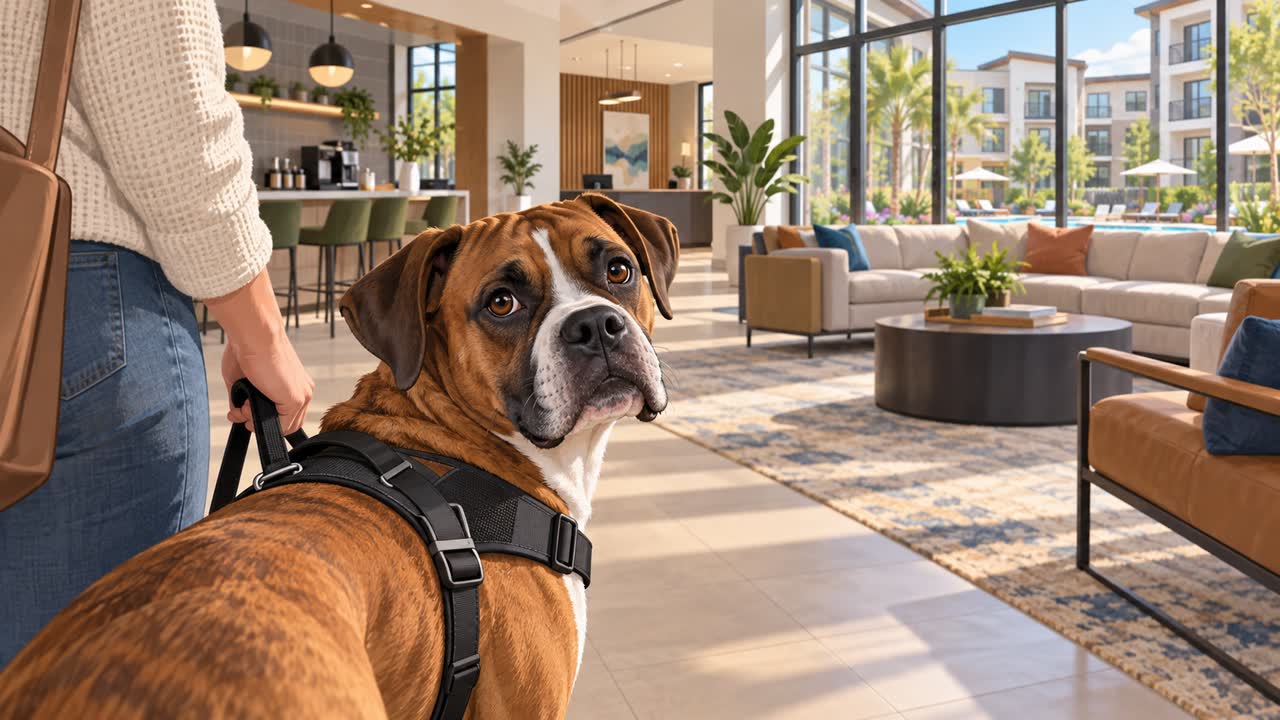
A resident may generally use a service dog at apartment clubhouse facilities when the clubhouse is an amenity available to residents and the dog provides disability-related assistance. A no-pets rule for the clubhouse should not automatically exclude a qualifying service or assistance animal.
Clubhouse access is primarily a housing-accommodation issue, not simply the public-access question that applies in restaurants or stores. The Fair Housing Act may require a housing provider to make a reasonable accommodation so a resident can use shared amenities with the animal.
The practical focus should be equal access, controlled behavior, and workable use of shared areas such as lounges, business centers, fitness rooms, event spaces, and patios.
Quick Overview
- A qualifying animal may generally accompany a resident into shared amenities the resident may use.
- Pet bans and pet-only restrictions should not automatically control assistance-animal access.
- The resident may need to request a housing accommodation if one is not already on file.
- The dog should remain controlled, housebroken, and away from furniture and food-contact surfaces.
1) Access for a Service Dog at Apartment Clubhouse Facilities
A clubhouse is often part of the housing services and facilities offered with the dwelling. When residents may use it for meetings, exercise, computer access, social events, or recreation, denying a disabled resident access with a needed assistance animal can limit the resident’s use and enjoyment of the housing community.
The applicable legal analysis can depend on the property, the resident’s disability-related need, and federal, state, or local law. Housing law may use the broader term “assistance animal,” which can include animals that perform tasks as well as animals providing other disability-related assistance.
This differs from ordinary ADA public access. A resident should review current housing guidance and direct an accommodation request to the property manager, owner, housing office, or designated accessibility contact.
2) Request the Accommodation Clearly
If the housing provider has already approved the animal for the resident’s dwelling, ask whether that accommodation also expressly covers common amenities. If the approval is unclear or staff are enforcing a clubhouse pet ban, submit a short written clarification request.
A resident might write:
I use an assistance animal because of a disability. I request confirmation that the animal may accompany me in resident common areas, including the clubhouse, so that I can use the property’s amenities. The animal will remain under my control, and I will follow generally applicable sanitation and safety rules.When the disability and disability-related need are not apparent, a housing provider may request reliable supporting information relevant to those questions. The appropriate scope depends on the circumstances. A full medical file is usually not the starting point, and the proper decision-maker should handle confidential information.
An optional ESA check may help a resident organize information, but it does not replace a housing provider’s individualized review or establish legal rights on its own.
3) Use Different Clubhouse Areas Safely
Clubhouses often combine several environments. A calm lounge presents different issues from a fitness room, shared kitchen, swimming-pool deck, or crowded party. The resident and housing provider should evaluate the actual space rather than impose one broad restriction.In lounges and business centers, position the dog where it can assist without blocking aisles, doors, or shared equipment. The dog should normally remain on the floor rather than clubhouse chairs, sofas, or tables.
In a fitness room, keep the dog away from moving belts, weights, cables, and equipment paths. You may need a safe settling place. If the room is too confined for safe positioning, discuss an effective adjustment rather than assuming that all clubhouse access must be denied.
In kitchens or food-service areas, keep the dog away from counters, serving surfaces, and stored food. Residents can consult practical daily living tips when developing routines for shared spaces.
4) Understand Control and Conduct ExpectationsThe resident is responsible for supervising, feeding, relieving, and cleaning up after the dog. Housing staff generally does not need to provide routine animal care.
The dog should remain housebroken and under control. Depending on the dog’s work and the handler’s needs, control may involve a leash, harness, tether, voice cue, signal, or another effective method. The dog should not wander, jump on residents, take food, damage property, or repeatedly disrupt clubhouse activities.
A housing provider may address actual conduct. If a dog damages furniture, threatens others, or remains uncontrolled after the handler has an opportunity to respond, the provider may consider proportionate action under applicable law and property procedures.
Breed, weight, or generalized fear is not the same as evidence that a particular dog poses a direct threat. Any serious restriction should be based on individualized, objective information.
5) Address Events, Guests, Allergies, and Other Animals
A resident may encounter birthday parties, association meetings, exercise classes, maintenance staff, children, and visiting pets in the clubhouse. Event rules should not treat an assistance animal as a pet or impose pet fees simply because the space is busy.
Other residents may have allergies, fear of dogs, or disabilities of their own. The property manager should gather relevant facts and consider measures that permit both residents to use the amenity. Depending on the situation, options may include increased distance, separate seating, cleaning, ventilation, adjusted schedules, or different routes.
The dog does not have to interact with other animals. If the property permits pets at certain clubhouse events, the handler can request enough separation for the service dog to work safely. Discourage guests from petting, feeding, calling, or photographing the dog in ways that interfere with its tasks.
6) Document Disputes and Practical Agreements
If clubhouse access is challenged, ask whether the staff member is applying a pet policy or a specific safety rule. Explain calmly that the dog is disability-related and ask the person responsible for housing accommodations to review it.
Keep records of the date, location, people involved, reason given for denial, and alternatives discussed. Preserve the lease, community rules, accommodation request, supporting information, written decision, and any incident reports. You can organize relevant documents in our app, although digital storage does not determine the legal outcome.
If the provider proposes a limitation, ask for the specific basis and whether a narrower measure could address the concern. Serious unresolved disputes may warrant assistance from a fair-housing organization, the appropriate government agency, or a qualified housing attorney.
FAQs
Can I bring a service dog at apartment clubhouse events?
Generally, a resident with a disability may request to use a qualifying service or assistance animal in clubhouse areas available to residents. The property and applicable housing laws determine the precise process.
Can the clubhouse enforce a no-pets rule against the dog?
A no-pets policy should not automatically exclude a disability-related assistance animal. The housing provider should evaluate the resident’s accommodation under the applicable legal framework.
Do I need a certificate or registration card?
A purchased certificate or registry listing does not automatically establish housing rights. Optional records may aid organization, but the key issues are the disability-related need, reliable supporting information when appropriate, and the animal’s conduct.
Can the dog enter the clubhouse fitness room?
Potentially, if the dog can be positioned safely without interfering with equipment or other residents. Address specific hazards through individualized planning.
May the dog sit on clubhouse furniture?
Usually, the dog should remain on the floor unless a disability-related task requires another controlled position. Housing providers generally do not have to permit assistance animals on shared furniture.
What if another resident has allergies?
The property manager should consider both residents’ needs and explore separation, scheduling, cleaning, ventilation, or other workable measures rather than automatically excluding either person.
Can the housing provider charge for damage?
A resident may generally be responsible for actual damage under policies applied consistently to residents. That differs from charging pet rent or a pet fee solely because a qualifying assistance animal is present.
Sources
- ADA.gov: Service Animals
- ADA.gov: Service Animals FAQ
- CDC: Dogs
- CDC: Pet Travel SafetHUD: Information for Persons with Disabilities
Takeaway
Handle clubhouse access as part of the resident’s equal use of housing amenities, with decisions based on disability-related need, actual conduct, and the conditions of each shared space.
- Clarify in writing that the accommodation covers resident common areas.
- Position and control the dog safely in each clubhouse environment.
- Document denials and seek an individualized solution to specific concerns.