
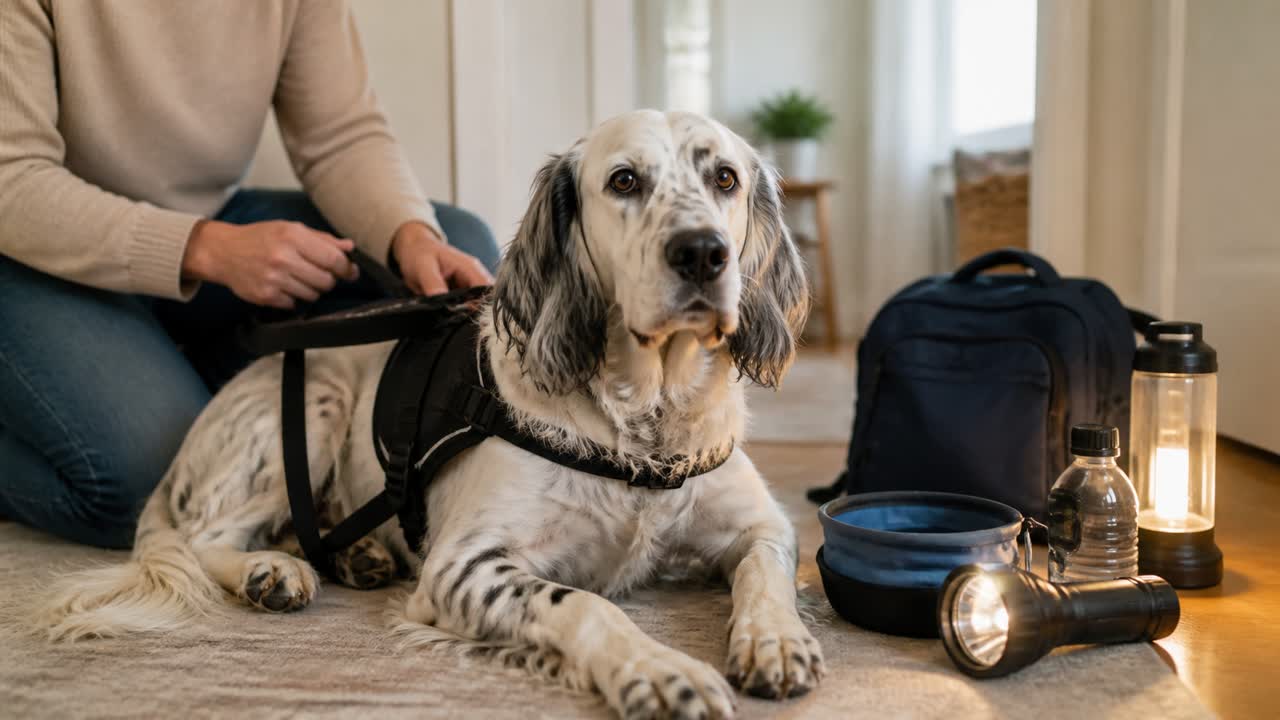
An apartment power outage checklist for service dog handlers helps you prepare before the lights go out, especially if your dog supports mobility, medical alert, psychiatric tasks, hearing alerts, or other disability-related needs.
Start with the items that could affect your dog’s task work first: power-dependent medical devices, elevator access, phone battery, temperature control, water, food, medications, and a backup exit plan.
Quick Overview
- Keep a 72-hour service dog kit near your apartment door, not buried in storage.
- Plan for elevator outages, locked electronic doors, dark stairwells, and emergency building access.
- Store extra water, food, medications, cleanup supplies, and paw protection.
- Keep task-related gear easy to find, including harnesses, leashes, lights, and backup batteries.
1) Build the Core Apartment Power Outage Checklist for Service Dog Handlers
Your first kit should cover the dog’s basic care and the support your dog provides during a power interruption. Store it in one reachable place, ideally near the exit route you would use if the building needed to be evacuated.
Include at least three days of food in sealed packaging, a manual can opener if needed, collapsible bowls, bottled water, medications, waste bags, grooming wipes, towels, and a small first-aid kit.
Add task-specific items. For a medical alert or psychiatric service dog, consider whether you need extra medication storage, written routines, comfort items that do not interfere with task work, and a quiet place away from building noise.
The goal is not to create a dramatic survival pack. When you are trying to manage darkness, alarms, neighbors, phones, and stairs, you should not also be searching for your dog’s leash, medication, or water bowl.
2) Plan for Elevators, Stairs, and Building Access
Apartment outages often become access problems before they become supply problems. If you have a mobility disability, low vision, medical instability, or a service dog that performs guiding, bracing, retrieval, interruption, or alert tasks, your emergency plan should address these challenges specifically.”
Ask your building manager how emergency power works in your property.
You do not need to present a “service dog certificate” to have this conversation.
If your building has a resident emergency list, ask how it is maintained, who can see it, and how it is used. If you have a mobility disability, low vision, medical instability, or a service dog that performs guiding, bracing, retrieval, interruption, or alert tasks, your emergency plan should address these challenges specifically.
3) Prepare Lighting, Batteries, and Task Gear
Dark apartments and hallways can interfere with both handler safety and service dog work. Keep a hands-free flashlight, extra batteries, a charged power bank, and a leash light in your service dog kit.
Do not rely on your phone as the only light source. During an extended outage, your phone may be needed for emergency calls, building alerts, medication reminders, weather updates, and transportation coordination.
Check any battery-dependent service dog equipment. Some handlers use rechargeable collar lights, cooling devices, medication monitors, alarm systems, or communication tools. If the item is part of your daily disability management, treat it like essential equipment rather than a convenience.
For dogs that startle at alarms, generators, emergency lighting, or crowded stairwells, practice calm movement in low-light conditions before an outage happens.
4) Cover Water, Food, Medication, and Temperature
Water is easy to underestimate in apartments. If pumps stop or water service becomes unsafe, your dog needs a separate supply. Large dogs, hot weather, and dogs on certain medications may need more than you expect.
Food should be familiar. A power outage is not the best time to change diets or introduce rich emergency foods. If your dog eats refrigerated food, plan a shelf-stable backup your dog has already tolerated. Rotate supplies before they expire.
Medication planning is especially important for dogs with seizure disorders, allergies, cardiac conditions, pain management needs, anxiety medications, or treatment plans prescribed or approved by your veterinarian.
Temperature is an apartment-specific risk. Your backup location might be a friend’s home, a cooling center, a hotel, or a designated shelter that can accommodate your disability-related service dog needs.
5) Keep Records that Reduce Confusion
Good records can reduce friction during a stressful building event. For public-access purposes under the ADA, a service animal is generally a dog individually trained to accomplish work or tasks directly related to a person’s disability.
Useful records may include your dog’s vaccination information, veterinarian contact, medication list, microchip number, task notes, training logs, emergency contacts, and any housing accommodation correspondence you already have.
For public places, staff may generally ask limited questions when the need is not obvious: whether the dog is mandatory because of a disability and what task or work the dog has been instructed to perform.
The practical point is simple: carry what helps solve real problems. A clean task summary, veterinary records, and emergency contact sheet are often more useful during an outage than certificate-style paperwork.
6) Make a Communication Plan with Your Landlord or Building Staff
Before storm season, send a short, calm message to your landlord, property manager, or resident services office. If your service dog’s work affects how you evacuate or shelter in place, say so in practical terms.
A useful message might be: “I live in Unit 402 and use a service dog for disability-related tasks. If the elevator is unavailable during an outage, I need to understand the accessible evacuation and communication plan.”
This kind of message avoids arguing about labels. It also creates a written record before an emergency creates additional pressure. If the building later has a prolonged outage, you can refer back to the plan instead of starting from zero.
Also decide who outside the building can help. Choose one or two contacts who know your dog’s routine, where the kit is stored, and what to do if you are unable to communicate clearly.
7) Practice the Checklist before You Need It
A checklist only works if you can use it under stress. Walk through your service dog power outage apartment checklist once every few months. Check expiration dates, battery levels, leash condition, medication supply, and whether your dog’s gear still fits.
Practice moving through your apartment in low light. If your dog retrieves items, guides around obstacles, interrupts symptoms, or alerts to sounds, reinforce those tasks in realistic but safe conditions.
Do not push your dog into unsafe simulations. Short, calm practice is enough. The aim is familiarity: your dog knows where to settle, you know where the kit is, and both of you have a predictable route if the building loses power.
FAQs
What should be in a service dog power outage apartment checklist?
Include food, water, medications, waste supplies, leash and harness gear, lights, batteries, veterinary records, task notes, emergency contacts, and a plan for elevators, stairs, locked doors, and temperature control.
Do I need a service dog certificate for an apartment power outage plan?
No. A certificate is not the foundation of an outage plan. Some handlers like organized ID or records for peace of mind, but practical documentation, training records, veterinary information, and clear communication with the landlord are more useful.
Can my landlord ask about my service dog during an emergency?
A landlord may need practical information to address access, safety, or housing accommodation issues. Keep the conversation focused on disability-related needs, safe evacuation, communication, and any documentation already used for housing accommodation.
What if the elevator stops and I cannot use stairs safely?
Ask the building in advance for its accessible emergency plan. Document who to call, which exits are usable, whether backup power exists, and how residents with disabilities are supported during outages.
Should I evacuate with my service dog or shelter in place?
That depends on the building condition, weather, medical needs, and official instructions. Plan both options. Your dog’s food, water, medication, gear, and records should be ready whether you stay or leave.
Sources
- ADA.gov: Service Animals
- ADA.gov: Service Animals FAQ
- CDC: Dogs
- CDC: Pet Travel Safety
- HUD: Information for Persons with Disabilities
Takeaway
An apartment outage plan for a service dog should be practical, boring, and easy to use: safe exits, essential supplies, clear records, and calm communication before the emergency happens.
- Prepare for elevators, access systems, lighting, water, food, medication, and temperature first.
- Use records and task notes to reduce confusion, not certificate-style claims as a substitute for training.
- Review the checklist seasonally so your plan still matches your building, your disability needs, and your dog’s current care routine.