
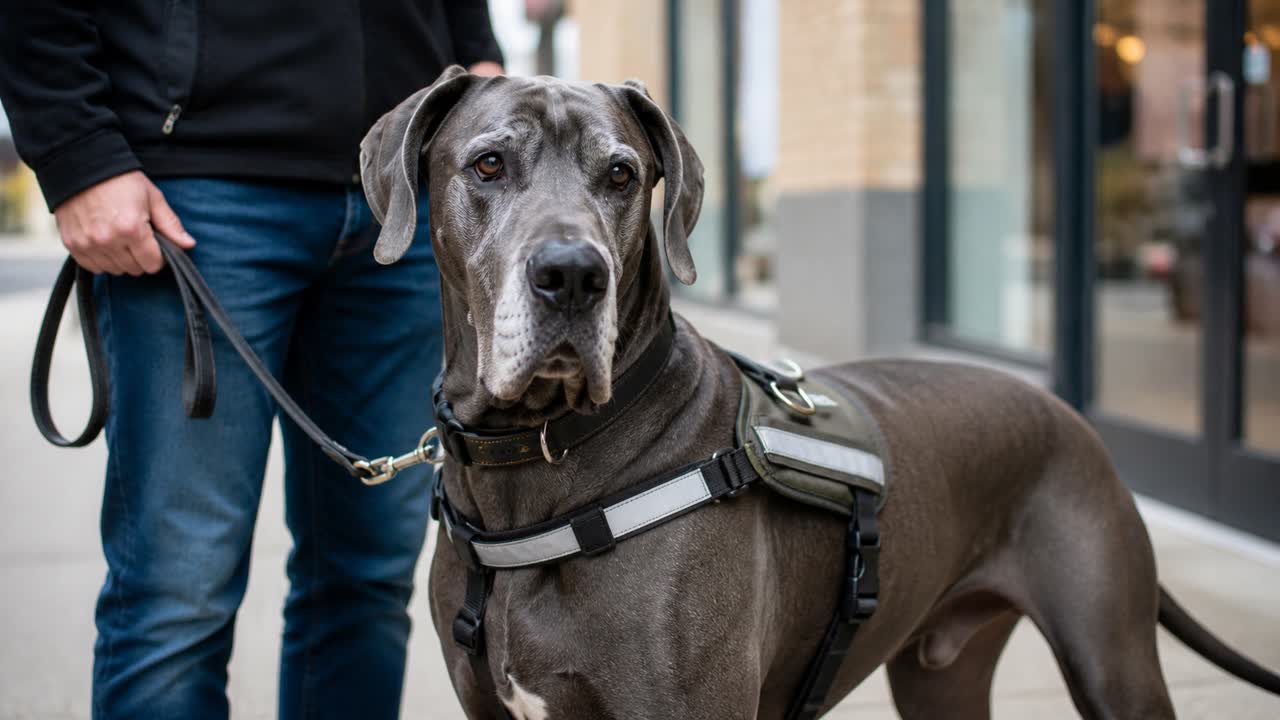
If you are handling a service dog in a food bank waiting line, the main question is usually practical: can you remain in line with your dog, and what should you do if staff or other guests are unsure?
This article is about public waiting areas of food banks, not housing, employment, or airline boarding. That scope matters because the questions, documentation, and reasons for refusal can look very different in those settings.
For most handlers, the safest approach is simple: keep the dog close, avoid blocking carts or walkways, be prepared to answer the two permitted questions when applicable, and focus on the dog’s behavior rather than trying to prove its status with extra gear or paperwork.
Quick Overview
- A service dog can usually accompany its handler in a public food bank waiting area if the dog is under control and task-trained.
- Staff generally should focus on behavior and access, not demand certificates, registration cards, or special vests.
- Lines can be tight, so position your dog beside or behind you without blocking traffic.
- If asked, keep your answer short and calm rather than turning the conversation into an argument.
1) Service Dog in a Food Bank Waiting Line: What Usually Matters Most
In a food bank line, the first issue is rarely whether a dog has a vest. It is whether the dog can wait quietly in a crowded, distracting space. If the food bank is serving the public, access decisions usually turn on the dog’s working role and behavior, not on purchased identification.
That means a handler should think operationally. Can your dog stay in a down-stay for several minutes? Can you move forward a few feet without tangling leashes, food bags, walkers, or strollers? Can your dog ignore dropped snacks and nearby children? Those are the practical issues most likely to matter in this setting.
If you want a broader refresher on access standards, reviewing the site’s public access guide can help you compare this scenario with other public-facing environments.
2) How to Stand in Line without Creating Friction
A food bank line can be slow, close together, and emotionally stressful for everyone there. Keep the leash short but loose, place the dog on the side away from foot traffic, and leave enough room for carts, volunteers, and other guests to pass safely.
If the line moves in small increments, guide the dog forward one short step at a time rather than allowing it to drift. Avoid extending the leash around boxes or table legs. If your dog is large, a back-of-leg tuck or a tight heel position often works better than asking the dog to lie broadside across the floor.
Health and cleanliness matter too. Basic grooming, clean paws, and reliable bathroom timing help in any public setting. The CDC’s general dog-health guidance supports the common-sense idea that a well-managed dog is easier for everyone around you to accommodate.
3) What Staff May Ask and How to Answer
If a staff member is unsure, keep the interaction brief and polite. In many public-access settings, staff may ask whether the dog is necessary because of a disability and what task or work the dog has been coached to perform.
A good script is calm and factual: “Yes, this is my service dog, and it is required because of my disability. It is trained to [perform a specific task].” If needed, add one short task description without oversharing medical details. The goal is clarity, not confrontation.
Some handlers like to keep organized records for their own peace of mind, especially when preparing for repeated public interactions. If you are building a folder of practical records, behavior notes, or training history, a structured service screening process may help you think through consistency and readiness. That is different from claiming a document is automatically required for access.
4) When a Food Bank can Still Say No
Even when a service dog is generally allowed, access is not unlimited. A food bank may still act if the dog is out of control and the handler does not correct it, if the dog is not housebroken, or if the dog creates a direct safety problem. Those rules are about conduct, not stigma.
Food distribution spaces can also have legitimate operational boundaries. In that case, the solution is often relocation within the same service area rather than total exclusion. A staff member might ask you to stand in a different part of the line, wait near a doorway, or use a side pickup point if that still provides meaningful access.
It helps to understand the broader framework in the site’s regulations, especially if you run into confusion between food-safety concerns and service-animal access rules.
5) Practical Records that can Help without Overreaching
For this kind of article, the useful discussion about documentation is not “Where do I buy proof?” It is “What helps me stay organized and reduce repeat friction?” A short task summary, vaccination records where relevant, a training log, emergency contact details, and a concise handler script can all be helpful to you even if they are not legally demanded at the door.
This is also a good place to separate public access from other contexts. Housing may involve disability-related documentation in some cases, and flights involve their own procedures and forms. Those are different lanes. If your question is really about airports rather than pantry lines, the site’s air travel rules are the more relevant starting point.
6) What to Do If You are Challenged in Line
If someone objects to your dog, start by lowering the temperature of the moment. Do not debate with other guests. Speak directly to staff, keep your dog settled, and ask whether there is a way to continue the line process without blocking anyone.
Take mental notes about what was said, who spoke to you, and whether the concern was about behavior, space, or a misunderstanding about documentation. If the dog was calm and the issue seemed to be a rule misunderstanding, a short follow-up message to management can be more effective than arguing in the room.
The strongest evidence in a conflict is usually not a badge or certificate. It is a calm dog, a concise explanation, and a handler who can show control in a crowded setting.
FAQs
Can a service dog enter a food bank?
Often yes, if the food bank is open to the public and the dog meets the service-animal standard for that setting. The dog still needs to be under control and not create a safety or sanitation problem.
What if there is a long delay in the food bank waiting lines?
Long waits make behavior more important. Use a practiced settle position, keep the leash short, and move in small increments with the line so the dog does not block the path or crowd other guests.
Can staff demand a certificate or ID card?
In many public-access situations, staff should not require a certificate, registration card, or special ID as a condition of entry. A handler may still choose to keep organized records for personal use, but that is different from a universal legal requirement.
Can the food bank separate me from other guests because I use a service dog?
They should not isolate you just because you use a service dog. However, they may suggest a different spot in the same service flow if that is needed to keep aisles clear or maintain safe operations.
Can a service dog be removed for barking or lunging?
Yes. A service dog can still be removed if it is out of control and the handler does not correct it, or if the dog is not housebroken. Access depends on behavior as well as status.
Sources
- ADA.gov: Service Animals
- ADA.gov: Service Animals FAQ
- CDC: Dogs
- CDC: Pet Travel Safety
- HUD: Information for Persons with Disabilities
Takeaway
A service dog in a food bank waiting line is usually less about showing paperwork and more about managing the moment well. If the dog is task-trained, under control, and positioned safely in the line, most of the real-world friction can be reduced before it turns into a dispute.
- Prioritize calm behavior, tight line management, and clear walkways.
- Use a short script if staff have questions, without overexplaining medical details.
- Keep practical records for your own organization, but do not assume certificates or IDs are universally required.