
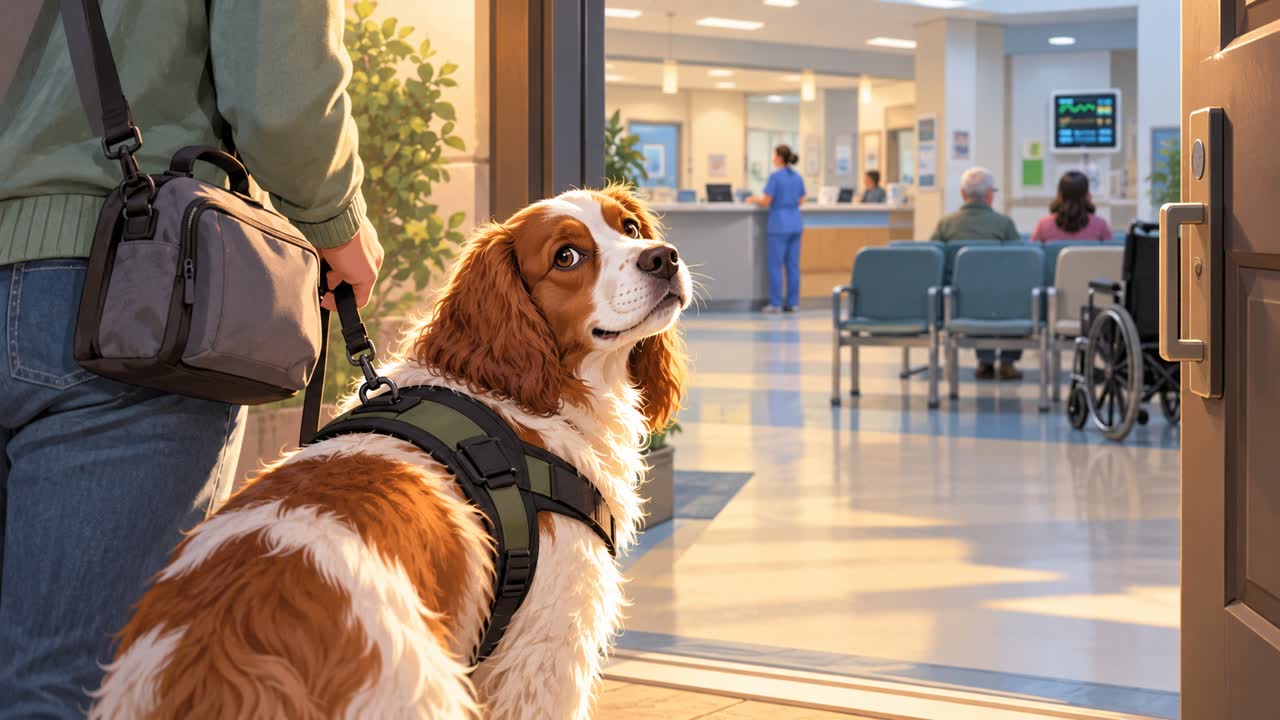
A service dog in an emergency room waiting room may need advance coordination when possible, but emergencies are unpredictable.
An emergency department differs from an ordinary public setting because patients may be acutely ill, waiting areas can become crowded, and staff may need to move quickly.
This guide provides general U.S. planning information. In a medical emergency, seek care first and follow the emergency department’s immediate safety instructions.
Quick Overview
- Tell triage staff about the service dog as soon as you arrive.
- Do not delay urgent medical care to arrange dog supplies or paperwork.
- Keep the dog close, quiet, clean, and clear of doors, wheelchairs, and staff routes.
- Ask where the dog can safely settle while waiting or during an examination.
1) Tell Staff about a Service Dog in an Emergency Room Waiting Room
At registration or triage, state plainly that you use a service dog because of a disability. If you have immediate symptoms that need attention, lead with those symptoms. Medical assessment should not wait while staff discusses the dog’s equipment, records, or routine.
Share only the practical information staff need. For example, explain that the dog must stay near you, that it performs a trained task during an episode, or that a trusted person may need to take control of the dog if you are moved for treatment.
Ask where the dog can settle without blocking seating, doors, wheelchairs, stretchers, supply carts, or emergency routes. The location may change as the waiting room fills, a patient needs a mobility space, or staff redirects people during an urgent event.
The Knowledge Center provides general background on trained service animals, but emergency-department staff must address the immediate conditions of the specific visit.
2) Keep the Dog Controlled in a Busy Waiting Area
Emergency-room waiting rooms can involve alarms, crying children, people in pain, wheelchairs, food, strong odors, cleaning activity, security staff, and unexpected movement. The dog should remain close to the handler, usually on the floor, without approaching other patients or investigating belongings.
When possible, choose a position along a wall or beside the handler’s chair. Avoid placing the dog in a doorway, directly beside a check-in desk, near a child’s play area, or in the path used by stretchers and wheelchairs.
Keep the leash and any task equipment short enough to prevent tangling or tripping. If the dog cannot settle safely because of pain, fatigue, illness, or stress, notify staff and use the backup plan.
A voluntary behavior check may help a handler identify skills to practice for crowded, noisy settings. It is not government approval and does not replace safe handling in an active emergency department.
3) Separate Waiting-Room Access from Treatment-Area Safety
A waiting room may be workable while a treatment bay, imaging room, procedure space, isolation area, or trauma response area requires a different plan. The hospital should identify the specific safety or clinical concern rather than relying only on a general no-animals policy.
For example, staff may need to keep the dog away from sterile supplies, medication preparation, emergency equipment, bodily-fluid cleanup, oxygen equipment, or a crowded resuscitation area. A restriction should relate to actual conditions, not assumptions about the dog’s breed, size, appearance, or lack of commercial identification.
Ask whether a safe nearby location, a support person, a different room arrangement, or another effective adjustment is available. If the handler must be separated from the dog for a procedure, do not leave the dog unattended in a hallway, parking lot, waiting room, or vehicle.
The public access guide explains general service-dog access principles, but clinical settings may require individualized planning around patient care, infection control, and emergency operations.
4) Prepare for Sudden Treatment or Hospital Admission
Emergency visits can change quickly. A patient may be called into an examination room, sent for imaging, admitted to the hospital, transferred by ambulance, or asked to undergo a procedure with little notice.
Keep that person’s name and phone number accessible. They should know where the dog’s leash, medication, food, water, identification information, and transportation supplies are located. If possible, tell them in advance which hospital you are using or how they can reach you.
Bring only essential items to the emergency department: effective control equipment, water if needed, waste bags, required medication, and a compact resting mat if it will not interfere with staff. A large bag of toys, food containers, or loose supplies can create clutter during a fast-moving visit.
If the patient arrives alone and cannot manage the dog, tell staff immediately. Hospital staff may be able to help coordinate contact with a listed support person, but they may not be able to provide ongoing dog care while treating an emergency.
5) Communicate Clearly without Oversharing Medical Details
When a dog’s purpose is not apparent, staff may generally ask whether the dog is required because of a disability and what functions the dog has been trained to perform. A brief, truthful answer is usually enough.
A patient does not need to explain a diagnosis, provide a full medical history, demonstrate a task, or produce a purchased certificate, registry entry, vest, or ID card simply to establish that the dog is a service animal.
If staff raise a concern, ask what specific condition is creating the issue and whether another workable arrangement is available. Keep the discussion focused on immediate safety: where the dog can settle, whether a support person is available, and whether the dog’s trained task is needed during care.
A voluntary service screening may help organize task and readiness information, but it is not medical documentation, government approval, or a substitute for the hospital’s own clinical process.
6) Address Allergies, Fear, and Infection-Control Concerns
Another patient’s allergy or fear does not automatically require excluding either the service-dog team or the other patient. Staff can often consider distance, different seating, a separate waiting area, adjusted routes, or other practical arrangements that reduce close contact.
The handler should keep the dog clean, housebroken, and under control. A dog that is ill, has open wounds, is not housebroken, or cannot remain controlled may create a legitimate health or safety issue that requires an immediate alternative plan.
Do not allow the dog to lick floors, approach spills, contact medical supplies, sniff patients, or enter staff-only areas. If the dog has been exposed to blood, bodily fluids, cleaning chemicals, or another hazardous substance, notify staff and seek appropriate veterinary advice as soon as practical.
Infection-control concerns should match the actual setting and circumstances. A calm, well-managed service dog in a waiting area presents a different operational question from a dog near a sterile procedure, isolation room, or active trauma response.
FAQs
Can I bring a service dog in an emergency room waiting room?
You can identify the dog to triage or registration staff and request a safe arrangement. The emergency department may need to adjust the plan based on crowding, clinical needs, and the areas involved in your care.
Should I call before going to the emergency room?
For a true emergency, seek care without delay. If you can call safely and doing it won’t delay treatment, you may ask about entry and support-person arrangements, but urgent symptoms come first.
Does my service dog need a vest or certificate?
No particular vest, purchased certificate, registry entry, or ID card generally determines service-dog access. The important issues are trained disability-related work, controlled behavior, and the conditions of the medical setting.
Can the dog come into a treatment room?
That depends on the room, clinical activity, safety requirements, and whether the dog can remain controlled without interfering with care. Ask staff to explain the available safe options.
What if I am admitted or transferred by ambulance?
Tell staff immediately and contact your designated emergency caregiver. Do not leave the dog unattended in the hospital, waiting room, parking lot, or vehicle.
Sources
- ADA.gov: Businesses Open to the Public
- ADA.gov: Service Animals
- ADA.gov: Service Animals FAQ
- CDC: Dogs
- CDC: Pet Travel Safety
- U.S. DOT: Service Animals
Takeaway
A safe emergency-room plan puts urgent care first while giving staff enough practical information to protect the handler, the service dog, and other patients.
- Tell triage staff about the dog and any immediate disability-related need.
- Keep the dog quiet, close, and clear of clinical routes and equipment.
- Maintain a reliable emergency-care plan for the dog if treatment escalates.