
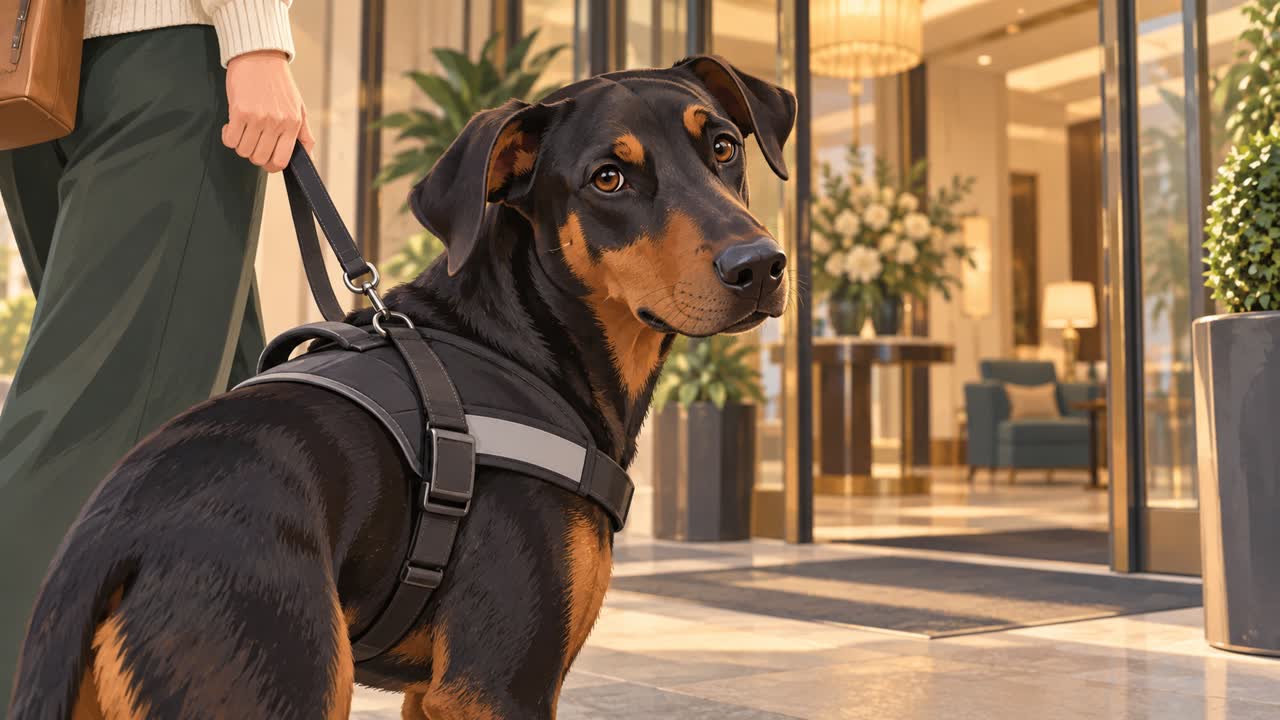
A service dog handler emergency card template gives responders and trusted helpers concise instructions if a handler becomes unconscious, disoriented, injured, or temporarily unable to communicate. It should explain whom to contact, how to keep the dog safe, and where the dog should go if separation is unavoidable.
This is a preparedness tool, not proof of public-access rights or service dog status. Under the Americans with Disabilities Act (ADA), businesses generally cannot require a certificate, registry card, or service dog ID as a condition of entry.
The best card is brief, readable, regularly updated, and backed by a more detailed emergency plan stored on the handler’s phone or with a trusted contact.
Quick Overview
- Carry one card in your wallet and attach a second copy to an emergency information pouch.
- Include two reliable contacts and a backup caregiver for the dog.
- Describe care instructions without disclosing more medical information than necessary.
- State the dog’s name, veterinarian, medications, feeding needs, and safe destination.
- Make clear that the card is an emergency aid, not legal certification.
- Review the information every six months and before significant travel.
1) What an Emergency Card Should Accomplish
An emergency card should help someone make safe decisions during the first few minutes of an incident. A responder may need to determine whether the dog can remain with the handler, who can take responsibility for the dog, and whether the animal has urgent medical or handling needs.
Keep the front of the card simple. A clear heading such as “Service Dog Emergency Information” is more useful than decorative language. The first lines should identify the dog and direct the reader to the handler’s emergency contacts.
A card does not replace a complete safety plan. Handlers preparing for unfamiliar settings can use the knowledge hub to review broader service-animal topics and identify issues that may need separate planning.
2) Service Dog Handler Emergency Card Template
You can copy the following template into a document and adjust it to fit a wallet-sized card. Avoid shrinking the text so much that it becomes difficult to read.
SERVICE DOG EMERGENCY INFORMATION
I am a person with a disability, and this is my task-trained service dog.
Handler: [Full name]
Dog: [Name, breed or description, color]
Emergency contact 1: [Name, relationship, phone]
Emergency contact 2: [Name, relationship, phone]
Dog caregiver: [Name and phone]
Veterinarian: [Clinic name and phone]
Important care information: [Medication, allergies, feeding schedule, handling needs]
If we must be separated: Please contact [caregiver] and take the dog to [agreed location]. Do not surrender the dog to an unidentified person.
Communication or medical note: [Brief information responders genuinely need]
This card supports emergency planning. It is not certification or proof of legal access rights.
Add only information that will help during an emergency. A detailed diagnosis is usually unnecessary. If a particular medical condition affects communication, transportation, or the dog’s work, describe the practical need in one short sentence.
3) Choose Information Responders can Use Quickly
Emergency contacts should be people who understand the handler’s plan and have agreed to help. Confirm that at least one person can collect the dog at any hour. A contact who lives far away may help coordinate decisions but should not be the only designated caregiver.
Useful dog-specific details may include medication timing, serious allergies, dietary restrictions, fear triggers, and safe handling instructions. Note whether the dog should remain in a harness during transport or whether removing particular gear is necessary for comfort or safety.
Keep longer records elsewhere. These might include vaccination records, local dog license information, veterinary history, a medication list, and a written task or training log. An optional service screening may help organize questions about the dog’s role and preparation, but it does not replace training or determine legal rights.
4) Plan for Separation without Assuming It will Happen
Keeping a service dog with the handler is generally preferable when circumstances allow. ADA guidance notes that service animals generally accompany handlers in ambulances, but another arrangement may be necessary if limited space would interfere with emergency treatment.
Your card should therefore cover both possibilities. Identify a caregiver, a veterinary clinic, and a safe temporary destination. Discuss the plan with each person before listing them. Consider giving the caregiver a key, feeding instructions, medication authorization, and information about the dog’s usual routine.
If the dog is transported separately, ask the caregiver to bring familiar equipment and verify where the handler has been taken. The card should never instruct an unprepared stranger to work the dog or attempt to make it perform disability-related tasks.
5) Keep Legal Identification Separate from Emergency Planning
An emergency card may help with organization and peace of mind, but it is not a government-issued service dog credential. For ordinary ADA public access, staff may ask two questions when the dog’s role is not apparent: whether the dog is required because of a disability and what work or task it has been trained to perform. Staff generally may not demand documentation or require a task demonstration.
The ADA also does not require a vest, special harness, certificate, or identification tag. Public access instead depends on the applicable legal definition and the individual dog’s training and conduct. The public access guide provides additional context for preparing for routine access conversations.
Local licensing and vaccination requirements that apply to dogs generally may still apply. Requirements can also differ in housing, employment, schools, healthcare settings, and transportation, so the emergency card should not make broad claims about access.
6) Adapt the Card for Travel and Changing Routines
Before a trip, add a temporary insert containing the destination address, lodging details, local emergency contact, and nearby veterinary clinic. Leave permanent information unchanged so the main card remains familiar and easy to scan.
Air travel is governed by the Air Carrier Access Act rather than the ADA rules used in most public accommodations. Airlines may require current U.S. Department of Transportation service-animal forms, so review the carrier’s process in advance. The air travel rules can help distinguish flight documentation from an optional personal emergency card.
International travel may involve animal-health documents, entry rules, vaccination timing, and return-to-U.S. requirements. Check government and airline instructions for the actual itinerary. Store paper and digital copies of relevant veterinary and travel records, but keep the emergency card limited to information someone needs immediately.
FAQs
Is a service dog handler emergency card template a legal requirement?
No. A personal emergency card is an optional preparedness tool. It is not required by the ADA and does not create public-access rights.
Should I put my diagnosis on the card?
Usually, only practical information needed for safe care or communication belongs on the card. Whether to include a diagnosis is a personal decision that can be discussed with a qualified clinician.
Where should I carry the card?
Keep a copy in a visible wallet slot. A second copy may go in an emergency pouch, travel folder, or accessible phone file. Avoid attaching sensitive medical information where anyone can casually read it.
Can the card ask responders not to separate me from my dog?
Yes, it can state that remaining together is preferred. It should also name a backup caregiver because treatment needs, safety concerns, or limited ambulance space may make temporary separation necessary.
What if my dog takes medication?
List the medication name, dose, schedule, prescribing veterinarian, and any time-sensitive warning. Keep an updated supply available for the designated caregiver when practical.
How often should I update the card?
Review it at least every six months and whenever a phone number, veterinarian, medication, caregiver, address, or travel plan changes. Replace every stored copy at the same time.
Does the card replace airline forms?
No. A personal emergency card does not replace forms or animal-health records required for a particular flight or destination.
Sources
- U.S. DOT: Service Animals
- CDC Yellow Book: Traveling with Pets and Service Animals
- CDC: Pet Travel Safety
- ADA.gov: Service Animals FAQ
- ADA.gov: Service Animals
Takeaway
A useful emergency card gives responders clear, limited instructions while protecting the handler’s privacy and keeping legal access questions separate from emergency preparation.
- Name two contacts and an informed backup caregiver.
- Include only actionable medical, veterinary, and handling details.
- Update every copy when routines, contacts, medications, or travel plans change.