
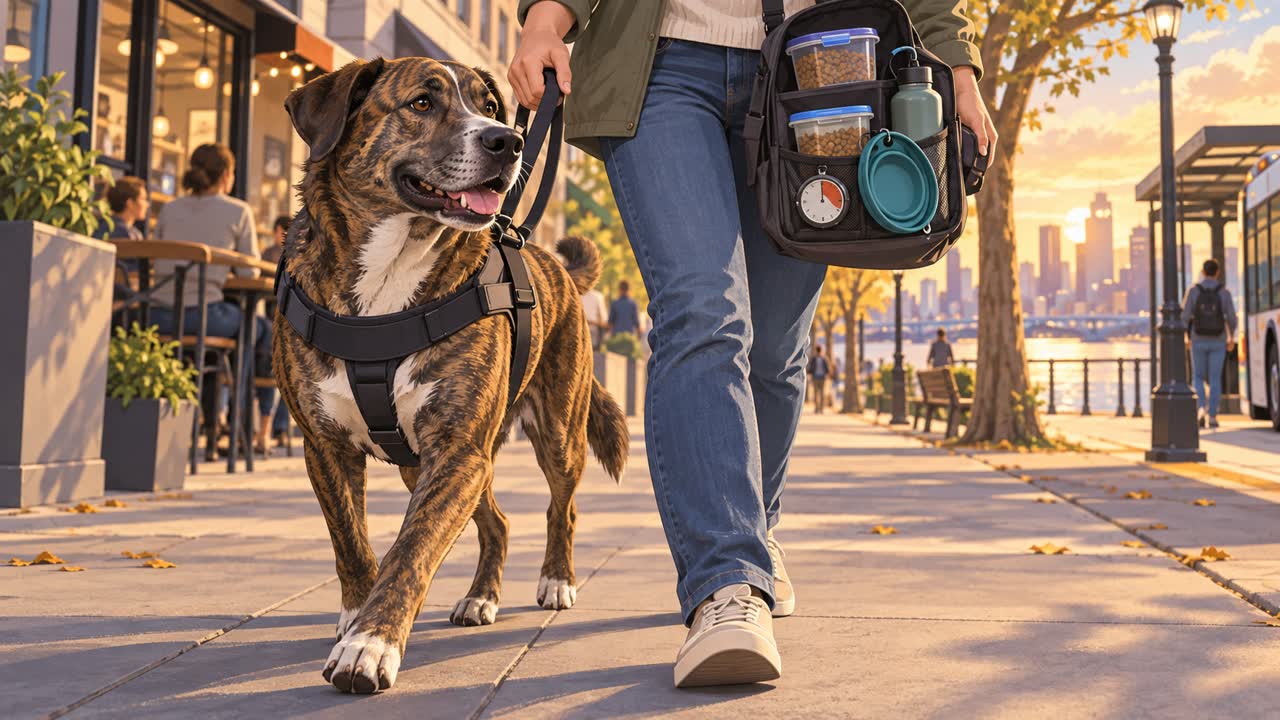
A practical service dog feeding schedule on long outings usually keeps the dog close to its normal meal routine while allowing for travel time, working demands, relief breaks, weather, and any veterinary instructions. Avoid making large diet or meal-timing changes solely for convenience.
Food planning is different from public-access planning. A service dog may generally accompany its handler in covered public places, but restaurants, venues, and transportation providers are not ordinarily responsible for feeding, watering, or supervising the dog.
This guide offers an outing-day framework rather than a universal feeding prescription. A veterinarian should set the plan for puppies, older dogs, dogs taking medication, and dogs with diabetes, digestive conditions, food allergies, or prescription diets.
Quick Overview
- Start with your dog’s established feeding schedule and your veterinarian’s guidance.
- Measure meals and task rewards before leaving home.
- Plan food, water, rest, and relief stops around the itinerary.
- Avoid feeding a large meal immediately before intense activity or stressful travel.
- Protect food from heat, moisture, pests, and contamination.
1) Set a Service Dog Feeding Schedule on Long Outings
Write the day’s timeline before packing food. Include departure, transportation, appointments, work periods, planned breaks, the return trip, and the expected arrival home. Mark the dog’s usual meals first, then decide whether they can remain unchanged.
For many dogs, the least disruptive plan is a normal breakfast before departure and a normal evening meal after returning, as long as that timing matches the dog’s established routine and health needs. An outing that crosses a regular mealtime may require a measured meal in a quiet location or a veterinarian-approved adjustment.
Avoid skipping food for an entire day merely to reduce relief needs. Likewise, do not add an extra full meal because the dog worked longer than usual unless the veterinarian or established nutrition plan supports it. The Knowledge Center offers broader handling information.
2) Measure Meals, Treats, and Task Rewards
Pre-measure each meal into a sealed, labeled container. Pack a small backup portion in case the outing is delayed, while keeping the dog’s total daily intake in mind. Bring the regular food rather than relying on whatever may be available at the destination.
Training treats and task rewards count toward daily intake. If the dog will receive frequent rewards in a demanding environment, set aside part of the usual ration for that purpose or ask the veterinarian how to adjust the meal safely. This helps prevent accidental overfeeding.
Use familiar treats that are easy to handle and unlikely to upset the dog’s stomach. Avoid rich table food, unfamiliar samples, shared buffet items, and food offered by strangers. A voluntary service check may help organize general task and readiness information, but it does not replace an individualized nutrition plan.
3) Coordinate Water, Food, and Relief Breaks
Offer clean water at sensible intervals and more often during heat, physical activity, or long periods outdoors. Water needs vary with body size, diet, health, temperature, and exertion, so ask a veterinarian for an appropriate planning amount rather than relying on a single formula.
Pack potable water when the destination’s supply is uncertain. Bring a clean portable bowl and avoid letting the dog drink from puddles, decorative fountains, standing water, or shared bowls that may be contaminated.
Plan a relief opportunity before entering a long meeting, performance, exam, or ticketed event. After a meal, allow adequate time for digestion and the dog’s normal relief pattern. Keep waste bags accessible rather than buried beneath other supplies.
Do not deliberately withhold needed water to avoid breaks. Reduced access to water can create health and performance concerns, especially in warm weather.
4) Choose a Safe Place and Time to Feed
Feed the dog in a calm location away from vehicle traffic, crowded entrances, food-service lines, unfamiliar animals, and people likely to interrupt. The dog should be able to eat without blocking an aisle or interfering with business operations.
At a restaurant, the dog may generally remain in customer areas under applicable public access rules, but the business is not required to provide food or a bowl. Keep the dog away from tables, chairs, serving surfaces, and employee-only food-preparation areas.
Use a washable bowl or food-safe container. Clean up dropped food promptly and seal leftovers. Perishable food should not remain unrefrigerated beyond safe handling limits; when refrigeration cannot be maintained, use an appropriate alternative approved for the dog beforehand.
5) Adjust for Travel, Medication, and Health Needs
For air travel, review current flight rules and confirm the itinerary with the airline. Public-access rights do not eliminate the need to comply with carrier procedures or destination requirements.
If medication must be given with food, pack the medicine in its original labeled container and carry written instructions. Confirm timing with the veterinarian before shifting a meal across time zones or delaying it for an event.
Dogs with diabetes, gastrointestinal disease, kidney or heart conditions, food allergies, or prescription diets need a veterinary plan for delayed meals, refused food, vomiting, or missed medication. Carry the clinic’s contact information and know where emergency veterinary care is available along the route.
6) Monitor the Dog and Review the Plan Afterward
Watch the whole dog, not just the food bowl. Slower responses, unusual panting, repeated lip licking, restlessness, vomiting, diarrhea, weakness, abdominal swelling, collapse, or refusal to continue working may signal that the outing should end and you need veterinary advice.
The handler remains responsible for deciding whether the dog is fit to continue. A busy schedule is not a reason to ignore fatigue, heat, illness, or digestive distress. Move to a safe place, stop work, and seek professional help when symptoms are urgent.
After returning home, record the actual meal times, treats, water breaks, stool changes, and any difficulty settling or eating. These notes help refine future outings. If the dog repeatedly struggles with the schedule, discuss the pattern with a veterinarian rather than repeatedly improvising.
For related guidance, see our Knowledge Center, service check, public access rules, and flight rules.
FAQs
What is a good service dog feeding schedule on long outings?
The best schedule usually stays close to the dog’s normal routine. Plan any change around the itinerary, the dog’s health, medication timing, activity level, and veterinary advice.
Should I feed my service dog before leaving?
Often, yes, if that matches the dog’s regular schedule. Consider travel sickness, planned activity, and veterinary guidance, and allow time for digestion and a relief break.
Can I skip a meal to reduce bathroom breaks?
Do not skip or substantially delay meals without considering the dog’s established routine and health needs. Dogs taking medication or managing medical conditions may be particularly sensitive to schedule changes.
How should I handle training treats?
Measure them before departure and include them in the dog’s total daily intake. You may reserve part of the normal ration for task rewards when appropriate.
Does a restaurant have to provide food or water for the dog?
No. Businesses generally are not responsible for feeding or caring for a service dog. The handler should bring appropriate food, water, and bowls.
What if my dog refuses food during the outing?
Move to a quiet location and assess stress, heat, illness, and water access. Do not substitute unfamiliar rich foods. Contact a veterinarian if refusal continues or occurs with concerning symptoms.
Should I change the schedule before a flight?
Discuss significant changes with a veterinarian, especially for medication-dependent dogs. Account for check-in, delays, time zones, relief access, and the dog’s history of motion sickness.
Sources
- ADA.gov: Service Animals
- ADA.gov: Service Animals FAQ
- CDC: Dogs
- CDC: Pet Travel Safety
- HUD: Information for Persons with Disabilities
Takeaway
A successful long-outing plan preserves the dog’s familiar routine while accounting for rewards, hydration, relief breaks, travel, and health needs.
- Measure food and treats before departure.
- Schedule clean water, quiet meals, rest, and relief opportunities.
- End the outing and seek veterinary help when concerning symptoms appear.