
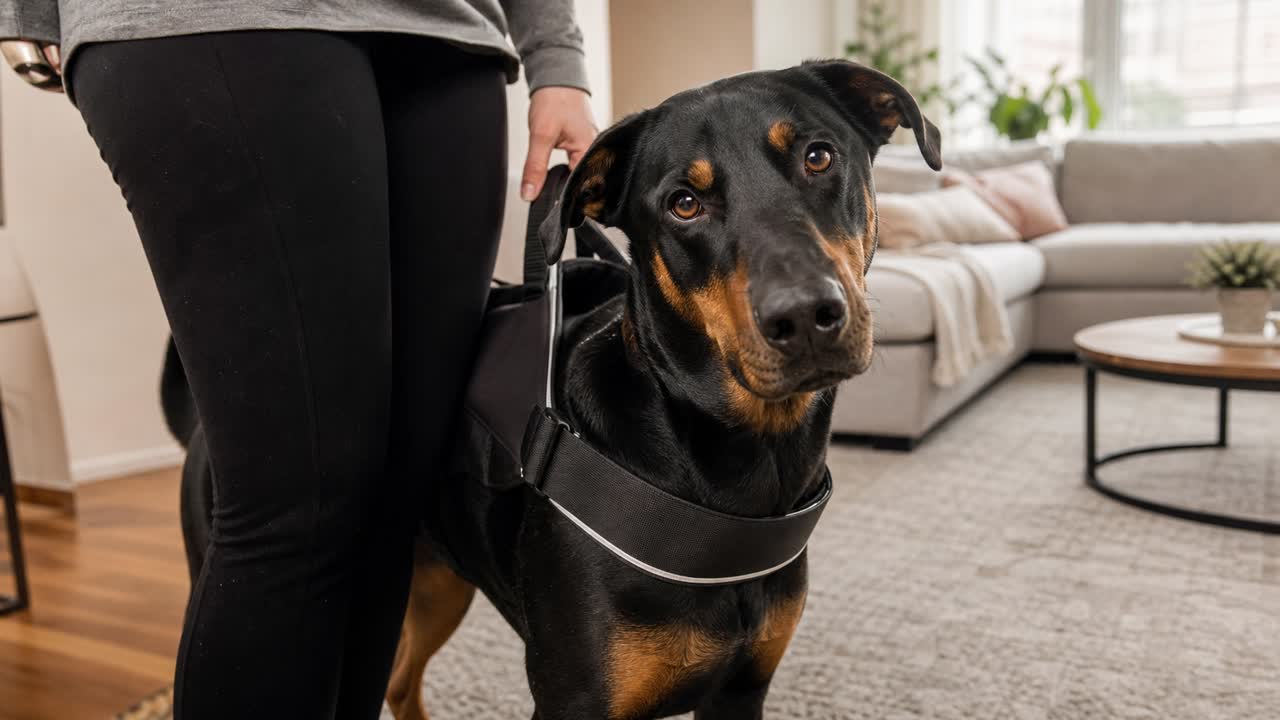
Good service dog etiquette in an apartment elevator is mostly about reducing friction in a small shared space. The goal is not to prove anything with gear or paperwork. It is to move through the elevator calmly, keep your dog under control, and make everyday interactions easier for you, your neighbors, and building staff.
This topic is narrower than general housing rights. A service dog may be allowed in housing under different legal frameworks than a pet, but elevator etiquette is about practical behavior: entering without crowding, giving people room, and handling awkward moments without escalation.
In real life, the best “proof” is a dog that is quiet, responsive, and safely positioned. If you want a broader refresher on service-animal basics, the knowledge hub covers the bigger picture, while this article focuses on apartment-building elevator situations.
Quick Overview
- Keep your dog close, quiet, and out of the doorway before the elevator arrives.
- Let exiting passengers clear the elevator before you step in.
- Use a short leash and place your dog in a consistent spot, usually at your side or slightly behind you.
- Do not allow sniffing, blocking, jumping, or greeting unless clearly invited.
1) What does Service Dog Etiquette in an Apartment Elevator Look Like in Practice
In a typical apartment elevator, good etiquette means your dog stays under control from the hallway to the destination floor. That includes waiting without lunging toward the door, allowing people to exit first, and entering without cutting others off.
Once inside, keep your dog tucked close to your body rather than stretched out across the floor. Many handlers find it easiest to cue a heel, side sit, or quiet stand facing the door. This helps prevent leash tangles and reduces the chance that someone steps on a paw or tail.
Short, predictable routines matter more than appearances. Optional identification may help some interactions run more smoothly, but calm behavior is usually what people notice first. If you want a quick readiness gut-check for daily handling habits, a service check can be a useful organizing tool.
2) How to Enter and Exit without Blocking People
Most elevator problems start at the threshold. Stand to one side while waiting so the path stays clear. When the doors open, pause a beat and let others come out before moving forward. This is especially important in narrow apartment hallways where a person may be managing groceries, a cart, or a mobility device.
If the car is crowded, it is often better etiquette to wait for the next elevator rather than squeeze in. That is not an admission that your dog does not belong there. It is simply the safest choice when space is limited, and body contact is likely.
Exiting should be just as controlled. Step out first or cue your dog to move with you in one smooth line. Avoid letting the dog surge ahead into the hall, where another resident or dog may be waiting out of sight.
3) Positioning Your Dog Inside the Elevator
Where your dog stands matters. In most cases, the easiest setup is at your side, facing the door, with the leash short enough to avoid drifting but loose enough to stay comfortable. Large dogs may fit best slightly behind your leg. Small dogs should remain on the floor unless a disability-related handling need requires another arrangement.
Try not to let your dog face other passengers up close. Even a friendly stare can make people uneasy in a confined space. Your apartment elevator is not the place for greetings, sniffing, or social practice.
Consistent public behavior helps here. The same body-positioning skills that matter in lobbies, hallways, and building entrances also apply to elevators, which is why many handlers review a broader public-access guide as part of routine maintenance training.
4) Handling Neighbors, Children, and Other Dogs
Shared housing creates repeated contact with the same people, so small habits add up. If a child reaches for your dog, a short, polite line works better than a lecture: “Please give her room, she’s working.” If a neighbor seems nervous, create space rather than forcing reassurance.
Other dogs can be the hardest variable to control. Even a solid service dog may have a more difficult moment when a pet rushes the doors on a flex leash. If you see another dog approaching and the hallway is tight, waiting for the next elevator is often the cleanest answer.
Keep the interaction boring. No nose-to-nose greetings, no leash weaving, and no pressure to “show” that your dog is friendly. Elevator etiquette is about neutrality, not social success.
5) Building Staff, Documentation, and Practical Records
In apartment housing, questions usually come from managers, concierge staff, maintenance workers, or neighbors seeking to understand the building’s expectations. For elevator etiquette, the strongest response is a calm dog and a calm handler. Still, practical records can help you stay organized if building conversations come up later.
Useful records may include vaccination paperwork, training notes, incident-free behavior logs, and a simple list of trained tasks for your own reference. If a housing-related disability accommodation discussion is involved, documentation may need to come from a qualified clinician or another appropriate source, depending on the situation. That is different from claiming a certificate or ID is legally required.
Some handlers like using a tracking app to keep dates, notes, and routines in one place. The point is not to collect flashy credentials. It is to make communication about ordinary housing easier if something comes up.
6) When Etiquette Becomes a Safety or Access Issue
Elevator etiquette stops being just a courtesy issue when behavior becomes unsafe. A service dog can still be asked to leave a space or be removed from a situation if the dog is out of control and the handler does not take effective action. Repeated barking, lunging, blocking, or toileting problems should be addressed as training issues rather than brushed off as neighbor complaints.
If a building has recurring friction, clearly separate the issues. Housing access rules are one question. Daily elevator behavior is another. A resident may not have the right to demand personal medical details, but building management may still expect safe, non-disruptive conduct in shared spaces.
That distinction protects everyone. You do not need to turn a routine elevator ride into a rights debate every time someone looks uncertain. Good handling usually solves the problem faster.
FAQs
Do service dogs have to follow apartment elevator etiquette rules?
Yes. A service dog may have access rights, but handlers are still responsible for safe, controlled behavior in shared spaces, such as elevators, hallways, and lobbies.
What is the best position for a service dog in an elevator?
Usually at your side or slightly behind you, with a short leash and enough space to avoid blocking the doorway. The exact position can vary based on your disability needs and the dog’s size.
Should I let people pet my dog in the elevator?
Usually no. Elevators are tight, fast-moving spaces. It is better to keep the ride brief and neutral unless you intentionally choose to allow interaction.
What if another resident brings a reactive pet into the elevator?
If possible, step aside and wait for the next car. Avoid nose-to-nose contact and do not force both dogs into a cramped space just to prove your dog can handle it.
Do I need a vest, ID, or certificate for apartment elevators?
Not typically. Those items may help with organization or smoother day-to-day interactions for some handlers, but they generally do not determine whether a dog is functioning appropriately in that setting.
Can a landlord care about elevator behavior even if the dog is allowed in housing?
Yes. Housing access and behavior standards are related but not identical. A landlord or building manager can still expect safe conduct in common areas.
Sources
Takeaway
The best apartment elevator etiquette for a service dog is simple: keep the ride quiet, controlled, and predictable. In a small shared space, polished behavior usually matters more than explanations.
- Wait to the side, let others exit first, and avoid crowding the doorway.
- Keep your dog close and neutral inside the elevator, with no greeting or blocking.
- Use calm records and practical communication if housing questions come up later.