
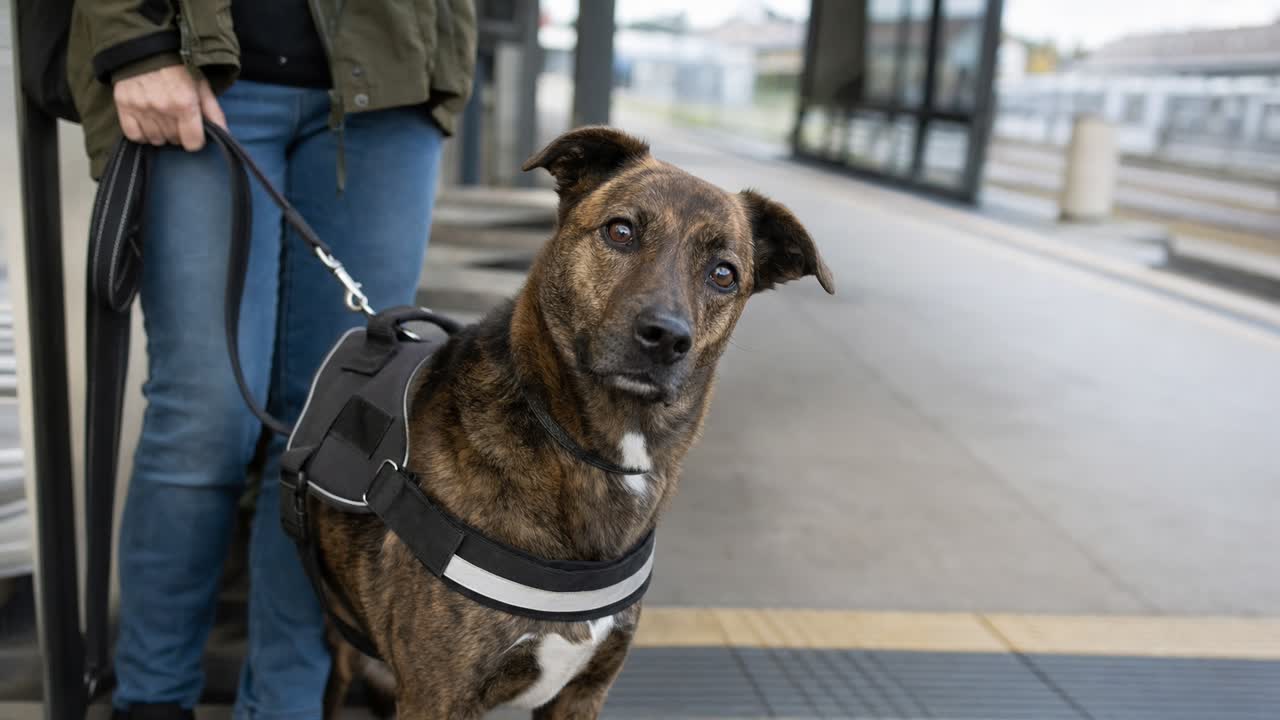
If you use a service dog at pharmacy pickup counters, the short answer is usually yes: a pharmacy’s customer-facing counter is generally treated like other public areas of a business under the Americans with Disabilities Act.
The main limits are practical ones, not paperwork ones. The dog still has to stay under control, housebroken, and out of the way of other customers. Access can also be narrower in employee-only or sterile work areas behind the counter, which is different from the customer side of the pharmacy.
This article focuses on pharmacy pickup interactions in the United States, not on housing, travel, or online prescription delivery. If you want a broader baseline first, the knowledge hub and these public access rules help explain the larger framework.
Quick Overview
- A service dog can usually accompany you to pharmacy pickup counters that are open to the public.
- Staff generally may ask only whether the dog is required because of a disability and what work or task the dog has been trained to perform.
- Employees should not require a vest, ID card, certificate, or registration just to let the dog stay in the public area.
- The dog must remain under control, close to you, and not interfere with lines, carts, or other customers.
1) What the Rule Usually is at Pharmacy Counters
In most cases, a pharmacy pickup counter is part of a public accommodation. That means a handler with a qualifying service dog is generally allowed to approach the counter, wait for a prescription, ask questions, and complete payment just like any other customer.
The fact that a business handles medications does not automatically turn the customer side of the counter into a no-dog zone. What matters is whether the dog is in the same public area where other customers stand and whether the dog is behaving appropriately in that setting.
If you are unsure whether your dog’s training and public behavior are ready for busy retail spaces, a basic service check can help you think through task work, control, and real-world handling before a stressful interaction happens.
2) Where Access can Stop or Narrow
The customer side of the pharmacy is the key point. Access does not usually extend to employee-only areas behind the counter, medication storage areas, or spaces where the public is not normally allowed. That distinction helps keep this topic separate from broader questions about hospitals, clean rooms, or treatment spaces.
If a pharmacist needs to step away into a restricted work area to retrieve or verify medication, that does not usually mean your service dog can follow.
That line between public space and restricted space comes up in other settings too. If you are comparing pharmacy access with landlord or residence issues, keep those rules separate and use the relevant housing guidance instead of assuming the same standards apply everywhere.
3) What Pharmacy Staff is Allowed to Ask
If the need for the dog is not obvious, staff can generally ask two questions: whether the dog is required because of a disability, and what functions the dog has been trained to perform.
This matters at pickup counters because the setting already involves privacy around medications. You do not need to explain your full condition in front of a line of strangers. A short, calm response is usually enough, such as explaining that the dog performs a trained task related to your disability.
Some handlers still carry organized records for their own peace of mind, especially when they deal with repeated misunderstandings. That can be helpful as a personal organization tool, but it is not the same thing as saying a certificate or registry is legally required for routine public access.
4) How to Reduce Friction While Waiting in Line
Pharmacy counters can be tight, noisy, and full of distractions. The best way to avoid problems is to keep the dog close, quiet, and out of traffic flow. A solid tuck, down-stay, or close heel is often more useful here than any piece of gear.
It also helps to think about the setting before you arrive. If your dog is large, angle your body so the dog has a protected spot beside or slightly behind you rather than stretched across the aisle.
Handlers who review their everyday access expectations ahead of time often have easier conversations in stores. For a quick refresher, these public access rules are often the most relevant starting point for pharmacy scenarios.
5) Hygiene, Safety, and Behavior Still Matter
Pharmacies can maintain ordinary health and safety rules as long as they are applied lawfully. This means they can respond if a dog is barking repeatedly, jumping on the counter, sniffing merchandise, or creating a sanitation problem.
Good grooming, reliable house training, and calm public behavior matter a lot in a pharmacy environment. So does keeping paws, nose, and gear away from food displays, open merchandise, and the counter edge where staff is processing items.
From a practical standpoint, this is one of those situations where behavior is the strongest proof that the team belongs there. A quiet dog that stays focused on its handler usually answers most concerns before they become an argument.
6) What to Do If a Problem Happens at the Counter
If staff challenge you, keep the conversation narrow and practical. You can calmly explain that the dog is a service dog required because of a disability and describe the trained task in simple terms.
If the concern is really about behavior, address that honestly. A pharmacy may be within its rights to remove a dog that is out of control or not housebroken, even if the dog is otherwise a service animal.
For repeated friction, it can help to keep a short incident log with date, location, what was said, and whether the issue involved access, privacy, or behavior. That kind of record is often more useful than collecting unnecessary gear, because it helps you spot patterns and prepare for future conversations.
For related guidance, see our knowledge hub, service check, public access rules, and housing guidance.
FAQs
Can a pharmacy refuse a service dog at the pickup counter?
Usually not if the pickup counter is open to the public and the dog is under control. A pharmacy may still remove a dog that is out of control, not housebroken, or trying to enter restricted staff areas.
Is a service dog at pharmacy pickup counters allowed even if medications are involved?
Usually yes on the customer side of the counter. Handling medications does not automatically eliminate access in public-facing areas, but staff-only or sterile work zones can be treated differently.
Do I need to show a certificate or ID card to pick up a prescription with my service dog?
No special certificate, registration, or ID is usually required just for routine public access. Some handlers carry personal records for organization, but access generally depends more on the ADA standard and the dog’s behavior than on paperwork.
Can staff ask what my disability is?
They generally should not require you to disclose your diagnosis at the counter. If the disability is not obvious, staff can usually ask only whether the dog is required because of a disability and what task it performs.
What if my dog is large and the pharmacy line is crowded?
You are still expected to keep the dog under control and out of the way. Choosing a quiet time, using a tight heel or tuck, and avoiding aisle blockage can make the interaction smoother for everyone.
Sources
- ADA.gov: Service Animals
- ADA.gov: Service Animals FAQ
- CDC: Dogs
- CDC: Pet Travel Safety
- HUD: Information for Persons with Disabilities
Takeaway
A service dog is usually allowed at a pharmacy pickup counter in the United States when the counter is part of the public customer area. The strongest way to reduce friction is to pair a clear, calm explanation with reliable public behavior from the dog.
- Public-side pickup counters are usually treated differently from behind-the-counter staff areas.
- Staff generally may ask limited access questions, but they usually cannot require a certificate or diagnosis disclosure.
- Control, hygiene, and steady handling matter most in a tight retail setting like a pharmacy line.