
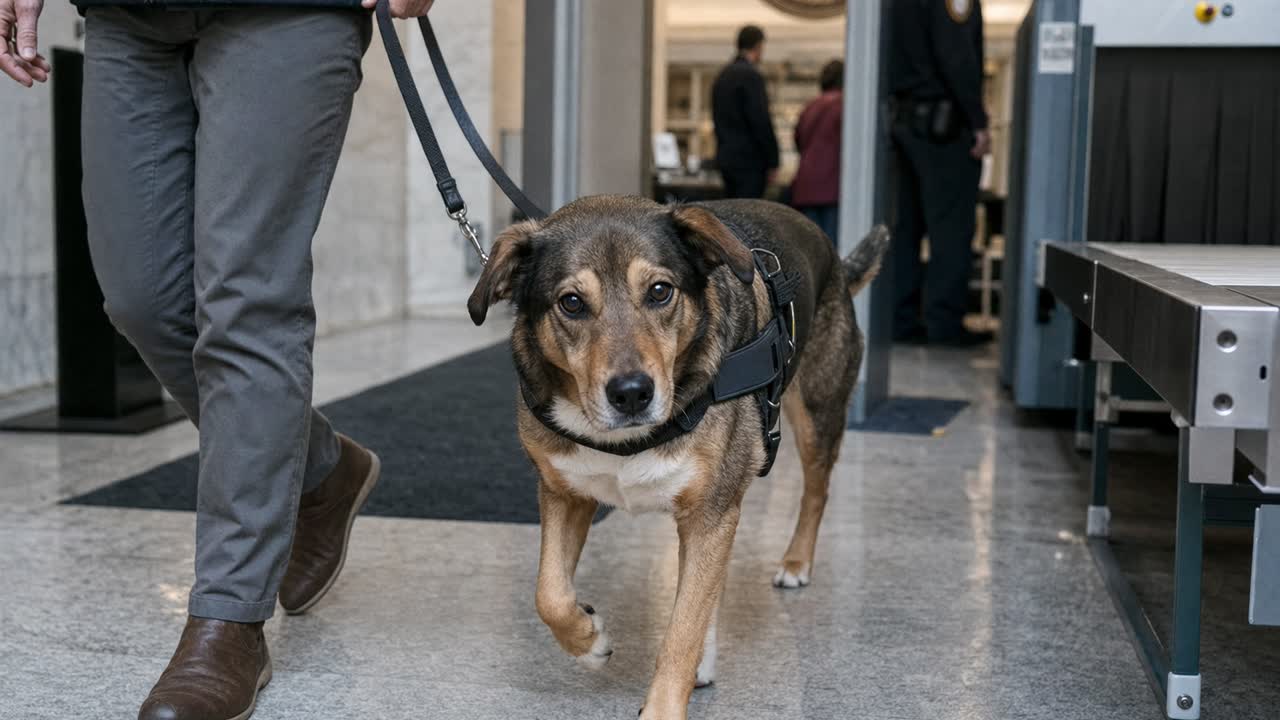
If you are wondering whether a service dog can go to a courthouse, the practical answer is usually yes. In the United States, a trained service dog can generally accompany a person with a disability into public areas of a courthouse, as long as the dog is under control and not creating a direct disruption or safety problem.
Courthouses are a little different from stores, restaurants, or office lobbies because they often have security screening, long waits, elevators, crowded hallways, and strict staff instructions. So this topic is broader than jury duty, courtroom testimony, or entrance screening alone. It is about overall courthouse access from the moment you arrive until you leave.
That also means the most useful preparation is practical. Calm behavior, a clear task-based explanation if needed, and a plan for waiting, relief breaks, and security lines usually matter more than carrying extra accessories or trying to prove legitimacy with paperwork no one is required to demand.
Quick Overview
- A service dog is usually allowed in public-facing courthouse spaces when the handler has a disability, and the dog is trained to do work or perform tasks.
- Courthouse staff may focus on access, safety, and building operations rather than labels, cards, or appearance.
- Security screening can add delay, so arrive early and expect verbal instructions.
- A courthouse can intervene if a dog is out of control, not housebroken, or creating a real disruption.
1) What Courthouse Access Usually Means
A courthouse is a government building that often includes public counters, waiting areas, hallways, elevators, courtrooms, and security checkpoints. In general, if members of the public are allowed in a space, a legitimate service dog should usually be able to accompany its handler there as well, assuming the dog is behaving appropriately.
This does not mean every moment will feel easy. That is why this topic overlaps with access law but also with practical readiness. A dog that can settle quietly under a bench or chair is much easier to accommodate than a dog that paces, vocalizes, or keeps checking strangers.
If you want a broader starting point before focusing on court-specific logistics, the Knowledge Center is the natural hub for related service-animal topics.
2) What Staff can Usually Ask
In many public-access situations, staff may ask limited questions when the need for the dog is not obvious. The usual focus is whether the dog is required because of a disability and what work or task the dog has been trained to perform. A courthouse is still a public-access environment, so the same basic framework generally applies.
What usually helps most is a short, calm answer. You do not need to turn the conversation into a debate about your medical history, and staff generally should not need a certificate or registration to understand that a working dog is accompanying you.
Some handlers still like to keep organized records for their own peace of mind, especially if they regularly visit formal settings. That can include training notes, a task list, or results from a service screening if they want a structured snapshot of readiness.
3) Security Screening is Often the Hardest Part
For many people, courthouse access becomes stressful at the entrance. Metal detectors, bag checks, lines, and officer instructions can all happen quickly. Even when access itself is not in dispute, the process may still feel more controlled than entering a typical public building.
That is why it helps to arrive early and expect coordination. Keep your dog close, minimize loose gear, and be ready to follow instructions about how to move through the checkpoint. If your dog wears equipment with metal components, that may affect the screening process, but it does not automatically mean access is denied.
The main issue here is cooperation and safety. Officers are usually trying to keep the building secure and the line moving. If your dog can remain steady during pauses, close passes, and brief handling changes, the experience tends to go much more smoothly.
4) Behavior Matters More than Appearance
Courthouses are not very forgiving environments for poor public behavior. Barking, lunging, wandering, sniffing people, blocking traffic paths, or repeatedly breaking position can create legitimate problems in a building where order matters.
That is one reason calm behavior often carries more weight than optional gear. Recognition items can sometimes make everyday interactions smoother, but they do not replace real working manners. In a courthouse, the strongest signal is usually a dog that stays quiet, responsive, and unobtrusive even when the building feels tense.
If you are unsure whether your dog is ready for long waits, tight spaces, and formal indoor movement, a behavior screening can be a reasonable way to identify weak spots before an important court date. That kind of preparation is often more helpful than chasing paperwork.
5) Planning for a Long Court Day
Some courthouse visits take twenty minutes. Others turn into half-day or full-day events. Hearings get delayed, calendars run long, and waiting rooms can stay crowded. Plan for water, waste bags, medication if relevant, and realistic relief timing.
It also helps to think through where your dog will rest when you are seated for a long period. If you know you may need an accommodation beyond normal access, such as extra space related to mobility equipment or seating layout, contacting the court ahead of time may reduce stress.
Keep the goal simple: keep the day about your appointment, hearing, or obligation rather than turning into a side issue about dog handling.
6) When Access Problems can Still Happen
Even when the general rule supports access, problems can still come up. A staff member may be unfamiliar with service-animal rules, a security officer may focus too heavily on documentation, or the dog may struggle in a crowded environment. The best response is usually calm and practical.
Restate that the dog is a service dog required because of a disability and briefly identify the trained task if asked. If the issue is operational, such as where to sit or how to clear screening, work on the immediate problem first.
Courthouse access is usually strongest when rights and readiness meet in the same moment. A clear handler and a well-prepared dog tend to reduce conflict before it starts.
For related guidance, see our Knowledge Center, service screening, behavior screening, and public access rules.
FAQs
Can a service dog go to a courthouse in the United States?
Usually, yes. A trained service dog can generally accompany a disabled handler into public-facing courthouse areas as long as the dog is under control and not causing a direct problem.
Can courthouse security ask for certification or registration?
They may ask limited questions about whether the dog is required because of a disability and what tasks it performs. In most situations, extra certificates or registry papers are not the main thing that determines access.
Can a courthouse remove a service dog?
Yes, if the dog is out of control, not housebroken, or creating a genuine disruption that the handler does not correct, the courthouse may require the dog to leave.
Does a service dog have to behave differently in a courthouse than in a store?
The legal framework is similar, but the setting is more formal and less forgiving. Quiet settling, close leash control, and calm behavior during long waits matter more in court than in many casual public places.
Should I call ahead before bringing my service dog to court?
If you expect a long hearing, complicated seating needs, or a specific accommodation issue, calling ahead can be helpful. It may reduce confusion on the day of your visit.
Sources
- ADA.gov: Service Animals
- ADA.gov: Service Animals FAQ
- CDC: Dogs
- CDC: Pet Travel Safety
- HUD: Information for Persons with Disabilities
Takeaway
If you are asking whether a service dog can go to a courthouse, the answer is usually yes, but courthouse access works best when the dog is prepared for screening, quiet waiting, and close control in a formal setting.
- Public-facing courthouse areas generally should allow a trained service dog accompanying a disabled handler.
- Security and logistics often create more friction than the access rule itself.
- Calm behavior, planning, and clear communication usually matter more than optional paperwork.