
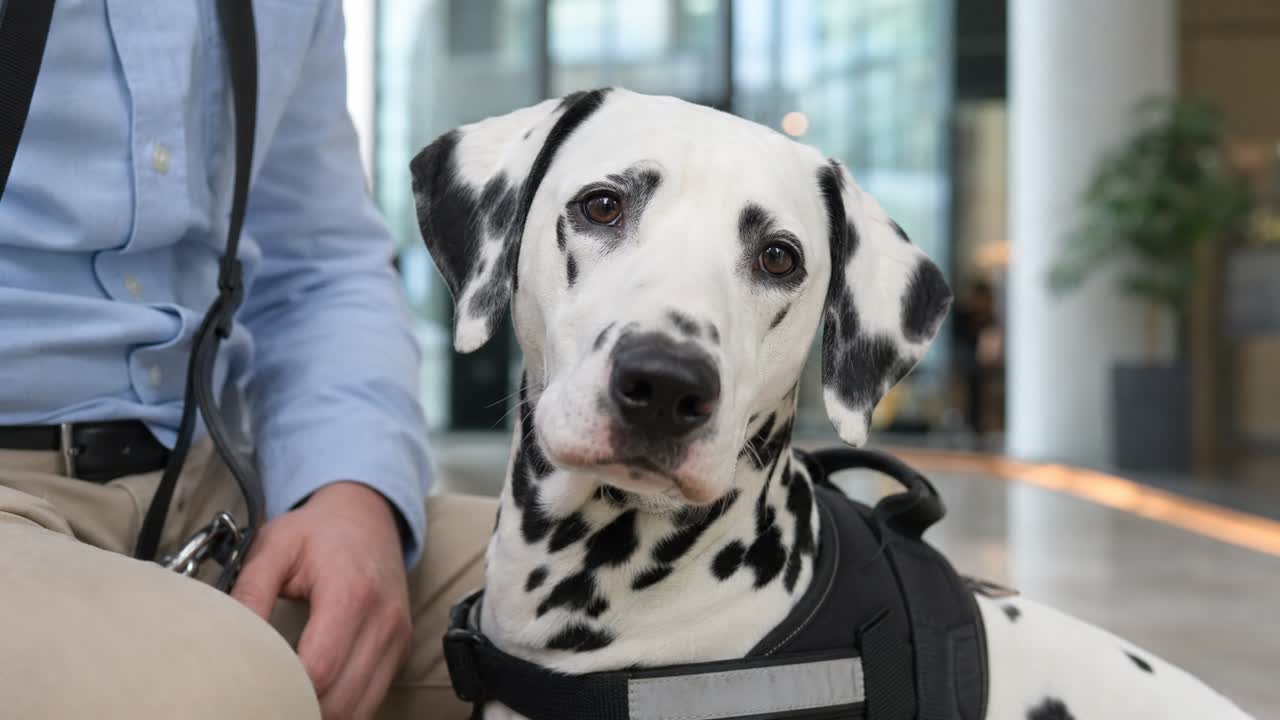
If you are wondering about a service dog at jury selection, the practical answer is usually yes: a trained service dog can generally accompany a person with a disability into public-facing courthouse areas involved in jury duty, including jury assembly and selection, as long as the dog is under control and the setting is one where jurors are normally allowed to be.
This topic is narrower than general debates over courtroom access. It is not mainly about witnesses, attorneys, or trial strategy. It is about what happens when a summoned juror arrives at the courthouse, goes through security, waits in a jury room, and may be called into voir dire while relying on a working service dog.
In real life, a service dog at jury selection raises practical questions about security screening, seating, long waits, and how court staff handle accommodations without turning the dog into a paperwork issue. The baseline public access guide matters, but courthouse logistics matter too.
Quick Overview
- A service dog is usually allowed in public-facing courthouse areas tied to jury duty and jury selection.
- Security staff and jury clerks may focus on screening, seating, and movement through the building, not on certificates or registry claims.
- Long waits, quiet rooms, and close seating make calm leash handling especially important.
- A court may still manage safety, traffic flow, and room setup if the dog blocks aisles or disrupts the flow.
1) What Service Dog to Jury Selection Usually Means
Jury selection is a public civic process, but it is also a controlled courthouse environment. That means a juror with a disability may usually bring a legitimate service dog into the spaces where jurors are required to report, wait, and move through the selection process.
That said, jury selection involves more structure than a typical store or office visit. A service dog that can settle quietly and stay close in crowded government spaces is much easier for court staff to accommodate smoothly.
If you are still sorting out whether your dog fits the core public-facing standard, a simple service check can help you think through the basics before jury day.
2) Security Screening and Courthouse Entry
For many people, the first point of friction is security. Courthouses often have stricter entry procedures than ordinary public buildings, and that can make handlers anxious. In practice, security staff are usually trying to keep lines moving and maintain safety, not create a special barrier for a working dog.
It helps to assume the process may take a little longer than usual. A dog may need to pause, wait, and move through a screening area while staying calm around guards, trays, belts, and crowds. The important issue is whether the dog can remain controlled and respond to handling in a tight, formal environment.
If you expect screening to be difficult due to mobility limitations, anxiety, or the dog’s size, contacting the court in advance can make the day easier. A simple accommodation plan often prevents confusion at the entrance better than showing up and improvising under pressure.
3) Waiting Rooms, Jury Assembly, and Quiet Behavior
The longest part of jury duty is often waiting. A jury assembly room may be crowded, quiet, and slow-moving for hours at a time. A service dog needs to be able to settle near a chair, avoid blocking walkways, and ignore food, bags, and nearby strangers.
This is one reason behavior matters so much. If you are unsure whether your dog is ready for a packed, quiet room with long periods of inactivity, a quick behavior screening can help you identify where the rough spots may be.
Handlers can also make the day easier by choosing a seat with enough space, keeping the leash short and tidy, and anticipating when the room may fill up. Small practical choices reduce attention and help the dog work without becoming the focus of the room.
4) Voir Dire, Questioning, and Accommodation Requests
If you are called into a courtroom or smaller room for voir dire, the dog will usually need to remain unobtrusive while you answer questions.
This topic can overlap with disability accommodation, but it is still different from housing or travel paperwork. The useful conversation is usually not about proving disability history in detail. It is about which setup helps you participate in the jury process safely and practically while keeping the dog under control.
In many cases, a short note to the jury office before your report date can help the court prepare a workable setup. That is especially useful if your dog is large, if you use mobility equipment, or if sitting in certain positions affects how the dog performs tasks.
5) What Court Staff can Focus on and What Usually Matters More than Paperwork
Court staff may focus on logistics: where the dog can lie down, how to move through the room, whether the dog is blocking other jurors, and whether the team can follow instructions during seating changes or recesses. Those are practical concerns, and they are usually more relevant than formal-looking documents.
A certificate may feel reassuring to some handlers, but it is generally not what makes courthouse access valid. Optional records can still help you stay organized, but in a public-access setting like jury selection, the stronger signal is a dog that behaves predictably and a handler who communicates clearly.
This is one of those settings where calm, brief answers tend to go farther than a long explanation. Court staff are trying to run a process on time. If the dog is steady and the handler is prepared, the conversation usually stays much simpler.
6) When Problems Arise and How to Respond
Sometimes the difficulty is not the dog itself but the setting. If the dog starts to struggle, the best move is usually to simplify the situation quickly rather than push through and hope it settles on its own.
Ask whether you can step out briefly, reposition to a better seat, or wait in a quieter area if that is available. If the concern comes from another person’s assumptions about dogs, keep the conversation practical and let staff focus on behavior and room management rather than personal opinions.
Most problems at jury selection are solved by planning, calm handling, and a realistic sense of the environment. The goal is not to win a theoretical argument. It is to get through the process safely and respectfully, with as little unnecessary friction as possible.
For related guidance, see our knowledge hub, service check, behavior screening, and public access guide.
FAQs
Can I bring a service dog to a jury selection?
Usually, yes. A trained service dog is generally allowed in juror-access areas of the courthouse as long as the dog is under control and does not create a direct problem in the space.
Can courthouse security ask for a certificate or registration?
Not usually as the basis for access. Security and staff are more likely to focus on screening, movement, and safety than on certificate-led proof.
What if the jury room is crowded?
Ask for a workable seating arrangement as early as possible. A little extra floor space or a better chair location can make a big difference for both the dog and everyone moving around the room.
Can the court excuse me from jury duty because I have a service dog?
Not automatically. The issue is usually whether the court can accommodate your participation safely and practically, not whether using a service dog disqualifies you from showing up.
What if another juror complains about the dog?
Stay calm and let staff handle room logistics. Most of the time, the solution is about seating, spacing, or clarifying expectations rather than removing the dog by default.
Sources
- ADA.gov: Service Animals
- ADA.gov: Service Animals FAQ
- CDC: Dogs
- CDC: Pet Travel Safety
- HUD: Information for Persons with Disabilities
Takeaway
A service dog at jury selection is usually workable when the dog is ready for long waits, close seating, and courthouse screening, and when the handler plans ahead for practical accommodations. In this setting, steady behavior matters more than paperwork theater.
- Think ahead about security screening, seating, and long waiting periods.
- Use early communication with the jury office if you need a clearer plan.
- Rely on calm handling and strong public behavior to reduce friction.