
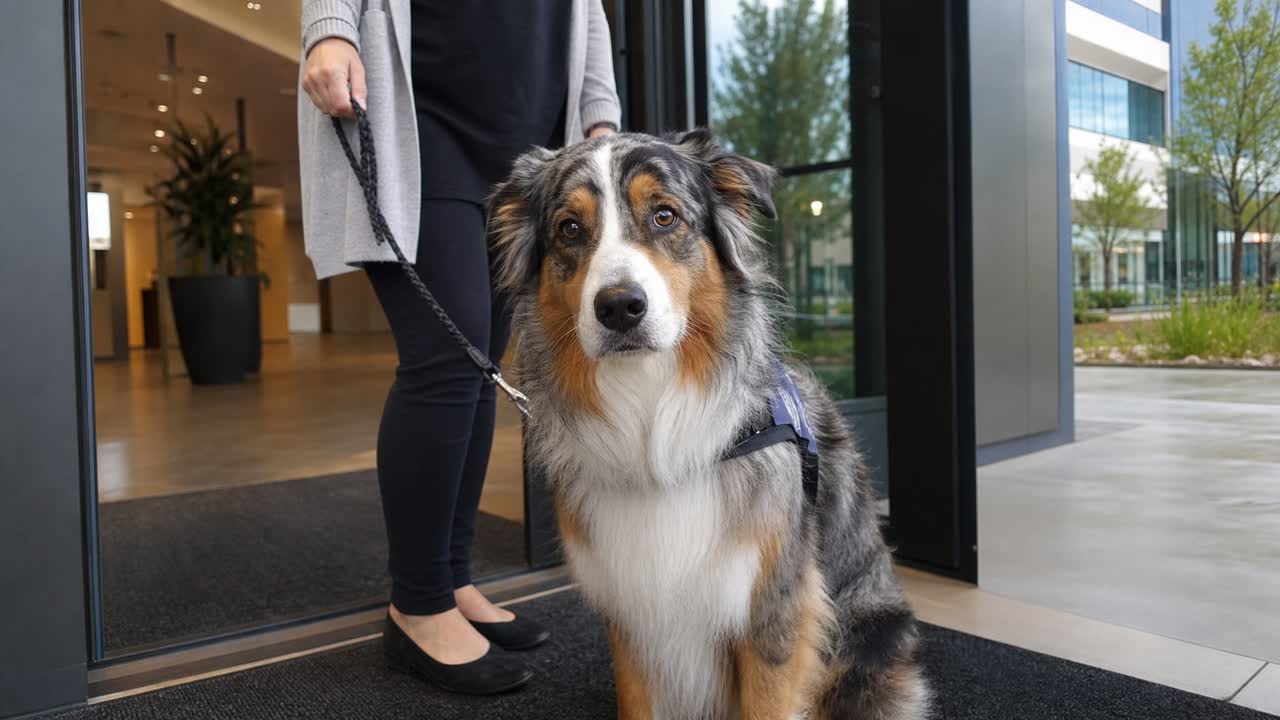
If you are planning for a service dog during outpatient surgery pickup, the short answer is that the dog can usually be with the handler in public-facing areas involved in discharge and pickup, as long as the dog is under control and the setting is one where patients or visitors are normally allowed.
This topic is narrower than general hospital access. It is not mainly about staying with the dog inside operating or sterile treatment spaces. It is about what happens when someone is being released after same-day surgery and needs to reunite with their service dog, get through checkout or curbside pickup, and travel home safely.
In real life, a service dog during outpatient surgery pickup often raises practical questions for the patient, the driver, and the clinic: where the dog should wait, who should hold the leash if the patient is groggy, and how staff should handle discharge without treating the dog like an ordinary pet. Knowing the basic public access rules helps, but planning matters even more.
Quick Overview
- A service dog is usually allowed in public-facing discharge and pickup areas where patients or visitors normally go.
- The biggest issue is often safe handoff after sedation, not whether the dog has paperwork.
- If the patient is drowsy, another adult may need to help with leash handling during pickup.
- Some restricted clinical or sterile areas may be treated differently from waiting rooms, lobbies, or curbside pickup zones.
1) What Service Dog During Outpatient Surgery Pickup Usually Means
Outpatient surgery pickup is a transition moment. In that setting, a service dog may be part of how the person safely orients, manages symptoms, stabilizes mobility, or handles psychiatric or medical needs after leaving the treatment area.
That is why this topic should be separated from broad hospital-access debates. Many outpatient centers have areas that are not open to the public for infection control or procedural reasons, but the pickup and discharge process often occurs in lobbies, family waiting areas, discharge desks, elevators, entrances, or curbside zones.
If you are not sure whether your dog’s role fits the baseline public-facing standard, a simple service screening can help you think through the core framework before the appointment date.
2) How Clinics Usually Think about Discharge, Safety, and Dog Handling
From the clinic’s perspective, discharge is about safety. Staff wants to know that the patient has a ride, can get home, and will not fall, wander, or struggle while still affected by anesthesia or pain medication.
This is where communication helps. If the patient expects to need the dog immediately after discharge, notify the facility in advance. Ask where the dog should wait, whether the driver can bring the dog to the entrance at the right time, and whether the discharge process is inside, curbside, or both.
Some clinics may be comfortable with the dog in waiting and discharge areas, but still cautious about more restricted zones. That is usually a workflow and medical-environment issue, not a statement that service dogs are optional. The goal is to make the handoff clean and predictable.
3) Who Should Hold the Leash If the Patient is Groggy?
This is often the most important real-world detail. After outpatient surgery, the patient may be dizzy, nauseated, sleepy, or unsteady. Even if the dog performs important tasks, the patient may not be in the best condition to manage the leash through doors, elevators, parking lots, and car transfers immediately after discharge.
That is why many teams do better when a second adult is part of the plan. A spouse, friend, family member, or designated driver can bring the dog to pickup, control the leash during transitions, and help the patient settle into the car. It simply acknowledges that temporary post-procedure impairment changes the handling picture.
If you are unsure whether your dog can stay calm in tight hallways, around wheelchairs, automatic doors, and curbside loading, a quick behavior check can be a useful way to assess readiness before surgery day.
4) Waiting Areas, Curbside Pickup, and Transportation Home
Discharge may happen in more than one step. The dog may start in the car with the driver, then move to an entrance area, then walk with the team to the vehicle after checkout. Each stage creates different demands. The ride home requires a safe placement for both the patient and the dog.
For many handlers, curbside pickup is the easiest option. The dog can avoid prolonged time in a busy lobby, and the driver can focus on timing. But curbside is not automatically easier if the dog is overwhelmed by traffic noise or does not load well into the vehicle.
Keep the dog’s route simple. Avoid last-minute surprises, long greetings, or unnecessary stops. A smooth exit usually works better than trying to make the pickup feel normal when the patient is still recovering from anesthesia.
5) What Staff can Ask, and What Usually Matters More than Paperwork
At discharge, staff may understandably focus on logistics and safety. They may ask who is driving, who is helping the patient, or where the dog is coming from. Those questions are usually reasonable in this context. What matters less is formal-looking paperwork.
Optional records can still be helpful for personal organization or peace of mind, but a service dog during outpatient surgery pickup is usually not validated by a card, registry, or purchased certificate.
That is also why tone matters. A short explanation and a workable plan usually go further than a defensive argument about rights. Calm behavior from both handler and dog tends to reduce friction quickly.
6) What to Do If the Pickup Plan is not Working
Sometimes the original plan falls apart. The patient may be more sedated than expected. The clinic may move the discharge to a different entrance. The driver may arrive late. The dog may become stressed by the environment. If that happens, the best move is usually to slow down and simplify, rather than forcing the team through a messy transition.
Ask for a few extra minutes, move to a quieter area if possible, and let the second adult take more of the handling burden. If the dog is overaroused, focus on a short, controlled exit rather than lingering in a busy waiting area. Recovery-day success is measured by safety, not by how polished everything looks.
Most problems in this setting are practical, not legal. Planning ahead, assigning responsibilities clearly, and keeping expectations realistic will solve more than paperwork ever could.
For related guidance, see our Knowledge Center, service screening, public access rules, and behavior check.
FAQs
Can a service dog during outpatient surgery pickup come into the clinic?
Usually into public-facing pickup or discharge areas, yes. But some clinical or sterile spaces may be handled differently depending on the environment and the reason for the restriction.
Should the dog stay with the driver until discharge?
Often that works best. If the patient will be groggy, having the driver bring the dog over at the right time can make the handoff safer and less chaotic.
Do I need a certificate or ID for surgery pickup?
Not usually. Some people keep optional records for peace of mind, but discharge staff generally care more about safe handling and a workable pickup plan than about certificate-led proof.
What if I cannot hold the leash safely after anesthesia?
Plan for another adult to manage the leash during discharge and transportation. That is one of the most useful adjustments a team can make for same-day surgery.
Can the clinic tell me the dog has to wait outside?
That may depend on the specific area involved. Public-facing spaces differ from restricted treatment zones, so it helps to confirm the pickup process in advance rather than assuming every part of the building works the same way.
Sources
- ADA.gov: Service Animals
- ADA.gov: Service Animals FAQ
- CDC: Dogs
- CDC: Pet Travel Safety
- HUD: Information for Persons with Disabilities
Takeaway
A service dog during outpatient surgery pickup is usually workable when the team plans for discharge timing, safe leash handling, and a low-stress exit from the facility. In this setting, calm coordination matters more than paperwork.
- Confirm the pickup process with the clinic before the day of surgery.
- Use a second adult to handle the leash if the patient may be sedated or unsteady.
- Keep the dog’s route simple, calm, and focused on getting home safely.