
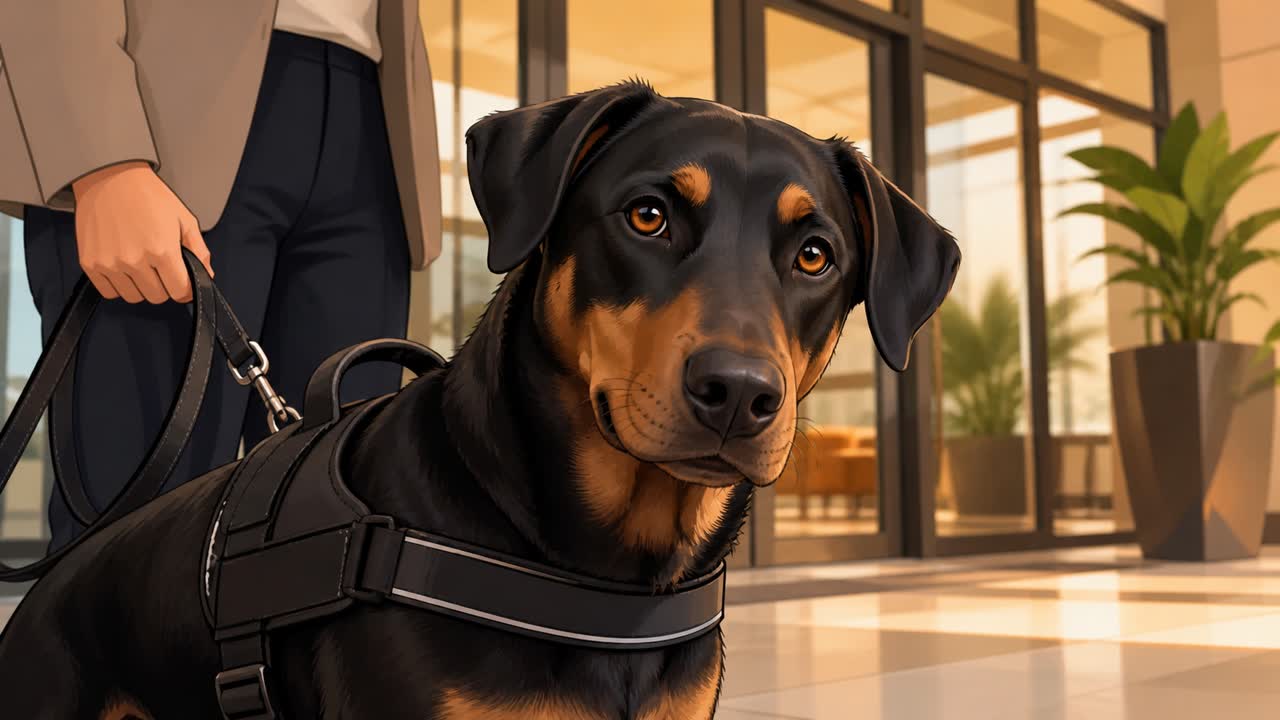
A service dog at graduation ceremony can usually attend when the dog meets the ADA definition of a service animal and remains under control in the setting. It is planning around crowds, seating, security, noise, long waits, and a venue team that may not handle service animal questions every day.
This article focuses on U.S. graduation ceremonies for students, guests, and family members. It is different from a general campus access article because graduation often involves ticketing, assigned seating, bag checks, stages, photographers, rented venues, and strict timing.
The best approach is simple: confirm the logistics early, keep documentation organized for conversations with the school when relevant, and make sure the dog’s public-access behavior is ready for a loud, crowded, emotional event.
Quick overview
- Under the ADA, a service animal is generally a dog trained to perform work or tasks for a person with a disability.
- A graduation venue usually may not require a service dog certificate, registration card, or vest as a condition of entry.
- Staff may typically ask only whether the dog is required because of a disability and what work or task the dog has been trained to perform.
- The dog can be excluded if it is out of control, not housebroken, or creates a legitimate safety issue.
1) What rules apply to a service dog at graduation ceremony?
For most U.S. public-facing graduation settings, the starting point is the ADA. The ADA does not treat a service dog as a pet. It focuses on whether the dog is individually trained to do work or perform tasks for a person with a disability.
If the ceremony is run by a public school, public university, private school, rented auditorium, arena, or convention center, more than one rule may matter. Employees may need a workplace accommodation process. A parent, sibling, grandparent, or other guest may simply be attending as a member of the public.
That is why it helps to separate the legal access question from the event-planning question. The public access guide can help you understand the basic ADA public-access framework, but graduation logistics still deserve their own plan.
2) Contact the right person before the ceremony
You usually do not need to ask permission to exist in public with a service dog. Still, graduation is a controlled event, and early coordination can prevent confusion at the door. If the ceremony is at a rented venue, ask whether the school or the venue controls seating and entry procedures.
Keep your message practical. You can say that you will be attending with a service dog and would like to confirm accessible seating, entry, relief-area options, and any security screening steps. For a graduating student, ask whether stage crossing, lineup areas, or photo procedures require additional planning.
Do not lead with a certificate or registration number. More useful records may include the dog’s task list, vaccination records if the school requests ordinary health information for animals on campus, training notes, and written accommodation communications when the person is a student or employee.
3) Plan seating, space, and movement
Graduations can be difficult for even a well-trained dog. Seating rows may be narrow. Balloons, robes, applause, music, and sudden cheering can create distractions. The goal is to place the handler and dog where the dog can tuck safely without blocking an aisle or being crowded by feet, bags, or strollers.
Good seating questions include whether there is end-row seating, wheelchair-accessible companion seating, an aisle with enough room for the dog to settle, or a quieter section away from speakers.
For families reviewing readiness, a structured behavior check can make the conversation more concrete. The important question is not whether the dog looks official. It is whether the dog can work calmly through crowds, noise, dropped food, strangers reaching out, and long periods of waiting.
4) Know what staff can and cannot ask
In many ADA public-access situations, staff may ask two questions when the need for the service dog is not obvious: whether the dog is required because of a disability, and what work or task the dog has been trained to perform.
That does not mean every conversation will be smooth. Security guards, ushers, volunteers, and temporary venue staff may be nervous about animals in a packed ceremony. We are headed to our assigned seats and can use the accessible entrance if that is easier.”
If you expect confusion, bring a printed copy of the event’s accessibility confirmation or the school contact’s email. That kind of record is not a substitute for the ADA standard, but it can reduce friction with people who are trying to manage a crowded entrance quickly.
5) Prepare for crowds, noise, and safety issues
A graduation ceremony is not the place to test basic public-access skills for the first time. Before the event, practice long settles, walking through crowds, ignoring food, staying close near rows of chairs, and recovering from loud applause or sudden music.
Pack for the real day, not the ideal day. Bring water, waste bags, a mat if the dog uses one, any needed medical supplies, and a plan for relief breaks before and after the ceremony. Avoid bulky gear that makes it harder for the dog to fit under or beside a seat.
Optional gear such as a vest or labeled leash wrap can help strangers recognize that the dog is working, but it is not what creates legal access. The stronger foundation is task training, control, housebroken behavior, and a handler who can communicate clearly.
6) If the school says no or adds confusing requirements
If a school or venue says the dog cannot attend, ask for the reason in writing. Sometimes the issue is a misunderstanding, such as assuming all animals are pets. Sometimes the concern is a specific safety or space problem that can be solved with seating changes or an alternate entrance.
If you are a student or employee, the discussion may belong in the school’s accommodation process rather than only with event staff. A quick service screening can help organize the basic facts before a conversation, especially the dog’s trained tasks and expected behavior in public.
For broader background, the knowledge hub is useful when you need to separate service dog access from emotional support animals, therapy dogs, pets, and optional documentation.
FAQs
Can I bring a service dog at graduation ceremony without a certificate?
In many ADA public-access settings, a certificate is not required for entry. The key issues are whether the dog is task-trained for a person with a disability and whether the dog remains under control and housebroken.
Can a school ask what my service dog does?
When the need is not obvious, staff may typically ask whether the dog is required because of a disability and what work or task the dog is trained to perform. They should not require a diagnosis or demand a task demonstration in a public-access setting.
What if the graduation is in a rented arena or theater?
Ask the school who controls accessibility logistics. The school may manage tickets and graduate procedures, while the venue may manage entry, seating, and security. Coordinating with both can prevent confusion.
Can my service dog walk across the stage with me?
Often this can be arranged, but it depends on the stage layout, stairs, ramps, crowding, and safety plan. Contact disability services or the graduation coordinator early so the route can be planned.
Can staff remove a service dog during the ceremony?
A dog may be excluded if it is out of control and the handler does not regain control, if it is not housebroken, or if it creates a legitimate safety issue. The handler should still usually be offered access without the dog when possible.
Sources
- ADA.gov: Service Animals
- ADA.gov: Service Animals FAQ
- National Association of the Deaf: Public Accommodations
- CDC: Dogs
- CDC: Pet Travel Safety
- HUD: Information for Persons with Disabilities
Takeaway
A service dog can be part of a graduation day, but the smoothest experience comes from practical preparation rather than relying on a certificate, vest, or last-minute explanation at the door.
- Confirm seating, entry, stage movement, and relief-area logistics before the event.
- Keep the focus on trained tasks, control, and behavior in a crowded public setting.
- Save written communications in case a volunteer, usher, or security checkpoint needs clarification.