
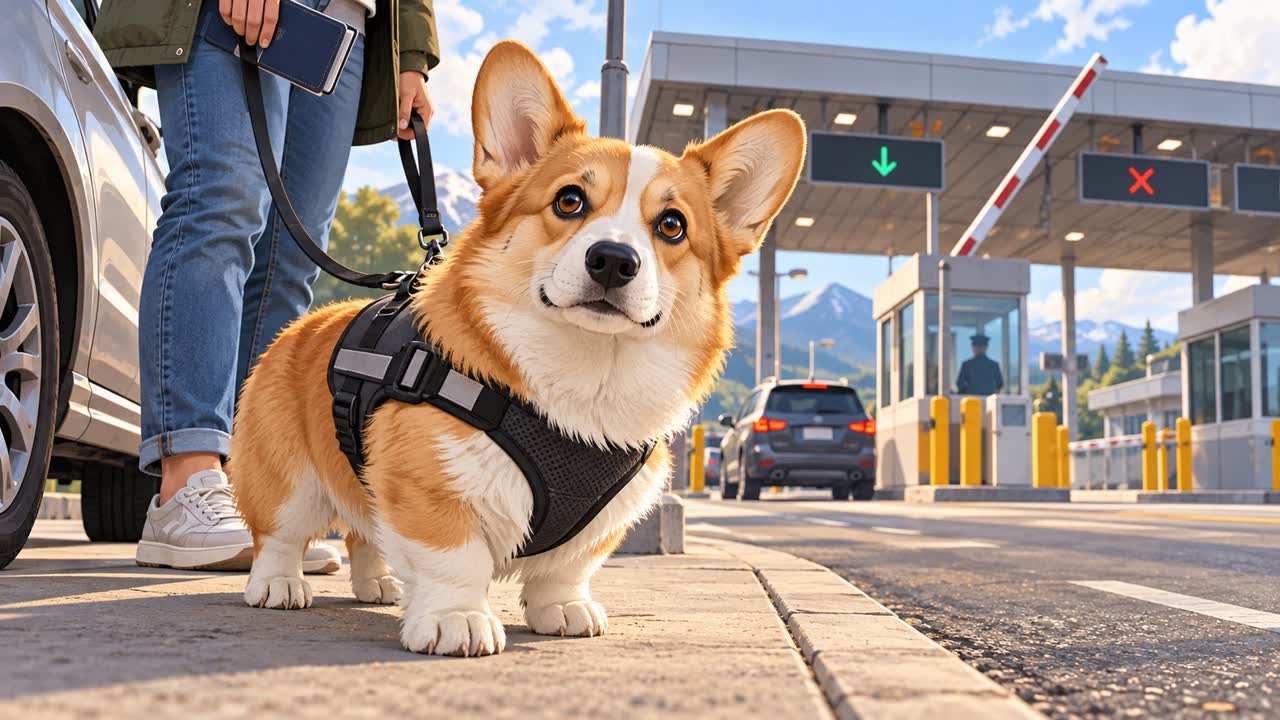
A service dog at a border crossing by car requires more preparation than a routine domestic road trip. The handler, vehicle occupants, and dog may each face separate entry requirements, and a service dog’s public-access role does not automatically replace animal-health, customs, or immigration rules.
Before travel, confirm the current requirements for every border you will cross, including the destination country, return trip, and any transit country. Rules can change based on the dog’s origin, destination, vaccination history, age, health, and the purpose and length of travel.
This guide focuses on practical preparation for U.S. travelers crossing an international land border by car. It is not legal, immigration, customs, or veterinary advice.
Quick Overview
- Check the current rules for both directions of travel before leaving.
- Keep the dog’s required health and entry documents organized and easy to reach.
- Plan for inspection delays, heat, water, relief stops, and safe vehicle restraint.
- Declare the dog and answer border officials’ questions accurately.
1) Prepare for a Service Dog at Border Crossing by Car
Begin with the official border, customs, agriculture, and animal-health authorities for each country involved. Confirm what documents are required for the dog at entry and on return, and check whether requirements differ based on the country where the dog has recently lived or traveled.
Ask the dog’s veterinarian early enough to complete any required vaccination, identification, examination, testing, or health-documentation steps. Some requirements have timing windows, so waiting until the day before departure may leave no workable option.
Create one travel folder containing the dog’s records, the handler’s contact information, the veterinarian’s contact information, and copies stored separately from the originals. The rules guide includes general preparation information, but confirm border requirements directly with the relevant authorities before each trip.
2) Keep Animal-Entry Records Separate from Service-Dog Access
A service dog may perform trained disability-related work, but border officials can still enforce animal-health, import, inspection, and customs requirements. A service-dog vest, purchase certificate, registry entry, or identification card does not replace documents required for international entry.
Keep the dog’s travel records accurate and up to date. Depending on the route, officials may need to review vaccination information, identification details, a health document, recent travel history, or other records required by the destination country. Bring originals when required and readable copies as a backup.
Optional organization materials may provide peace of mind, but they are not government approval or a guarantee of entry. A voluntary service check may help organize information about the dog’s trained tasks and readiness, but it does not determine customs or animal-entry decisions.
Keep the distinction clear: service-dog access rules address the dog’s disability-related role in many public settings, while border agencies manage entry into a country. Border authorities can make decisions based on applicable entry and inspection rules.
3) Pack the Vehicle for Inspection and Delays
Border waits can be much longer than expected, particularly during holidays, severe weather, construction, or heightened inspections. Keep water, a bowl, waste bags, food (if needed), medication, a leash or harness, and a safe resting option in the passenger area, not buried under luggage.
The dog should travel in a way that allows the handler to maintain control without distracting the driver. Use appropriate restraint, a crate, or another safe setup that does not interfere with airbags, pedals, visibility, or emergency exits.
Before joining a long line, offer the dog a relief break if a safe location is available. Do not allow the dog to exit the vehicle in traffic lanes, inspection areas, or restricted border zones unless an officer directs otherwise.
Heat is a particular risk during slow-moving border queues. Never leave the dog alone in a parked vehicle. Monitor ventilation, temperature, water, and signs of distress, and seek urgent veterinary help if the dog shows concerning symptoms.
4) Handle the Inspection Conversation Calmly
At the inspection booth, answer questions truthfully and directly. Tell the officer that the dog is traveling with you, identify the dog as a service dog when relevant, and provide required animal-entry records when asked.
Keep records in a single accessible folder so the driver does not need to search through bags or reach around the vehicle during an inspection. If the dog performs a task that could become visible, a short explanation is usually more useful than a long discussion of private medical information.
Border officials may direct the vehicle to secondary inspection or give instructions about the dog during a search. Stay calm, maintain control of the dog, and ask how to follow the instruction safely if the handler’s disability affects a standard procedure.
General public access rules can help distinguish a qualifying service dog from a pet in many domestic public settings. They do not override an officer’s authority to conduct a lawful border inspection or enforce international entry requirements.
5) Plan for Food, Medication, and Restricted Items
Check the destination’s rules before packing dog food, treats, raw products, medication, supplements, bedding, and cleaning supplies. Animal-origin ingredients, agricultural products, and some medications may be regulated or restricted at the border.
Keep medication in its original labeled container and bring a current prescription or veterinary instruction when appropriate. If the dog has a condition that requires temperature-sensitive medication, plan for safe storage during the drive and any inspection delay.
Do not conceal food, medication, or other items you may need to declare. Declaring an item allows the officer to tell you whether it can enter, must be discarded, or needs further review. Trying to avoid a declaration can create a larger problem than asking a straightforward question.
Pack enough supplies for unexpected delays, but avoid bringing unnecessary items that complicate inspection. A simple, organized kit is easier to explain and manage than loose containers throughout the vehicle.
6) Prepare for Refusal, Illness, or a Changed Itinerary
Have a contingency plan before departure. If the dog is denied entry, becomes ill, loses records, or cannot safely continue the trip, know who can provide veterinary care, temporary transport, or emergency assistance on each side of the border.
Keep an emergency contact who can help with the dog if the handler needs medical care or cannot continue driving. The contact should know where the dog’s supplies and records are stored and how to reach the veterinarian.
A structured behavior check may help identify skills to practice before a long drive, crowded rest stop, vehicle inspection, or unfamiliar lodging. It is not a substitute for current border documentation, veterinary care, or safe travel planning.
If an officer identifies a document problem, ask what specific requirement is missing and whether a lawful alternative is available. Do not assume a domestic service-dog access rule resolves an international entry issue. Document the information given, then seek advice from the appropriate border or animal-health authority before attempting another crossing.
FAQs
Can I take a service dog at border crossing by car?
You may travel with a service dog, but the dog must meet each country’s current entry and animal-health requirements. Service-dog status does not automatically replace those requirements.
Does a service-dog vest count as border documentation?
No. A vest, purchased certificate, registry entry, or ID card does not replace the animal-entry records required by border authorities. Confirm the current requirements for your route before travel.
Should I tell the border officer about my dog?
Yes. Answer questions accurately and provide required records when asked. Do not hide the dog or any regulated animal-related items from inspection.
What records should I bring?
Bring the records required by the countries on your route, plus copies and veterinary contact information. Required documents vary, so verify them directly with the appropriate official authorities before departure.
Can I bring dog food across the border?
That depends on the destination’s current import rules and the food’s ingredients. Check before packing and declare food or treats when required.
Sources
- U.S. DOT: Service Animals
- CDC Yellow Book: Traveling with Pets and Service Animals
- CDC: Pet Travel Safety
- ADA.gov: Service Animals FAQ
- ADA.gov: Businesses Open to the Public
- ADA.gov: Service Animals
Takeaway
A successful border crossing starts with current official entry requirements, organized records, honest declarations, and a vehicle plan that protects the handler and dog during delays.
- Verify requirements for every country and every direction of travel.
- Keep required records, medication, water, and safety equipment within reach.
- Separate service-dog access questions from border and animal-entry requirements.