
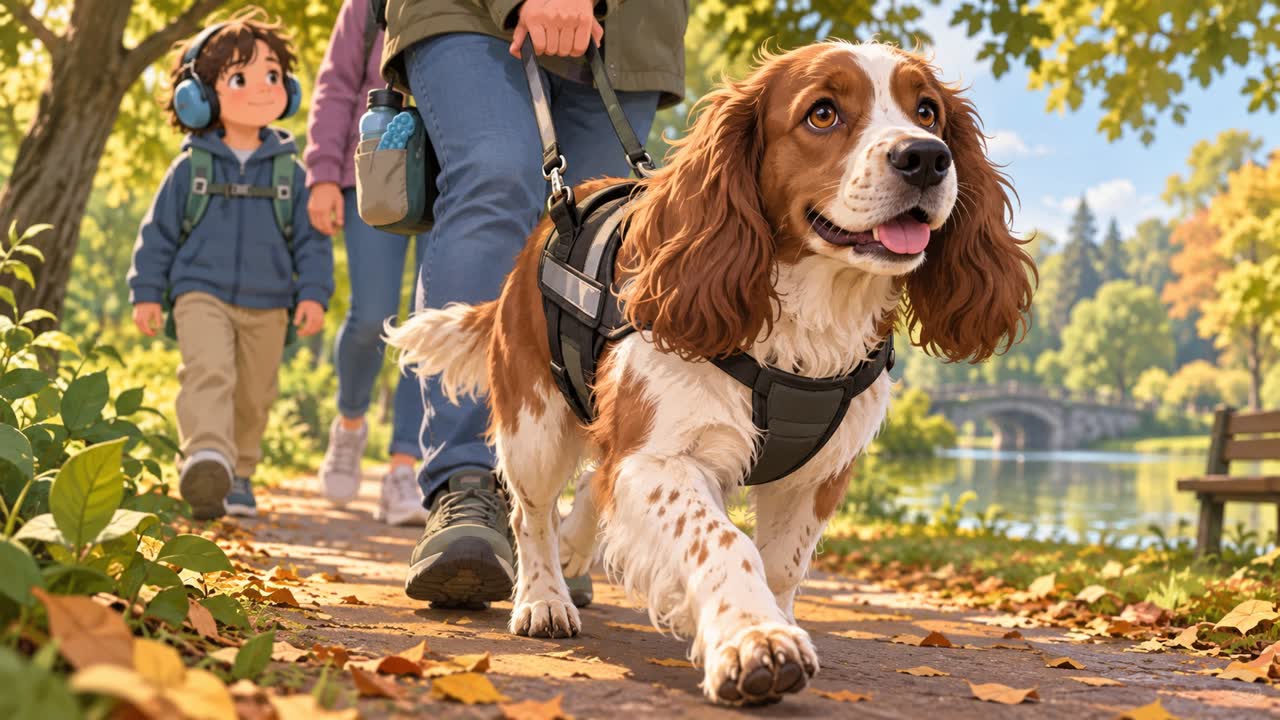
Using an autism service dog on family outings can make restaurants, museums, stores, parks, and community events more manageable when the dog performs trained disability-related tasks. The dog may interrupt harmful behavior, respond to escalating distress, retrieve an item, or help the disabled person navigate a specific limitation.
The dog is one part of the family’s support plan, not a substitute for adult supervision, clinical care, or emergency preparation. Successful outings depend on matching the destination to the person’s needs, assigning clear handling responsibilities, and preparing for sensory and behavioral challenges.
This guide focuses on practical outing plans and public-access responsibilities. It differs from articles about getting a dog or choosing a training program.
Quick Overview
- Plan the dog’s tasks, handler, route, breaks, and exit strategy before leaving home.
- A service dog must be trained to perform work or tasks related to a disability.
- Businesses may ask two limited questions when the dog’s role is not apparent.
- The dog must remain under control and should not obstruct aisles or approach strangers.
1) Define the Dog’s Role before the Outing
Start with the specific trained tasks you may need at the destination. An autism service dog’s tasks vary by person. Examples may include interrupting a particular harmful behavior, retrieving medication or a communication device, guiding the person toward a caregiver, or providing a trained response during an episode of escalating distress.
The dog’s presence can be comforting, but comfort alone is not a trained task under the ADA public-access definition. Families should be able to describe what the dog is trained to do without disclosing private diagnostic details.
A written task list can help adults communicate consistently with staff and avoid overpromising what the dog can manage. A voluntary service screening may help organize task and readiness information, but it is not government approval and does not create access rights.
2) Plan an Autism Service Dog on Family Outings
Choose destinations that offer a realistic chance of success. For a new team, a short visit during a quiet period may be more useful than starting with an all-day festival. Review parking, entrances, security screening, noise, crowds, restrooms, relief areas, and places where the family can take a break.
Create a simple outing plan that identifies:
- The dog’s primary handler for each part of the visit.
- The adult responsible for the autistic family member’s broader support.
- A quiet location or vehicle-based exit option.
- Water, waste bags, medication, communication aids, and sensory supports.
- The expected duration and planned relief breaks.
- A backup plan if the person or dog becomes overwhelmed.
For trips involving a flight, review the applicable air travel guide well in advance. Airline procedures differ from ordinary public-access rules and may require specific federal forms.
3) Assign Safe Handling Responsibilities
The family should decide who will control the dog. This is particularly important when the service dog assists a child or a person who cannot reliably manage a leash throughout the outing. A parent or another responsible adult may need to handle the dog while remaining attentive to the disabled person.
A leash, harness, or tether is generally expected unless it interferes with the dog’s trained work or the person’s disability prevents its use. If standard equipment cannot be used, the dog must remain under control through voice commands, signals, or another effective method.
Families should be cautious about systems that physically connect a dog to a child to prevent wandering. Falls, entanglement, traffic, and unexpected pulling can create serious risks. Evaluate any specialized equipment with qualified professionals who understand the person, the dog, and the intended environment. Never treat the dog as the family’s sole anti-wandering measure.
4) Navigate Public-Access Conversations Calmly
Under the ADA, state and local government facilities, businesses, and nonprofit organizations open to the public generally must allow a qualifying service dog in areas where customers or participants may go. Consider the relevant public access rules alongside state or local protections.
When the dog’s role is not apparent, staff may generally ask:
- Is the service animal required due to a disability?
- What assignment has the dog been trained to perform?
Staff generally cannot require a diagnosis, task demonstration, special vest, certificate, registration, or ID card. Optional identification may help some families feel organized or reduce confusion, but it does not replace task training or guarantee entry.
A short response is usually best: “Yes, this is a service dog required because of a disability. The dog is trained to [brief task description].” A broader rules guide can help families prepare for different settings without turning an outing into a legal debate.
5) Manage Sensory Load and the Dog’s Welfare
A successful outing must work for both the person and the dog. Bright lights, loud speakers, costumed performers, crowds, food on the floor, shopping carts, and unfamiliar animals can create layered challenges. Watch for early signs that either team member needs space or a break.
The dog should remain calm, housebroken, and under control. It should not solicit attention, block pathways, climb on furniture, or interfere with other patrons. Businesses may generally require removal if the dog is out of control and the handler does not take effective action, or if the dog is not housebroken.
Practice destination-specific skills gradually. Useful exercises may include settling under a table, riding an elevator, passing food displays, waiting at a checkout, ignoring strangers, and recovering after sudden noise. End the outing before fatigue causes performance to deteriorate.
6) Prepare for Distress, Separation, or an Early Exit
The family should have an emergency plan that does not depend entirely on the dog. Identify who will support the autistic person, who will manage the dog, and how the group will leave if necessary. Keep phones charged and carry relevant emergency contacts, medication, and communication information.
If the autistic person becomes distressed, allow the dog to perform its trained response when safe while reducing demands and environmental stimulation. Avoid inviting strangers to crowd the team or touch the dog. One adult can communicate with staff while another supports the person and dog.
If the dog becomes sick, injured, frightened, or unable to work, shorten the outing. Families can record what happened, including triggers, successful responses, and skills needing more practice. These notes support future training decisions and more realistic outing plans.
FAQs
Can an autism service dog go into restaurants and stores?
Generally, yes, if the dog meets the ADA definition and remains under control. The dog may accompany the disabled person in customer areas, subject to limited behavior- and safety-based exceptions.
Can a parent handle a child’s service dog?
A responsible adult may need to control the dog when a child cannot do so reliably. The family should establish a handling arrangement that keeps the dog under control and supports its work for the disabled child.
What tasks can an autism service dog perform?
Tasks depend on the individual and may include retrieving items, interrupting specific harmful behavior, guiding the person toward a caregiver, or giving a trained response to escalating distress. The task must be related to the person’s disability.
Can staff ask for proof of autism?
In ordinary ADA public-access settings, staff generally cannot demand a diagnosis or medical records. When the service is not obvious, they may ask the two limited questions about disability-related need and trained work.
Does the dog need a vest on family outings?
The ADA generally does not require a vest, certificate, or registration for public access. Some families use optional gear for clarity or organization, but controlled behavior and trained tasks are what matter legally.
Sources
- ADA.gov: Service Animals
- ADA.gov: Service Animals FAQ
- CDC: Dogs
- CDC: Pet Travel Safety
- HUD: Information for Persons with Disabilities
Takeaway
Family outings are more manageable when the dog’s role, handling responsibilities, sensory plan, and exit strategy are clear before the trip begins.
-
Match the destination and duration to the person’s and dog’s current readiness.
- Use trained tasks alongside—not instead of—adult supervision and emergency planning.
- Keep public-access conversations brief, factual, and focused on the dog’s work and behavior.