
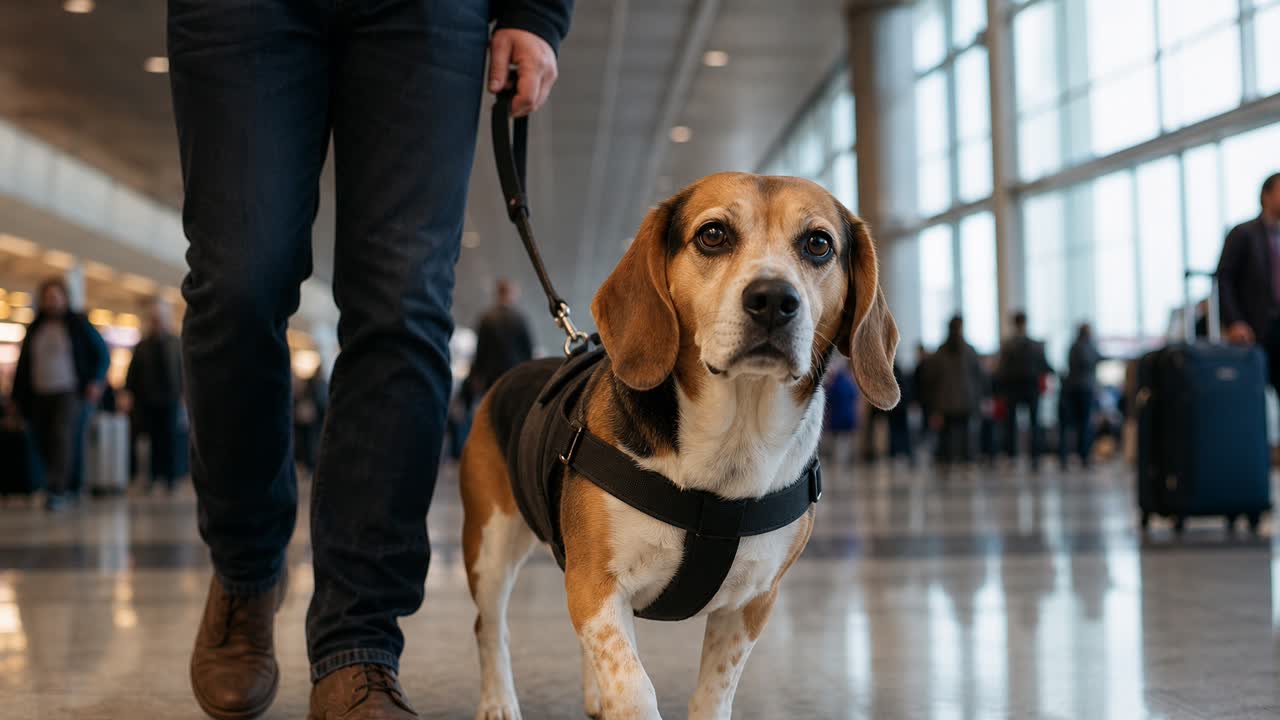
The Assistance Dog International public access test is often described as a structured method for evaluating whether a dog and handler can behave appropriately in public places. For U.S. readers, the most important point is that this kind of test can be helpful for training and program standards, but it is not the same thing as the legal standard for public access under the ADA.
In practical terms, the assistance dog international public access test is about everyday public behavior. It assesses whether a team can enter buildings calmly, move through shared spaces without disruption, ignore distractions, and remain under control. That makes it useful as a readiness benchmark for real life, even when no one can require a specific private test result to allow a qualified service dog team to enter.
This article stays narrowly focused on public-access behavior, so it does not overlap with housing or emotional-support topics. If you need a broader background on service-animal rules and related topics, the Knowledge Center is a useful starting point.
Quick Overview
- The test idea focuses on whether a dog and handler can function safely and calmly in public.
- It is generally about behavior, control, and public readiness rather than paperwork.
- In the U.S., ADA access rights do not usually depend on passing one branded public-access test.
- A dog can know tasks well and still need more public-access training in busy environments.
- Training notes, task lists, and honest practice records are often more useful than optional accessories.
- Public access, travel, and housing are related topics, but they follow different rules and expectations.
1) What is the Assistance Dog International Public Access Test
The assistance dog international public access test is best understood as a practical evaluation of whether a service dog team can function appropriately in public settings. The goal is not to show off advanced tricks. The goal is to see whether the dog and handler can move through ordinary public situations with control, safety, and minimal disruption.
That means the dog is usually being assessed on steadiness around people, noise, doors, food, crowds, and other common distractions. The handler is also part of the picture. A team should show clear communication, safe leash handling, and the ability to redirect the dog when needed.
2) What Public-Access Evaluators Usually Look For
Most public-access standards focus on basic reliability. A strong team should be able to enter a building calmly, walk through aisles or waiting areas without pulling, settle quietly beside the handler, and ignore unnecessary distractions. The dog should not bark repeatedly, lunge, sniff merchandise, beg for food, or block walkways.
Recovery matters too. Even a well-trained dog may notice a loud noise or sudden movement, but a public-ready dog should return to focus without prolonged disruption. Teams that want a more structured self-check before a formal evaluation sometimes use a simple behavior check to identify issues, such as reactivity, overstimulation, or inconsistent settling.
3) How it Differs from ADA Public-Access Rules
This is where confusion often starts. Under the ADA, a service animal is usually a dog individually coached to perform tasks or work for a person with a disability. A business may typically ask limited questions about whether the dog is required due to a disability and what work or tasks the dog has been coached to perform.
What a business generally may not do is require a specific certificate, registry, or private public-access test card before allowing entry. So even though an organized test can be useful, it is not usually the legal key to access in the United States.
That said, the behavior measured by a public-access test still matters a great deal. A dog that is out of control or not housebroken can still create valid access problems. For that reason, many handlers find it helpful to study a practical public access guide alongside their training plan.
4) Why can this Kind of Testing Still Help in Everyday Life
Even when it is not legally required, a structured test can give handlers a realistic benchmark. It can show whether the team is ready for stores, restaurants, lobbies, sidewalks, medical offices, or other routine public environments.
It can also help with organization. Some handlers feel more confident when they keep training records, public-practice notes, and task documentation in one place instead of relying on memory. A test result or training log may not replace the law, but it can support calm conversations with employers, event staff, or others who want to understand how the team functions.
5) How to Prepare Responsibly for Public-Access Evaluation
The best preparation is realistic repetition. Start with quieter environments and practice clean entry and exit routines, loose-leash walking, neutral behavior around strangers, and quiet settling near the handler. Then gradually move to harder settings such as busier sidewalks, checkout lines, waiting rooms, and restaurants.
Keep records that actually improve training. Useful notes may include where you practiced, what distractions arose, how well the dog recovered, and whether the tasks remained reliable in that setting. Those records are often more helpful than relying on optional vests, IDs, or certificates to tell the story for you.
Handler skill matters just as much as dog skill. Teams often struggle because the handler gives inconsistent cues, pushes the dog too quickly into difficult spaces, or misses early signs of stress.
6) Where this Topic Overlaps with Housing or Emotional Support Rules
Because this keyword involves access and evaluation, some readers may confuse it with housing documentation or emotional-support questions. Those are separate issues. Public-access testing is mainly about whether a service-dog team can function appropriately in shared public settings.
Housing accommodation questions usually center on disability-related needs and reasonable accommodations, not on public-access evaluations. If a reader is really dealing with emotional-support housing issues instead of public access, the more relevant topic may be ESA screening rather than a public-access evaluation.
For related guidance, see our Knowledge Center and ESA screening.
For related guidance, see our behavior check and public access guide.
FAQs
Is the international public access test for assistance dogs required by law in the United States?
No. In the U.S., public-access rights under the ADA do not usually depend on passing one specific private test.
Can a business ask to see proof that my dog passed a public-access test?
Generally, a business may not require a specific certificate, registry record, or test card as a condition for entry. What usually matters most is whether the dog is under control and meets the ADA service-animal standard.
Does passing a public-access test automatically make a dog a service dog?
No. A service dog must also be individually trained to execute tasks for a person with a disability. Public behavior is important, but it is only one part of the overall picture.
What if my dog performs tasks well at home but struggles in crowded places?
That usually means the team needs more public-access practice. Task training and public neutrality are related, but they are not exactly the same skill set.
Are vests, IDs, or certificates enough if my dog behaves well?
No. Those items may be helpful for organization or peace of mind, but they do not replace training, handler control, or the legal rules that apply in public.
Does this topic apply to emotional support animals?
Not in the same way. Emotional support animals do not have the same public-access status under the ADA as service dogs, even though they may matter in some housing situations.
Sources
Takeaway
The assistance dog international public access test is most useful as a readiness benchmark for public behavior, not as a universal legal pass. For U.S. handlers, the most reliable approach is steady task training, calm public conduct, and records that support real-world confidence.
- Public-access testing focuses on whether a team can function safely and appropriately in ordinary public spaces.
- ADA access rights do not usually depend on a specific certificate, registry, or branded test result.
- The strongest proof of readiness is reliable behavior, useful task work, and responsible preparation over time.