
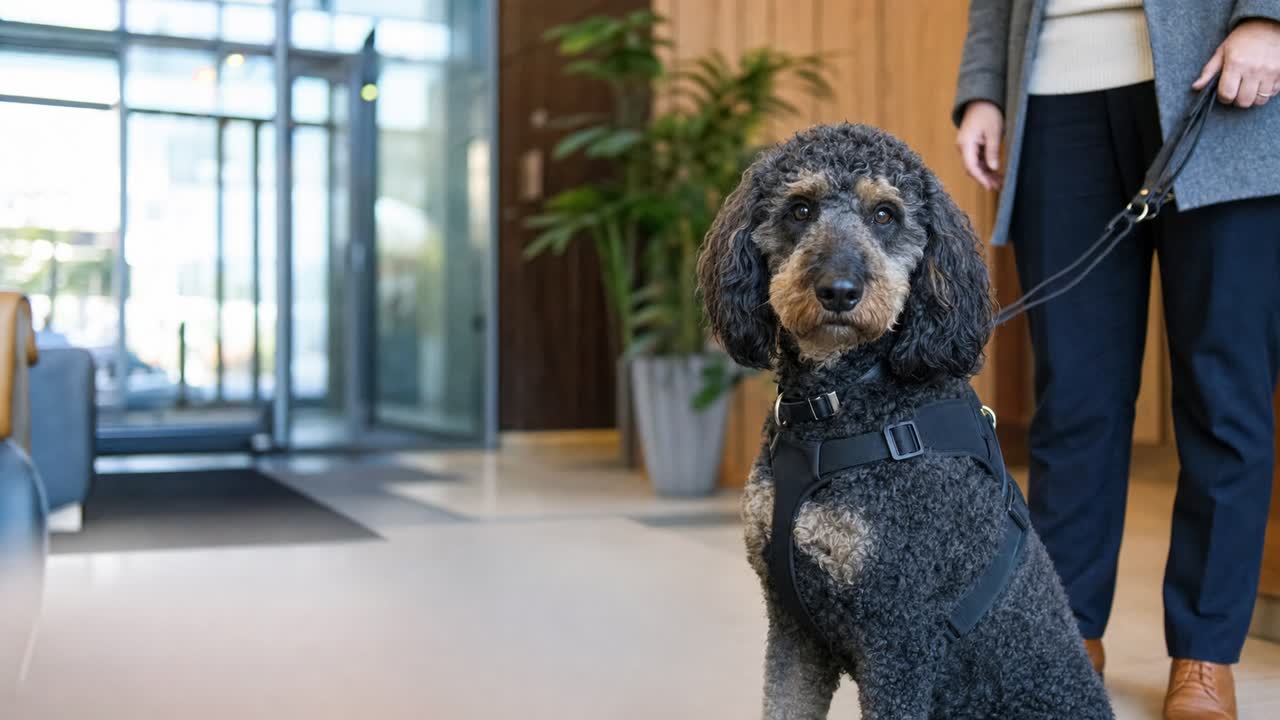
Bringing a service dog on airport shuttle buses is usually more straightforward than many handlers expect. In most U.S. situations, the key issue is not airline paperwork but ordinary public-access behavior: whether the dog is a trained service dog, under control, and able to ride safely without blocking the aisle or interfering with boarding.
This topic is narrower than airline cabin rules. A shuttle bus between terminals, a rental car center, long-term parking, or an airport hotel is ground transportation, so the conversation is usually about access, space, safety, and staff questions rather than in-flight seating or federal air-travel forms.
For most handlers, the best way to reduce friction is simple: arrive with a calm dog, keep gear practical, know the two questions staff may ask in many public settings, and have a plan for tight boarding areas, luggage, and relief breaks before and after the ride.
Quick Overview
- A trained service dog is generally allowed to accompany its handler on airport shuttle buses in ordinary public-access situations.
- Shuttle staff often care most about control, safe placement, and smooth boarding, not special cards or certificates.
- Airline DOT forms apply to flights, not automatically to the shuttle ride before or after the flight.
- Your dog should stay close to you, out of the aisle, and not interfere with doors, ramps, or emergency access.
1) Can You Bring a Service Dog on Airport Shuttle Buses?
Usually, yes. If your dog is a service dog that is individually instructed to do work or perform tasks for your disability, the practical expectation in most airport shuttle settings is that the dog can accompany you just as it would in many other public-facing transportation environments.
That does not mean every shuttle ride feels identical. But the core expectation stays the same: access generally turns on the dog’s status and behavior, not on whether you bought an ID card or carry a certificate.
If you are also flying the same day, it helps to separate your planning. Use your air travel guide for flight-specific rules, and treat the shuttle as a separate ground-transportation step with its own safety and space considerations.
2) What Shuttle Staff can Usually Focus On
In real life, staff often try to keep boarding moving and passengers safe.
If the dog’s role is not obvious, a staff member may ask limited questions, as in other public-access settings. They generally should not require a special service dog certificate, vest, or registration as a condition of entry. A calm, concise answer and a composed dog usually matter more than extra paperwork.
Many handlers still find it helpful to keep organized records for travel days. That is about reducing confusion, not proving rights through a purchased document. If you want a practical pre-trip review, a simple service screening can help you check that your routine, gear, and talking points are ready.
3) Boarding and Seating without Creating Safety Problems
The best boarding strategy is usually the least dramatic one. Keep your dog close, let other passengers clear tight spaces if needed, and choose a spot where your dog can tuck near your feet or beside your mobility equipment without extending into the aisle.
On a crowded bus, avoid placing the dog where doors open, where wheels or carts swing through, or where a driver may need clear access. Reasonable positioning requests are common on shuttles because the space is tighter than a hotel lobby or terminal hallway.
If you know your dog needs a little extra settling time after noisy curbside activity, practice that before travel day. A focused down-stay in a moving, crowded environment is often more valuable than any accessory. A solid behavior check can reveal small issues before they become public-access friction.
4) How Airline Rules and Shuttle Rules Overlap
This is where many people get mixed up. A driver for an airport shuttle bus is typically not deciding whether your dog can fly under the Air Carrier Access Act; they are dealing with ground access and safe transport in that moment.
That is why it helps to carry your planning in layers. For broader trip planning, keeping a short travel advice checklist can make connections between the airport, shuttle, hotel, and return trip much smoother.
If airport staff or shuttle staff seem to mix up pets, emotional support animals, and service dogs, stay calm and bring the conversation back to the dog’s trained role and your ability to keep the dog under control.
5) What to Do If a Driver Hesitates or Refuses
First, do not escalate faster than necessary. Many refusals start as confusion, not a final decision. A short explanation often works better than a long legal lecture at the curb. You can state that your dog is a trained service dog required because of a disability and briefly identify the task if asked.
If the concern is space, ask whether you can board first, use a different door, wait for the next shuttle, or position yourself in a safer area. A dog that is lunging, barking repeatedly, or unable to settle can create legitimate problems even if the dog is task-trained.
If you are dealing with an airport-connected service and the problem continues, document what happened after you are safely situated: time, location, shuttle operator, route, and what was said. That record is more useful than arguing in the middle of a loading screen.
6) A Practical Checklist before You Leave for the Airport
Relieve your dog before arriving at the shuttle stop if possible. Keep water, cleanup supplies, and essentials easy to reach. Use simple, familiar gear rather than bulky gear. If you travel with multiple bags, make sure you can still control the dog comfortably while boarding.
It also helps to rehearse common moments: standing close while passengers crowd around, stepping onto a bus with a narrow entrance, settling under a seat area, and remaining composed around rolling suitcases and beeping carts. None of this requires special branding or official-looking accessories. It requires teamwork.
When handlers have trouble on shuttle buses, it is often because one small travel stressor stacks onto another. Planning the entire chain, not just the flight, is what usually keeps the day manageable.
FAQs
Can a service dog be denied on an airport shuttle bus because the bus is crowded?
Space and safety can affect how boarding happens, but crowding alone does not automatically cancel access. In practice, staff may ask you to use a safer position or wait for the next shuttle if the immediate setup is genuinely unsafe.
Do I need a service dog certificate for an airport shuttle?
No special certificate is typically required just to ride a shuttle bus. Some handlers carry organized records for peace of mind, but public access usually turns on the dog’s training and behavior, not a purchased document.
Can the driver ask me what my dog does?
In many public-access situations, limited questions may be allowed when the dog’s role is not obvious. The discussion should stay narrow and should not turn into a demand for detailed medical information.
Do airline DOT forms apply to the shuttle bus too?
Usually no. Those forms are tied to air transportation, especially the flight segment, not automatically to the shuttle ride between airport facilities or nearby hotels.
Where should my dog sit or lie on the shuttle?
Your dog should stay under control and out of the aisle, doors, ramps, and emergency paths. The safest spot is usually close to your feet or mobility equipment where the dog can settle compactly.
What if the shuttle is for an airport hotel?
Hotel shuttles can involve the same practical issues: safe boarding, tight space, and driver confusion. The same calm explanation and controlled behavior usually help most.
Sources
- U.S. DOT: Service Animals
- CDC Yellow Book: Traveling with Pets and Service Animals
- CDC: Pet Travel Safety
- ADA.gov: Service Animals FAQ
- ADA.gov: Service Animals
Takeaway
A service dog on an airport shuttle bus is usually a ground-access question, not an airline-form question. The smoothest rides usually come from calm behavior, compact positioning, and a handler who is ready for brief, practical conversations.
- Focus on control, safety, and space management more than special paperwork.
- Separate flight requirements from shuttle-bus expectations so you do not overprepare the wrong part of the trip.
- Use simple travel routines, organized records, and public-access practice to reduce friction.