
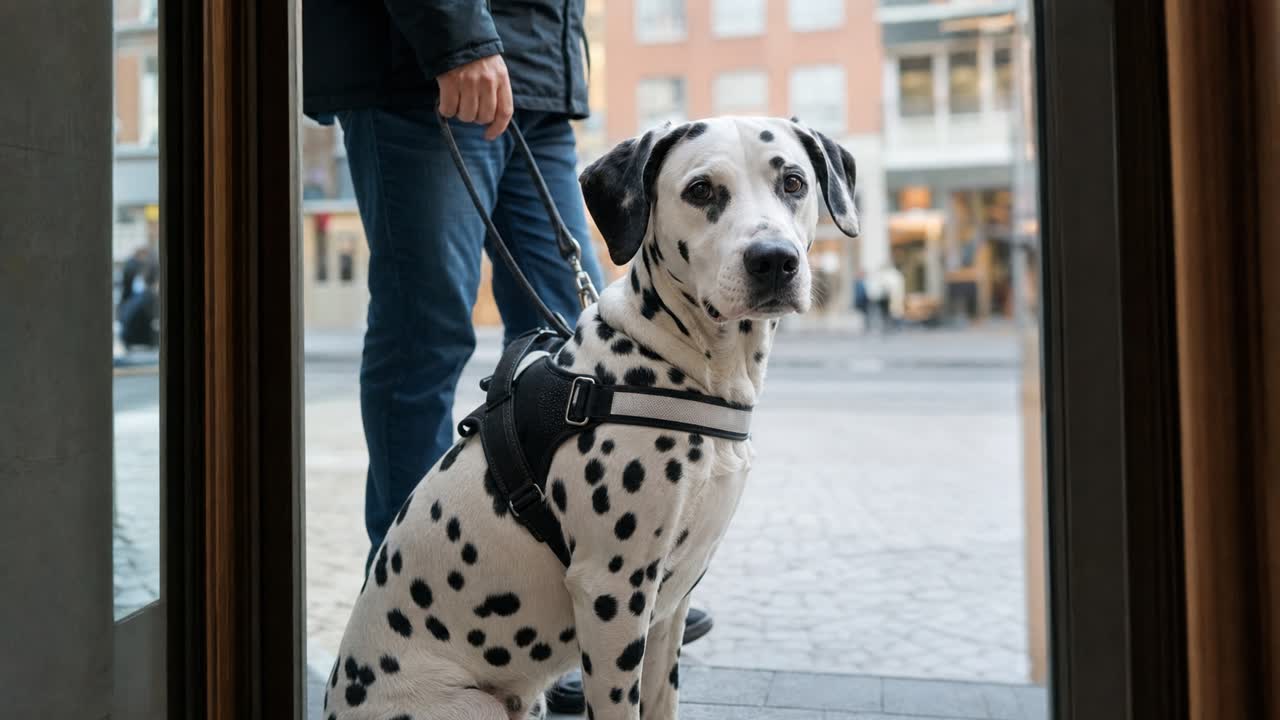
Bringing a service dog to community college orientation is usually a public-access question, not a housing or airline paperwork issue. For most U.S. community colleges, orientation events held in classrooms, student centers, libraries, and similar public-facing campus spaces generally follow the ADA’s service-animal rules.
That means the main issue is rarely whether you have a special card or certificate. The more practical questions are whether your dog is task-trained, under control, ready for long indoor periods, and whether you have a simple plan for check-in lines, crowded hallways, and conversations with staff.
This article focuses on orientation day itself. It does not cover dorm accommodation requests or air travel rules in depth, because those are separate processes with different decision-makers and documentation standards.
Quick Overview
- A service dog can usually accompany a disabled handler to community college orientation areas open to students or the public.
- Staff generally may ask only limited ADA-allowed questions if the dog’s role is not obvious.
- Colleges typically should not require a vest, ID card, registry listing, or certificate for public access.
- Good preparation matters: hydration, bathroom breaks, quiet settling, and tolerance for crowds and noise.
- Orientation is different from housing accommodation, classroom testing accommodations, or campus employment rules.
1) What the Rules Usually Mean on Orientation Day
Community college orientation often includes tours, welcome sessions, registration assistance, advising tables, and student services stops. When those activities occur in ADA-covered spaces, a trained service dog may generally accompany the handler unless the dog is out of control or not housebroken.
That is why a public-access guide is more relevant here than housing or travel materials. Orientation staff usually manage crowds and logistics, not run a formal approval process for each dog that enters campus.
If your orientation also includes later dorm discussions, keep that separate. Public access on orientation day and disability-related housing requests can involve different offices and different records.
2) What Staff may Ask about a Service Dog at Community College Orientation
If it is not obvious that the dog is a service animal, staff generally may ask whether the dog is required because of a disability and what functions the dog has been trained to perform. They generally should not demand medical details, require a demonstration, or insist on a registry printout.
This is one reason to prepare a short, calm explanation in advance. You do not need a speech. One or two clear sentences are usually enough, along with steady handling and a dog that stays focused.
If you want to organize your own records before campus events, a folder with vaccination records, contact information, and a brief task summary can be useful for peace of mind. Some handlers also review service screening information to assess readiness and consistency, even though orientation staff are not usually subject to broad documentation demands for public access.
3) How to Prepare for Crowds, Tours, and Long Sessions
- Bathroom timing before arrival and during breaks
- Water and a compact bowl
- A settle behavior for presentations
- Comfort around backpacks, rolling carts, and sudden noise
- A backup plan if part of the event becomes too crowded
4) What to Bring Even When Extra Paperwork is not Required
Orientation access usually does not require a certificate, ID card, or registration number. Still, being organized can reduce friction. Bring what is genuinely useful rather than what looks official.
Helpful items may include your dog’s leash or tether, if appropriate for your work; water; cleanup supplies; a mat if your dog settles better on one; and basic health records in case of an unrelated issue. Many handlers also keep a note on their phone listing tasks, emergency contacts, and the campus disability-services office.
Records are especially useful if you are transitioning from orientation into follow-up discussions about labs, clinical spaces, internships, or other environments with separate rules. If your later plans involve flights to school events or trips home, that is a different issue better addressed by an air travel guide.
5) When a College may Ask You to Remove the Dog
Access rights are strong but not unlimited. A college may generally require removal of a service dog that is out of control and the handler does not take effective action, or that is not housebroken. The focus is on behavior, not on whether the dog is wearing special gear.
Examples that can create problems during orientation include repeated barking during presentations, lunging at other students, scavenging for food in common areas, blocking crowded walkways, or showing distress that prevents the dog from working safely.
If something starts to go wrong, taking a short break outside is often the smartest move. A short reset protects your dog, reduces conflict, and usually preserves the rest of your day better than trying to push through.
6) How to Reduce Friction with Staff and Student Leaders
You do not need to over-explain, but a proactive, low-drama approach can help. If there is an advance orientation schedule, you may contact the disability services office beforehand to ask about quiet break areas, accessible seating, or the route for campus tours. That is not always required, but it can make the day run more smoothly.
On the day itself, arrive early if possible. Early arrival gives your dog time to decompress, lets you choose better seating, and makes check-in conversations easier. If someone seems uncertain, a calm explanation of the dog’s trained role is usually more effective than debating legal terms in the hallway.
The goal is not to prove legitimacy through accessories. The goal is to move through orientation with a dog that is steady, unobtrusive, and clearly working as part of your daily function.
FAQs
Can I bring a service dog to community college orientation without prior approval?
In many cases, yes, if the orientation activities are in ADA-covered public spaces. Advance approval is often not required for public access, although contacting disability services can still help with logistics.
Do I need a certificate or ID card for orientation?
Usually no. A vest, ID card, certificate, or registry listing generally does not determine public access. Practical readiness and appropriate behavior matter more.
Can the college ask for my medical records?
Generally, orientation staff should not require detailed medical records to allow a service dog into a public-access setting. Separate offices may request documentation for other accommodations, but that is a different process.
What if orientation includes a campus tour and crowded events?
Plan for breaks, hydration, and your dog’s tolerance for noise and foot traffic. If your dog is still building endurance for long public days, consider whether a shortened schedule or support from disability services would help.
Can the college exclude my dog from a lab or specialized area during orientation?
Possibly in limited circumstances if there is a legitimate safety issue or a fundamentally different access rule for that environment. That should be assessed carefully, not assumed automatically.
Is orientation the same as asking for housing accommodations in a dorm?
No. Orientation access and housing accommodation requests often involve different rules, offices, and documentation standards. Keep those conversations separate so the issues do not get blurred together.
Sources
- ADA.gov: Service Animals
- ADA.gov: Service Animals FAQ
- CDC: Dogs
- CDC: Pet Travel Safety
- HUD: Information for Persons with Disabilities
Takeaway
A service dog at community college orientation is usually a straightforward public-access issue: the dog should be task-trained, under control, and ready for a busy campus environment. For most handlers, calm preparation is more useful than trying to collect extra “proof” that orientation staff may not legally require.
- Focus on behavior, task readiness, and a realistic plan for crowds and breaks.
- Keep public-access questions separate from housing, travel, or specialized accommodation processes.
- Bring practical records for your own organization, but do not assume a certificate or registry is the key to access.