
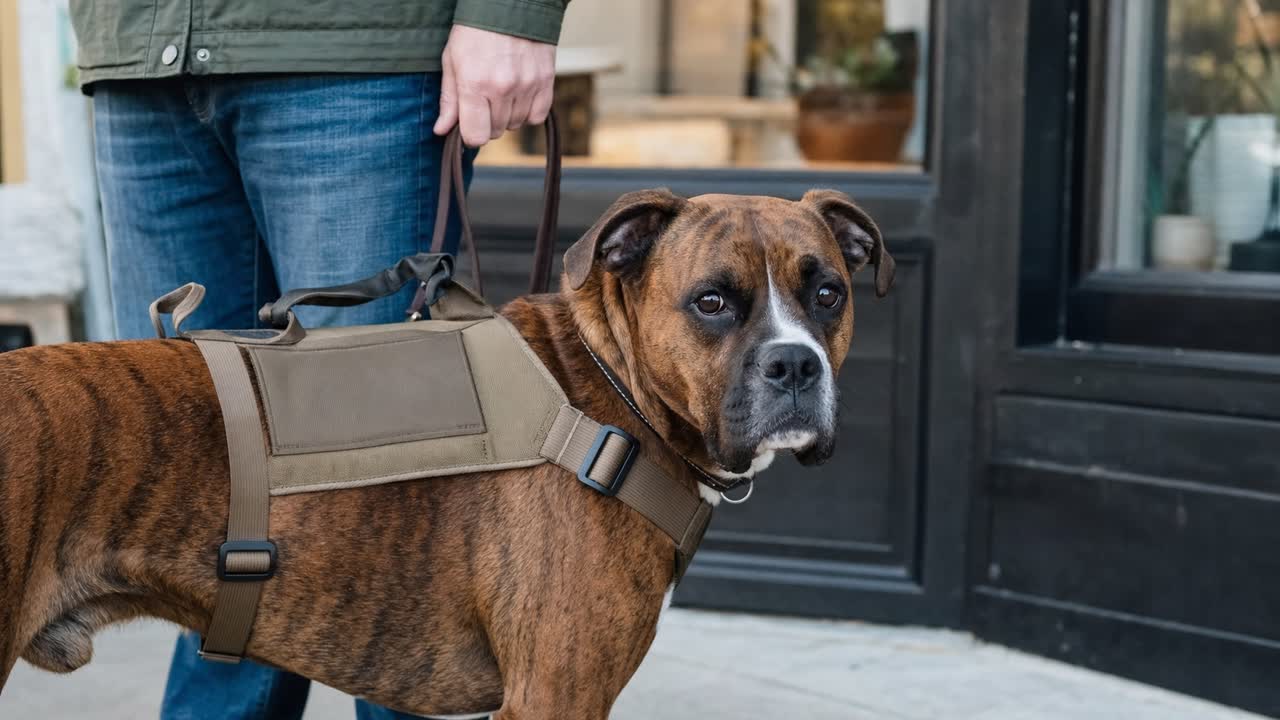
During severe weather warnings, a service dog should stay with the handler whenever it is safe to do so.
This topic is less about proving status and more about emergency readiness. A service dog may already perform mobility, psychiatric, alert, or medical-response tasks, but severe weather adds noise, chaos, shelter movement, and transportation stress. That means the dog needs both access protection and a realistic evacuation plan.
This article focuses on public-facing emergency situations and practical planning, not landlord paperwork or airline forms. If you want a broader baseline first, reviewing expectations for general public access guides can help frame what usually carries over during emergency disruptions.
Quick Overview
- A service dog should generally remain with the handler during severe weather warnings whenever safety allows.
- Emergency shelters and public response spaces should not automatically treat a working service dog like a pet.
- Preparation matters more than paperwork: leash control, transport readiness, medication, water, and a fast exit plan are key.
- Noise, crowding, sirens, and unfamiliar shelter conditions can make task performance harder, so practice helps.
1) What a Service Dog Usually Needs Most During Severe Weather Warnings
When a warning is issued, the immediate goal is safety, not perfection. A service dog that helps with balance, panic interruption, medical alert, or other disability-related tasks may be even more important during a storm evacuation or shelter move than during an ordinary outing.
In many situations, the answer is yes. If you are moving to a basement, hallway, designated shelter room, community center, or other emergency location, the dog should usually remain with you rather than being treated as separate from the disability-related support it provides.
If you are not sure whether your dog’s role fits the normal public-facing standard before an emergency ever happens, a basic service screening can help you think through readiness before you make decisions under stress.
2) Shelter Access, Temporary Relocation, and Public Spaces
One of the biggest concerns during severe weather is what happens when people are directed into shared spaces. Schools, recreation centers, municipal buildings, and church halls may temporarily become shelters or staging areas. Staff in those settings may be focused on speed and crowd control, which can sometimes lead to confusion about animals.
A working service dog should not automatically be treated like a pet and sent to a separate animal area. A calm dog that can lie close, ignore food, and tolerate noise is much easier to place safely in a crowded emergency room, hallway, or cot area.
Severe weather also creates a context in which people may misunderstand different rule categories. A public shelter or emergency line is different from a housing dispute, a hotel stay, or a question about a travel document. Keeping those categories separate helps reduce confusion when time matters.
3) How to Prepare an Emergency Kit for the Team
The most useful preparation is simple and repeatable. Keep a go-bag ready with water, a bowl, waste bags, any needed medications, a backup leash, a towel, a familiar mat or blanket, and enough food for at least a short disruption.
It also helps to think about your own disability-related needs at the same time. If the dog performs tasks tied to medication timing, panic response, diabetic alerts, mobility stabilization, or item retrieval, your emergency supplies should support the whole team, not just the dog. Storm warnings are exactly when forgotten essentials create preventable problems.
Some handlers keep route notes, shelter addresses, medication reminders, and supply checklists in a tracking app so updates are easy to review quickly before leaving home. That kind of planning can reduce mental load without turning emergency readiness into a paperwork exercise.
4) Training Challenges in Storms, Sirens, and Crowded Conditions
A dog that works beautifully on normal days may still struggle during thunder, wind pressure changes, flashing lights, crowded stairs, or emergency vehicle noise. Severe weather can challenge even solid teams by creating sensory overload and unpredictable movement. That does not mean the dog has failed. It means this environment needs its own practice.
Useful skills include a close heel, reliable recall in the home, calm stair use, waiting at doors, settling on cue, and tolerating strangers moving quickly nearby. If your region commonly deals with tornado warnings, hurricane prep, wildfire evacuations, or flood alerts, it is worth practicing parts of the routine before an actual emergency arrives.
Handlers should also be realistic about thresholds. If the dog becomes overwhelmed by thunder or panics in a tightly packed shelter setting, that is an issue to address in training and planning now rather than during the next warning. Emergency readiness is part of working-dog readiness.
5) What to Do If Staff or Responders Seem Unsure
During severe weather, emergency workers may be moving fast and may not know much about service-animal rules. Explain that the dog is a service animal and that the dog needs to remain with you. Keep the focus on where the dog can settle safely and how the team can avoid blocking others.
This is not the moment for a long debate about online registries or formal-looking papers. Optional items may help you feel organized, but in a real-world emergency, staff usually care more about safety, crowd flow, and whether the dog is calm enough to stay with the handler.
If there is a conflict, move the conversation toward logistics. Ask where the team can safely sit, whether there is a quieter corner, or how to handle an accessible route. Those questions are often easier to resolve than abstract disagreements about policy.
6) After the Warning: Returning Home, Re-Entry, and Follow-Up
Once the immediate warning passes, the work is not always over. Returning home after a storm can involve debris, broken glass, standing water, unstable flooring, or crowded building re-entry. A service dog may need shorter leash handling, slower movement, and extra time to reorient before resuming normal task work.
This is also a good time to check whether the emergency plan actually worked. Did the dog tolerate the shelter space? Were supplies easy to carry? Did the route out of the building make sense? Were there access problems in a public emergency setting that you should plan around next time?
Post-event notes are useful because severe weather rarely unfolds the same way twice. Small adjustments now can make the next warning less chaotic and much safer for both handler and dog.
For related guidance, see our regulations, service screening, public access guide, and tracking app.
FAQs
Can a service dog stay with me during a severe weather warning?
Usually, yes. If it is safe to move together, the dog should generally remain with the handler rather than being treated like a separate pet during the emergency.
Can emergency shelters refuse a service dog?
They should not automatically refuse a legitimate service dog just because animals are otherwise restricted. Real safety and space concerns may still need to be managed, but the starting point is usually access with the handler.
Do I need a certificate or registration for a storm shelter?
Not usually. Some handlers keep optional documents for peace of mind, but emergency situations are generally resolved more by calm behavior, clear communication, and practical readiness than by certificate-led proof.
What should I pack for my service dog during severe weather warnings?
Start with water, food, a bowl, waste bags, medications, leash backups, and something familiar for the dog to settle on. Then add anything specific the team relies on during stressful transitions.
What if my dog is scared of thunder or sirens?
That is a training and planning issue worth addressing before the next event. Practice manageable parts of the routine, and talk with a qualified trainer or veterinary professional if storm fear is affecting safety.
Sources
- ADA.gov: Service Animals
- ADA.gov: Service Animals FAQ
- CDC: Dogs
- CDC: Pet Travel Safety
- HUD: Information for Persons with Disabilities
Takeaway
A service dog during severe weather warnings is usually safest and most effective when the team has already planned for fast relocation, noise, crowding, and shelter conditions. In emergencies, calm preparation matters more than paperwork theater.
- Keep the dog with the handler whenever it is safe to do so.
- Build an emergency kit and a simple evacuation routine before the next warning.
- Train for real storm-related stressors, not just ordinary daily outings.