
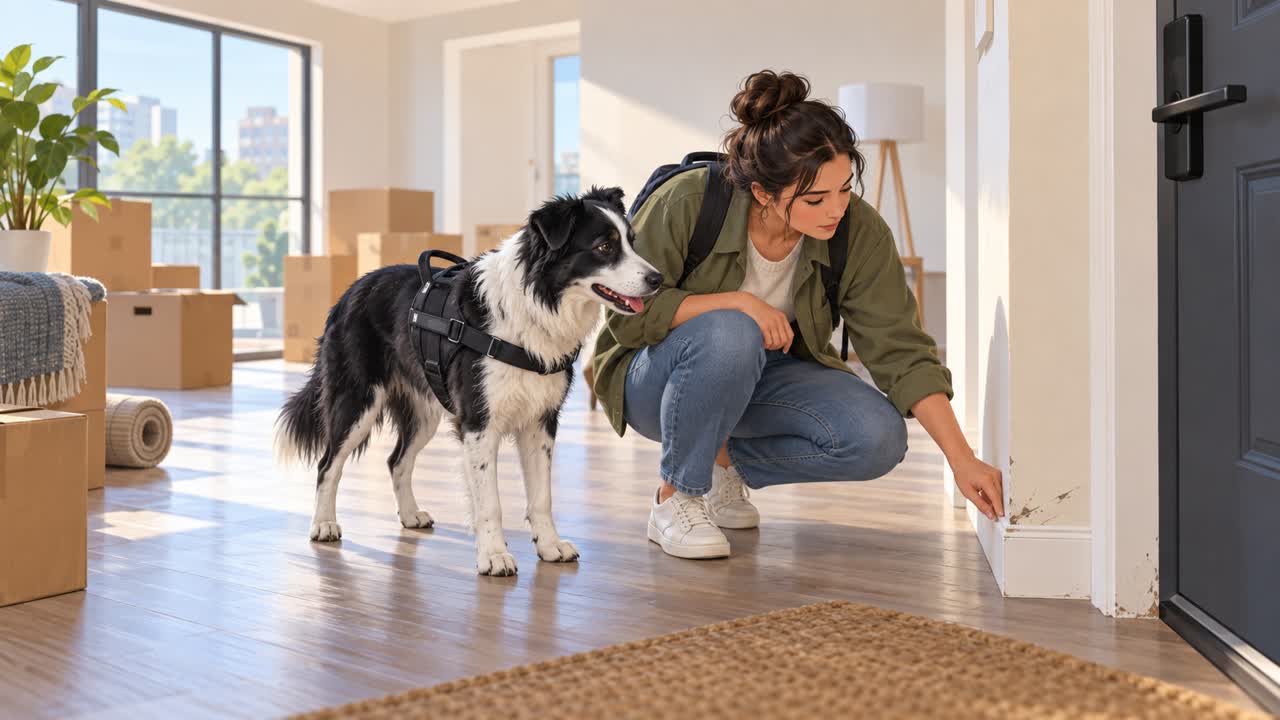
A service dog move-in inspection checklist helps a tenant and housing provider document a rental’s condition before occupancy, identify hazards, and agree on practical animal-related arrangements. It should record preexisting damage without treating the service dog as a pet or implying that a certificate, registration, or ID card is required.
Housing access is different from access to stores, restaurants, and other public places. Depending on the property and applicable law, a service dog may be considered an assistance animal for a reasonable accommodation under federal housing rules.
Keep the inspection focused on the unit’s condition, safe use of the property, and clear communication. Photos, dated notes, repair requests, and a signed inspection form can reduce disputes when the tenant eventually moves out.
Quick Overview
- Complete the inspection before moving furniture into the unit when possible.
- Photograph every room and record existing stains, scratches, odors, and damage.
- Check flooring, doors, screens, balconies, shared routes, and relief areas.
- Confirm the housing accommodation separately from the condition inspection.
1) Start the Service Dog Move-in Inspection Checklist
Schedule a joint walkthrough with the landlord or property manager if possible. Bring the lease, the property’s inspection form, a phone or camera, and a way to take notes. Record the date, time, unit number, and names of everyone present.
Begin with wide photos of each room, then take close-ups of individual defects. Include an object for scale when documenting a crack, stain, or damaged fixture. Do not rely only on video; still images and written descriptions make individual conditions easier to reference later.
For every issue, note its exact location and condition. “Two-inch scratch beside the bedroom doorway” is more useful than “floor damaged.” Ask both parties to sign or electronically acknowledge the completed report, and retain a copy.
The Knowledge Center provides broader explanations of service-animal settings and responsibilities, but the inspection itself should remain a neutral record of property condition.
2) Document Floors, Walls, Doors, and Windows
Flooring is a common source of move-out disputes, so inspect it carefully before the dog enters the unit. Photograph carpet seams, discoloration, loose boards, cracked tiles, worn finish, and existing odors. Note whether stains are dry, damp, or linked to an unresolved leak.
Check walls and baseboards for dents, nail holes, chipped paint, scratches, water marks, and unfinished repairs. Inspect doors for loose hinges, damaged weather stripping, sticking locks, and marks near the bottom edge. Test windows and screens, especially if the dog’s tasks require movement between rooms or close positioning near an exit.
Do not agree that an animal caused every mark near floor level. The report should describe what is visible without speculating about its cause. Likewise, the tenant remains responsible for preventing new damage and promptly reporting maintenance problems.
3) Check Safety Features and Working Routes
Walk the routes the handler and dog will use most often, including the path from the bedroom to the front door and from the unit to the designated relief area. Look for loose rugs, exposed nails, sharp metal, unstable railings, broken lighting, slick surfaces, and doors that close unexpectedly.
Test smoke and carbon monoxide alarms according to local requirements and property procedures. Confirm that exits open properly and that hallways are free of permanent obstructions. If the handler uses mobility equipment, make sure there is enough space for the person, dog, and equipment to move together safely.
Record urgent hazards in writing and ask for a repair schedule. An optional service screening may help a handler organize task-related needs, but it does not replace a maintenance request or determine the housing provider’s legal obligations.
4) Review Shared Spaces and Relief Arrangements
Inspect elevators, stairwells, entry doors, laundry rooms, parking routes, courtyards, and other shared areas the tenant can use. Note broken gates, unreliable access controls, poor lighting, or surfaces that may be unsafe in rain or ice.
Ask where dogs may relieve themselves and how to dispose of waste. A reasonable route should not require the handler to enter a dangerous or inaccessible area. If the proposed location creates a disability-related barrier, describe the problem and request a practical alternative in writing.
Other tenants may have allergies, fear of dogs, or disability-related needs of their own. The housing provider should address specific concerns through practical measures rather than automatically isolating or excluding the service dog. Possible steps may include route planning, cleaning, or reasonable separation.
5) Keep the Housing Accommodation Process Separate
A move-in inspection documents property condition; it should not become an informal test of whether the tenant “deserves” a service dog. Handle the accommodation request and any supporting information through the appropriate confidential housing process.
When a disability and the need for the animal are not apparent, a housing provider may request reliable information relevant to the disability-related need. The proper scope depends on the circumstances. A tenant may use records from a qualified healthcare professional when relevant, along with a clear explanation of the animal’s disability-related work or assistance.
A purchased certificate, registry listing, vest, or ID card does not automatically establish housing rights. Optional identification may provide organization or peace of mind, but practical records and a clear accommodation discussion are more useful. Do not treat the ADA public access guide as a substitute for housing-specific rules.
6) Record Responsibilities and Resolve Discrepancies
Before concluding the walkthrough, confirm how routine maintenance, pest treatment, lawn access, emergency entry, and repair appointments will be handled. The tenant is ordinarily responsible for controlling, supervising, feeding, and cleaning up after the dog. Housing staff is not expected to provide animal care.
A housing provider may generally hold a tenant responsible for actual damage caused by an assistance animal when comparable damage rules apply to other residents. This differs from charging ordinary pet rent or a pet deposit simply because an assistance animal lives in the unit. Exact requirements vary by property and governing law.
A voluntary behavior check may help identify skills to practice in elevators, hallways, and shared spaces. It is not a legal certification or a guarantee against future damage.
If the parties disagree about an item, write both observations on the form rather than leaving it blank. Email follow-up photos and keep proof of delivery. After move-in, report newly discovered problems promptly so they aren’t confused with damage that occurs later in the tenancy.
FAQs
What belongs on a service dog move-in inspection checklist?
Include room-by-room condition notes, dated photos, existing damage, safety hazards, shared routes, relief areas, requested repairs, and signatures or electronic acknowledgment from both parties.
Should the inspection form identify the dog as a pet?
No. A service dog or other qualifying assistance animal should not be treated as a pet for housing accommodation purposes. The form can note practical arrangements without using inaccurate pet classifications.
Can a landlord require a service dog certificate during inspection?
A purchased certificate or registry entry does not automatically determine housing rights. Depending on whether the disability-related need is apparent, the provider may request reliable information relevant to evaluating an accommodation.
Should I photograph existing carpet stains?
Yes. Photograph stains, fraying, odors, worn areas, and seams before move-in. Add written descriptions and make sure the landlord receives a copy of the record.
Can the landlord charge for damage caused by the dog?
A tenant may generally be responsible for actual damage under rules applied consistently to residents. That differs from imposing pet rent or a pet deposit solely because the tenant uses an assistance animal.
What if the designated relief area is inaccessible?
Explain the disability-related barrier and request an alternative location or route. Document the request, the provider’s response, and any arrangement reached.
Sources
- ADA.gov: Service Animals
- ADA.gov: Service Animals FAQ
- CDC: Dogs
- CDC: Pet Travel Safety
- HUD: Information for Persons with Disabilities
Takeaway
A careful move-in inspection protects both tenant and housing provider by creating a neutral record of the unit’s condition while keeping accommodation questions in the proper process.
- Use dated photos and precise room-by-room descriptions.
- Inspect working routes, shared areas, hazards, and relief access.
- Keep inspection records, repair requests, and accommodation documents organized separately.