
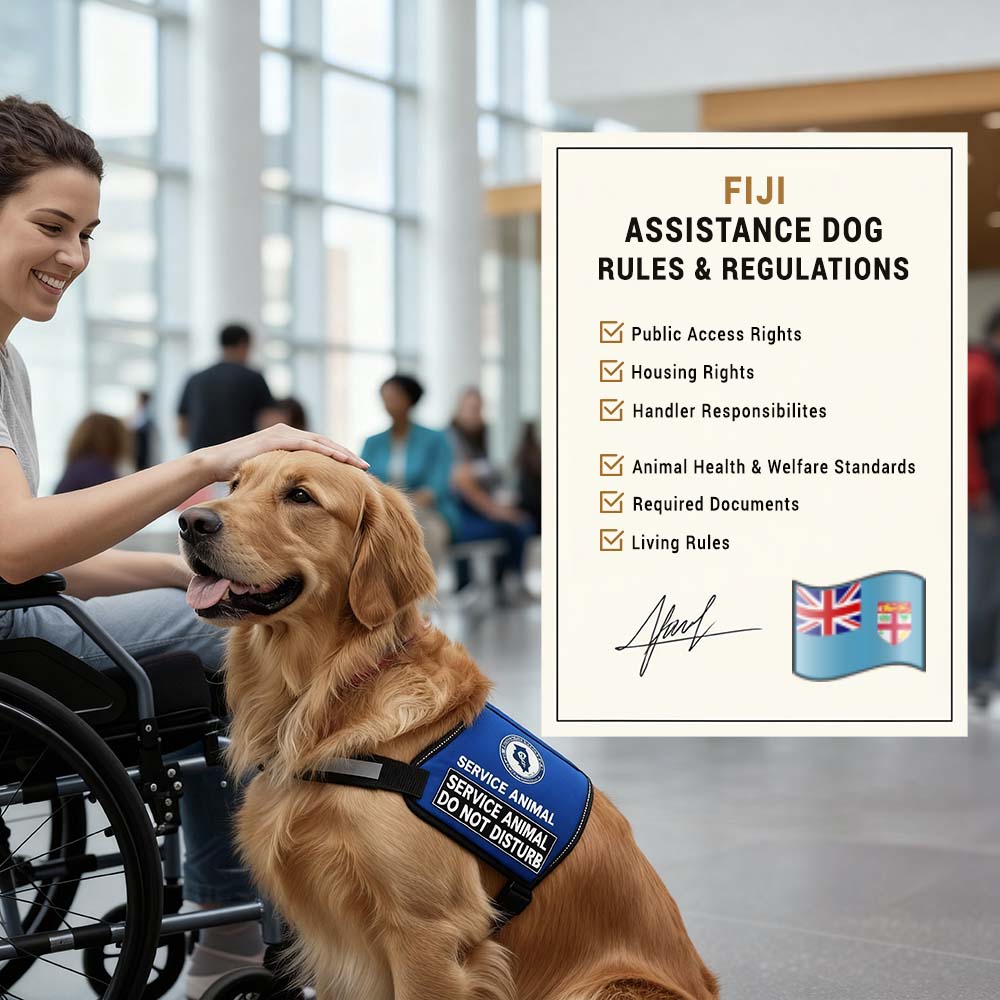
International Entry
Required Documentation & Gear (must bring)
- ISO-Compliant Microchip (must match all documents)
- Rabies Vaccination Certificate
- Puppy must be 12+ weeks old at the time of vaccination
- High-risk countries: Rabies Titer required
- Low-risk countries (Canada, Western Europe, etc.): Titer not required
- Veterinary Health Certificate (vet letter confirming no known diseases)
Preferred Documentation (greatly facilitates acceptance and pre-clearance)
- Physical ID Card (animal + handler)
- Recognition Gear (Service Animal vest, bandana, or harness)
- Prescription Letter (ESA, PSA, or Service Animal letter from a licensed professional)
Important Notes
- A physical ID Card, Registration Certificate, and visible Recognition Gear speed up the processing.
- No airport restrictions: Fiji requires entry through approved ports and pre-approved import permits.
- Assistance Animals follow the same import rules as pets and are subject to Fiji’s biosecurity and quarantine controls.
Deworming / Tapeworm Treatment Rules
Fiji enforces strict parasite and biosecurity requirements.
Specific deworming, parasite treatments, and timelines are required and must be documented prior to travel.
Restricted Breeds at Entry
Fiji may restrict or prohibit the import of certain dog breeds.
Breed eligibility must be confirmed before travel, and restricted breeds may be refused entry even if trained as Service Dogs.
Public Transport & Transit Rules
Service Dogs are generally permitted in public areas in Fiji but public transport access may vary by operator.
Pets are typically restricted. Service Dogs may be allowed with proper identification and approval.
For more information, see Fiji Laws & Regulations.