
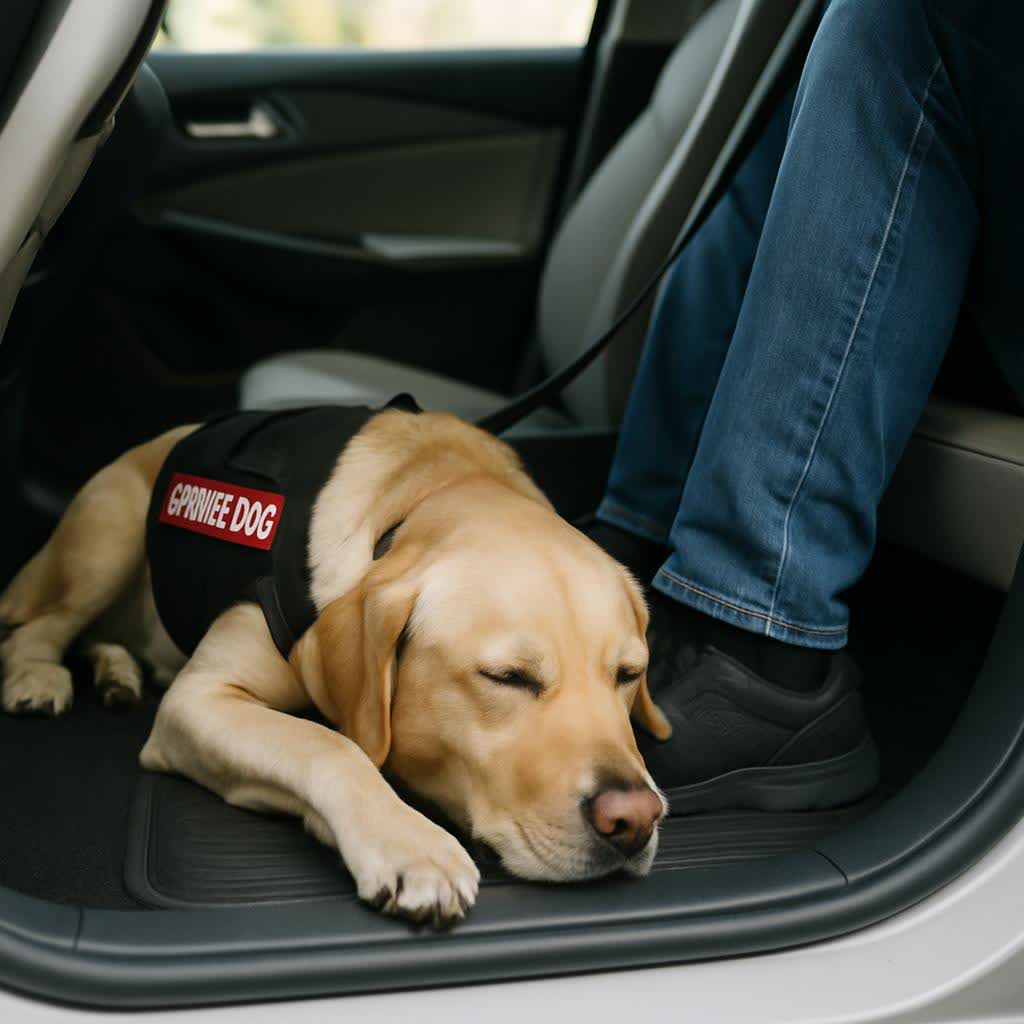
Rideshare apps and taxis are a common flashpoint for service dog teams. The handler needs transportation; the driver may be worried about allergies, damage, cleanliness, or simply doesn’t understand the rules. The result can be confusion, delays, and at times refusal.
This guide is practical education (not legal advice). Laws and enforcement vary by country, state, and city. The goal is to help you travel smoothly, reduce conflict, and know what to do if something goes wrong.
Quick Answer: Can a Service Dog Ride in Uber/Lyft or a Taxi?
In many places, a task-trained service dog is permitted to ride with the handler in rideshares and taxis the same way the handler would in other public services. But the details depend on local laws and the platform’s policy.
Practically, you want two things: clear communication and predictable behavior. If both are true, most rides are boring—in a good way.
Why Refusals Happen (the real reasons)
- Allergies: The driver worries about exposure.
- Mess or smell: Shedding, wet paws, mud.
- Damage: Claws on seats, scratches, and chewing.
- Fear: The driver is uncomfortable around dogs.
- Misinformation: The driver believes “no pets” applies to service dogs.
- Bad past experiences: Previous riders let dogs jump on seats, bark, or leave hair everywhere.
Some of these are solvable with preparation. Some require calm escalation through the app and local systems.
Before You Request the Ride: A 7-Point Prep Checklist
- Dog cleanliness: Quick brush, wipe paws if they are wet, and avoid requesting rides right after the dog has rolled in dirt.
- Bring a seat cover or blanket: Even if your dog stays on the floor, a cover reduces driver anxiety.
- Bring wipes + poop bags: It signals responsibility and helps you leave the vehicle clean.
- Secure handling: Leash organized, no tangled gear.
- Training readiness: Calm loading, quiet settle, ignore strangers.
- Plan your words: One calm sentence beats an argument.
- Backup plan: If one ride refuses, request another quickly; don’t let one person derail your day.
How to Communicate with the Driver (short scripts)
- At pickup: “Hi. This is my service dog. He’ll stay on the floor and remain under control.”
- If the driver hesitates: “I understand. I have a cover, and we’ll keep everything clean.”
- If refused: “Okay. Please cancel the ride on your side. I’ll document it and request another.”
Avoid long debates. Most drivers decide in the first few seconds.
Inside the Car: Etiquette that Prevents Problems
- Placement: Dog rides on the floor (front passenger footwell is common if safe and permitted), not on seats.
- Settle: Quiet and still—no roaming, no sniffing the driver.
- Control: Leash short enough to prevent contact, but not so tight as to cause stress.
- Exit cleanly: Quick check for hair or dirt; a small lint roller helps if your dog sheds.
What If the Driver Says “No Dogs”?
Stay calm. Getting angry wastes time and rarely changes the outcome. Use a simple sequence:
- Confirm: “Are you refusing the ride because of my service dog?”
- Don’t argue: If they refuse, don’t beg.
- Document: Screenshot of the driver + trip details; note time and location.
- Report in-app: Use Uber/Lyft reporting for service animal access issues.
- Move on: Request another ride and get to your destination.
Allergies: The Practical Reality
Allergies are real, but in many jurisdictions, they do not automatically override service dog access. The practical approach is to reduce exposure:
- Keep the dog on the floor.
- Use a cover/blanket and keep the dog clean and dry.
- Offer airflow (crack a window) if the driver wants it.
If a driver refuses, don’t litigate it in the car. Document and report through the platform.
Driver Concerns about Damage (and how to prevent it)
- Trim nails: Long nails increase seat scratches.
- Solid “place/settle” behavior: Prevents pacing and scrambling.
- No chewing items: Avoid giving a chew that could leave residue or create noise issues.
- Practice car manners: Short training rides build predictable behavior.
Training Note: What “Rideshare-Ready” Looks Like
A dog that is fine in public may still struggle in a small vehicle. Your dog should reliably:
- Load calmly without jumping on seats
- Hold a settle for the full ride
- Ignore food, people, and sudden movement
- Stay neutral if another dog is nearby
Related reading:
- Public Access Training: The 5 Core Skills Every Service Dog Needs
- Service Dog Etiquette in Public: A Guide for the General Public
FAQs
- Should I message the driver in advance? Sometimes it helps, but it can also cause a pre-cancel. If you do, keep it one sentence and calm.
- Do I need a vest? Requirements vary. A vest can reduce interactions but does not replace training and control.
- Can a driver charge extra? Policies vary. Many platforms prohibit extra fees for service animals. Document and report if it happens.
How to Report a Refusal (without wasting time)
If a driver refuses or cancels because of your service dog, the priority is to keep moving. Do the reporting fast and clean:
- Save proof: Screenshot of the trip, driver name, and pickup point.
- Use in-app help: Report “service animal access issue” (wording varies, but most platforms have a dedicated category).
- Keep it factual: Time, location, what was said, and that you had a service dog under control.
- Don’t write an essay: Short reports get processed faster.
If you feel unsafe or targeted, leave the area and request another ride from a calmer location.
Cancellation Tip: Who Should Cancel?
When a driver refuses, it’s usually better for the driver to cancel. If you cancel, you may be charged a fee, and you lose a clear refusal record. If the driver will not cancel, document it and contact support through the app.
International Note
Outside the U.S., “service dog” definitions and access rules vary more widely. If you travel internationally, check the local rules for public access and transportation. When in doubt, rely on calm documentation and platform support channels rather than arguments on the curb.
Bottom Line
The best rideshare experience is boring: a calm dog, a clean setup, and simple communication. If a refusal happens, document it, report it through the platform, and move on to the next ride.