
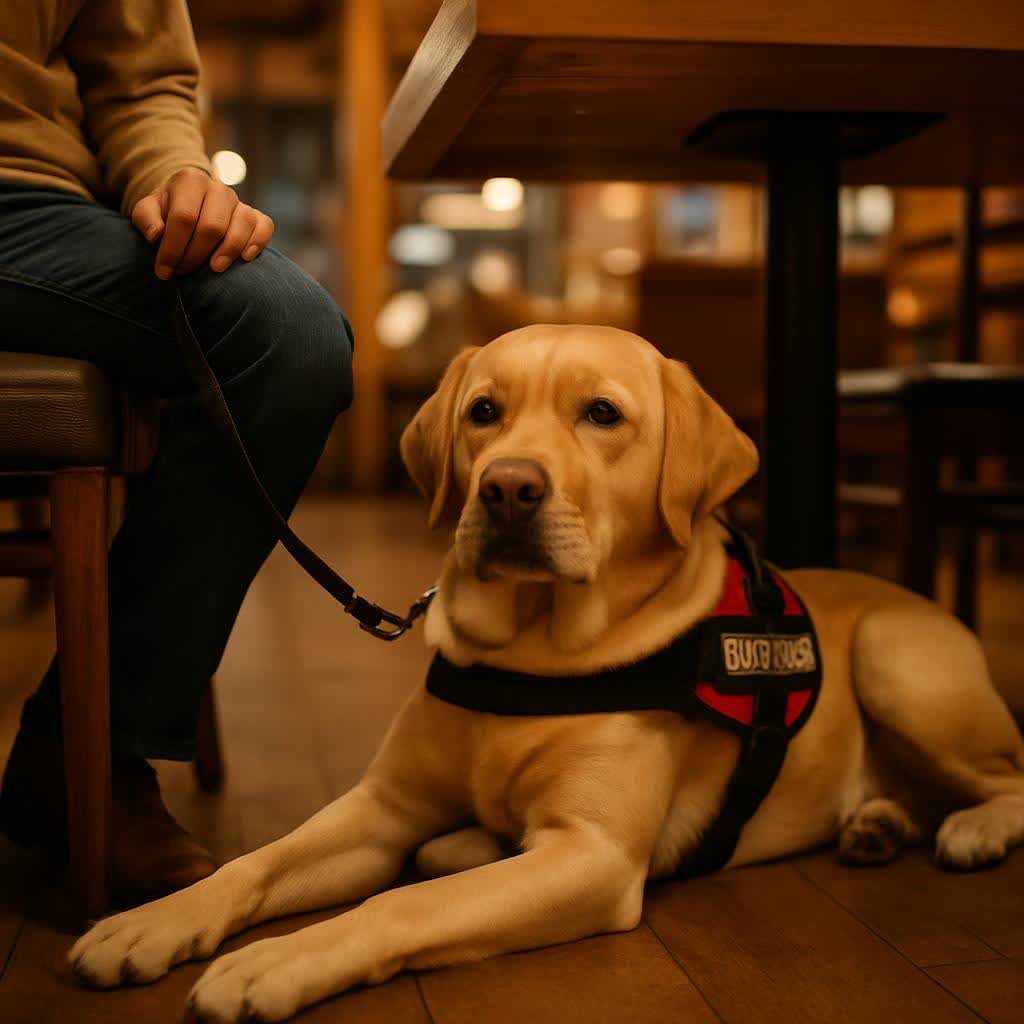
Restaurants are among the most common places service dog teams face questions, pressure, and occasional refusal. Most of the time, it’s not malice—it’s confusion, fear of health-code violations, or staff who have never been trained on service animal access.
This guide is practical education (not legal advice). Laws vary by country and sometimes by state or city. The goal is to help you get seated, eat, and leave without turning dinner into a debate.
Quick Basics: What a Restaurant Usually Needs from You
In most places where service dog access is protected, the standard expectation is simple: your dog must be under control, safe, and not disruptive. That’s it. A calm team gets treated like any other customer.
Why Restaurants Push Back (the real reasons)
- Health-code misunderstandings: Staff assume “no animals” applies to service dogs.
- Allergies: They worry about another guest’s reaction
- Space and safety: Narrow aisles, servers carrying hot plates, and crowded seating.
- Past bad experiences: Someone brought a pet, claimed it was a service dog, and it caused problems.
- Fear: Some staff are uncomfortable around dogs.
Before You Go: Set Yourself Up for a Boring Meal
- Choose timing wisely: Off-peak hours reduce pressure and crowding.
- Pick a seat with space: Booths or wall-side tables often give the dog a safer “tuck” spot.
- Bring a small mat if helpful: Not required, but it gives the dog a clear place to settle.
- Groom basics: Clean coat, wiped paws if it’s wet outside.
What “Restaurant-Ready” Behavior Looks Like
Restaurants are a public-access skill test. Your dog should reliably:
- Enter calmly without greeting people
- Hold a settle under the table for the whole meal
- Ignore dropped food and smells (strong leave-it)
- Stay out of aisles so staff can move safely
- Remain quiet (no whining, barking, or pacing)
If you want a baseline skills checklist, see: Public Access Training: The 5 Core Skills Every Service Dog Needs.
Etiquette that Prevents Conflict (the simple rules)
- Dog stays on the floor: Not on chairs, not on laps, not on tables.
- No sniffing the room: Keep the dog in work mode.
- Don’t block walkways: Tuck the dog tight to your side.
- Keep gear neat: Leash not stretched across an aisle.
- Keep it quiet: Calm cues, minimal talking, no drama.
For public behavior rules you can share with others, see: Service Dog Etiquette in Public.
What to Say to Staff (short scripts)
- At the door: “Hi. This is my service dog. He’ll stay under the table and out of the aisle.”
- If someone says ‘no dogs allowed’: “I understand. He’s a service dog and will remain under control.”
- If they insist: “Can we involve a manager so we can resolve this quickly?”
Allergies and ‘What about Other Guests?’
Allergies are real. The practical approach is to reduce conflict without surrendering access:
- Offer to sit at a different table if available.
- Keep the dog fully tucked and calm.
- Don’t let the dog roam or greet.
If staff tries to remove you solely because “someone might be allergic,” document it. In many jurisdictions, that is not a valid reason to deny access.
If You’re Challenged or Refused: What to Do
- Stay calm: Anger wastes time and escalates.
- Confirm the reason: “Are you denying service because of my service dog?”
- Ask for a manager: Many issues end here.
- Document: Time, location, and names, if possible.
- Leave if needed: Safety first. Report through the correct channel later.
Common Mistakes Teams Make in Restaurants
- Letting the dog sit in the aisle where staff trips
- Allowing food scavenging (even once)
- Letting strangers interact with the dog
- Turning a policy discussion into a loud argument
- Bringing a dog that isn’t ready for long settles
Seating Strategy (small details that matter)
- Wall-side tables usually make it easiest to tuck your dog out of traffic.
- Ask for a corner if the restaurant is crowded—your dog is less likely to be stepped on.
- Avoid high-traffic spots near the kitchen door, drink station, or bathrooms.
Handling Dropped Food and Distractions
Restaurants are full of smells and falling crumbs. One failed “leave it” can cause conflict fast. If your dog struggles with food distractions, practice controlled setups before you rely on the skill in public.
- Use a clear leave-it cue and reward calm ignoring.
- Position the dog so the nose isn’t in the aisle where crumbs land.
- If food drops near your dog, calmly block access with your foot and reset the settle.
What Staff are Allowed to Do (general guidance)
Rules vary by jurisdiction, but generally, staff focus on behavior, not paperwork. If the dog is under control and not disruptive, most conflicts end quickly. If you want a definition refresher on what counts as a service animal, see: What Is a Service Animal? A Practical Definition.
If another customer Complains
This is common. Stay calm and let the staff manage the room. You can offer a simple solution:
- “We can move to another table if that helps.”
- Keep the dog fully tucked and quiet.
FAQs
- Do I have to show papers? In many places, no official certificate is required for a real service dog. Requirements vary by country.
- Do I need a vest? Often not legally required. A vest can reduce interactions but doesn’t replace training.
- Can staff ask me to leave? If the dog is out of control or disruptive, yes. If the dog is calm and under control, denial is often improper.
Related reading
Bottom Line
The best restaurant experience is boring: a clean, calm dog tucked under the table, and short, respectful communication if questions come up. Most conflicts can be prevented with predictable behavior and smart seating choices.