
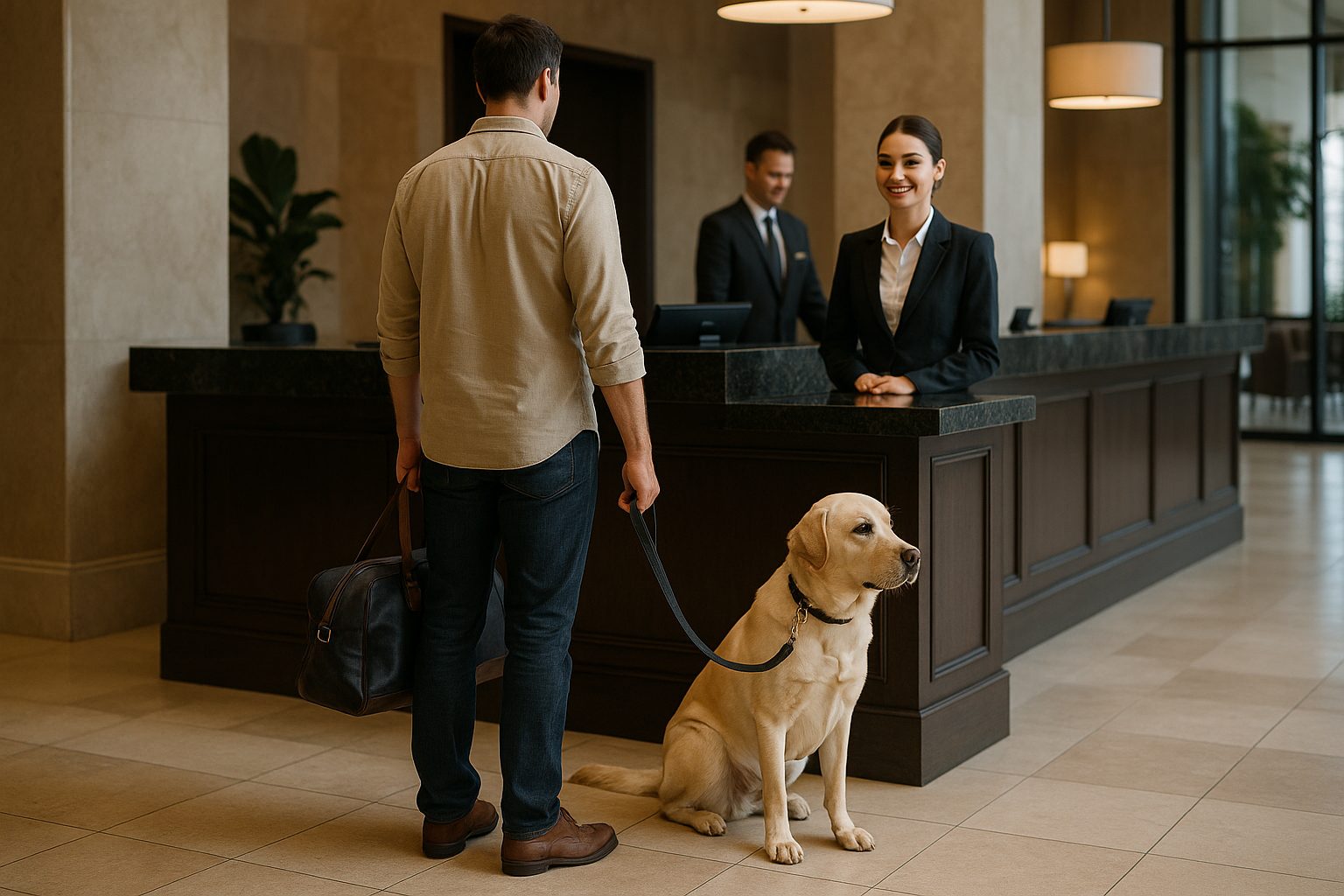
Hotels are a common stress test for dogs because everything is new: smells, sounds in hallways, elevators, people passing close by, and food distractions. When problems happen, it’s usually a training gap — most often settle, neutrality, or door manners.
Before You Arrive
- Exercise the dog so check-in is calm
- Bring a mat/blanket and use a practiced settle routine
- Pack cleanup basics (wipes, bags, enzymatic cleaner)
- Plan potty breaks and avoid long stretches of frustration
Hotel Skills to Practice
- Settle: In the lobby, elevator waiting, and room
- Loose leash: Narrow corridors and corners
- Neutrality: No greeting people by default
- Door manners: No barking at hallway noise
Two-Week Practice Plan
- Practice settling in new places daily (car, hallway, outside a shop).
- Practice calm elevator/stairs routines if relevant.
- Reward calm before barking starts (prevent rehearsal).
- Generalize: different buildings, different times of day, different distractions.
Why Public Access Training Matters
The skills above come from public access training. If the dog can’t settle and recover, travel becomes stressful for everyone.
FAQs
- What if my dog barks in the room? Reduce arousal (exercise), add structure (settle), and prevent rehearsal.
- What skills matter most? Settle+neutrality.
Next Step
If you’re still clarifying categories, see service dog vs ESA and service animal vs ESA. Then build reliability via public access training.
-
Room Routine (simple and effective)
- Arrive → potty break → water → settle on mat
- Short, calm chew to help the dog relax
- Quick training rep (settle/quiet) → then rest
Noise and Door Reactivity
Hotels have hallway noise. Prevent rehearsal: reward calm before barking starts, use distance when possible, and ensure the dog has a clear settle spot.Practical Checklist
- Define the environments you need to handle.
- Define the behaviors/tasks you need.
- Build foundations first (settle, leash, neutrality).
- Proof skills gradually in new places.
Common Mistakes
- Moving too fast (dog goes over threshold).
- Training only at home (no generalization).
- Repeating cues instead of reducing difficulty.
- Skipping maintenance once things look good.
Common Hotel Scenarios (and how to handle them)
Elevators
Elevators compress space, creating a sense of surprise and proximity. Practice waiting calmly, entering only on cue, and settling inside without sniffing or greeting.Hallway noise
Hotels have doors closing, carts rolling, and voices. Prevent barking rehearsal by rewarding calm early. If needed, use a white-noise app and a clear settling routine.Breakfast areas
Food smells are intense. If you need to pass through food-heavy areas, treat it like distraction training: distance, short reps, reinforce “leave it” patterns.What to Pack (travel kit)
- Mat/blanket (settle anchor)
- Chew (calm activity)
- Wipes + bags
- Enzyme cleaner
- Water bowl + measured food
Why these tips work
They reduce arousal and increase predictability. That’s the same goal as public access training — calm, neutral behavior under real-life conditions.
When Hotels Go Wrong
Quick Checklist for Check-In
- The dog is exercised and can settle
- Leash stays loose in tight spaces
- The dog ignores greetings and food smells
- You have a mat and a clear settle cue
What to Practice after You Arrive
Bottom line: Hotels are usually smooth when your dog is quiet, controlled, and able to settle for long stretches. If you run into pushback, stay calm, state that the dog is a service animal, and focus on behavior and control—not paperwork.
Quick Summary
- Before check‑in: Exercise + a short settle practice.
- During the stay: Keep the dog leashed/harnessed, quiet, and out of aisles.
- Housekeeping: Crate or remove the dog if it can’t remain calm.
- If challenged: Use simple language and demonstrate control.
Next time you stay somewhere new, do one 2–3 minute “settle rep” as soon as you arrive. That small habit prevents most hotel problems before they start.