
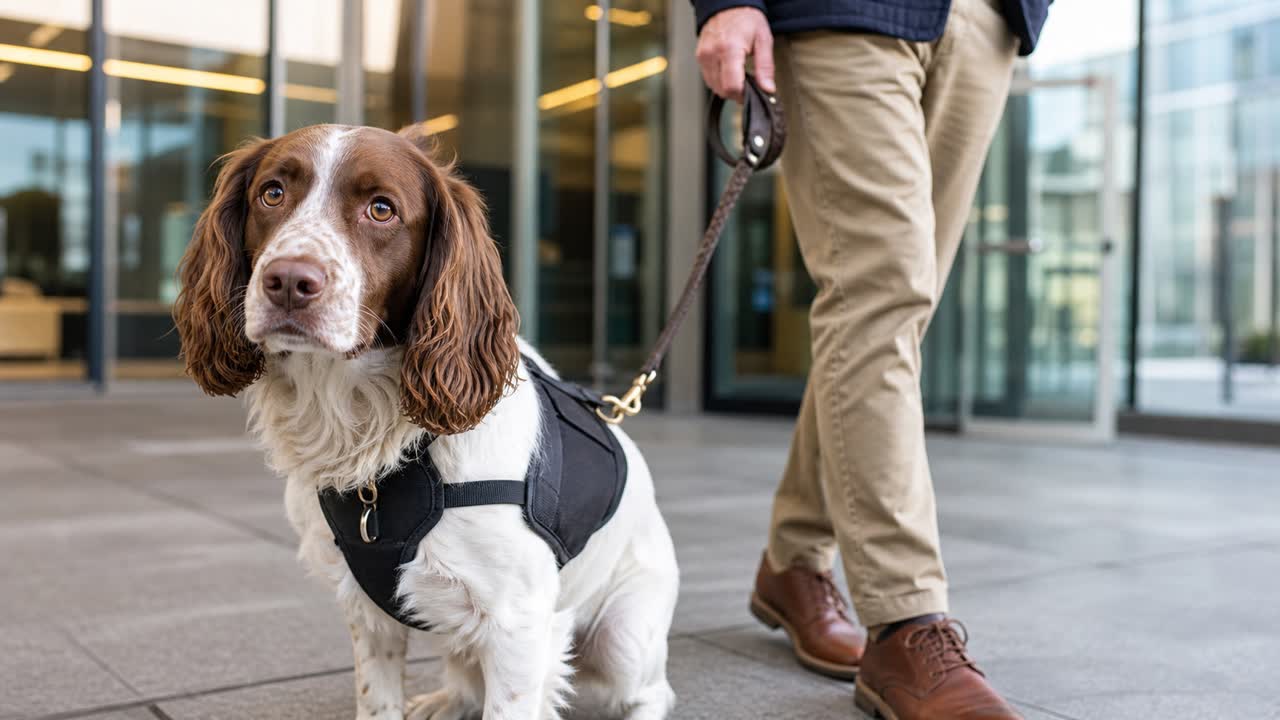
A service dog winter boot fit guide should answer one question first: do the boots stay on securely without changing how your dog walks, works, or settles? Good winter boots can protect paws from salt, ice melt, sharp crusted snow, and frozen sidewalks, but a poor fit can cause rubbing, toe pressure, slipping, and distraction.
For working dogs, fit matters more than appearance. That is why a practical service dog winter boot fit guide focuses on measurement, movement, surface traction, and real-world wear time instead of brand hype.
This topic is about equipment fit and daily readiness, not certification or paperwork. If your dog works in stores, offices, transit, or other shared spaces, reliable paw protection helps ensure comfort and cleaner movement in the same public-facing environments covered in the broader public access guide.
Quick Overview
- The best winter boot fit is snug enough to stay on but not so tight that it changes gait or leaves pressure marks.
- Measure each front and back paw because they are often not the same size.
- Check width, toe spread, strap placement, and boot height, not just the size label.
- Boots should stay stable during walking, turning, sitting, and task work on winter surfaces.
1) What a Good Winter Boot Fit Actually Looks Like
A properly fitted winter boot lets the paw sit naturally, spread slightly during weight-bearing, and stay centered without rotating off to one side. The dog should be able to walk, stand, pivot, and lie down without constantly lifting its feet, chewing at the boots, or shortening its stride after the first minute or two.
Good fit is not the same as “as tight as possible.” A boot that stays on only because it is cinched tightly around the leg will often rub, slip down later, or make the dog move stiffly.
For a working dog, the standard is simple: the boots should protect the paw without becoming the main thing the dog thinks about. If you are still evaluating whether your dog’s overall routine and gear setup fit working life, a general service screening can help frame where equipment supports function rather than distracts from it.
2) How to Measure the Paws the Right Way
The most useful measurement is usually the weight-bearing paw, not the paw held up in the air. Have the dog stand on a sheet of paper, mark the widest part of the paw, and note the full contact area.
Measure all four paws. Front paws are often larger and rounder than back paws, and some dogs fall between sizes depending on the brand or boot shape. If one paw is slightly wider, fit for the larger measurement instead of hoping the smaller size will stretch.
Do not forget the coat and nail length. Long fur between the pads and overly long nails can distort fit and make even a decent boot look wrong. A quick trim and basic paw tidy before fitting often gives a much more accurate result.
3) Common Signs the Boots are Too Loose or Too Tight
A loose boot often rotates, slips backward, bunches at the ankle, or starts flapping after a few minutes outside. You may also notice snow packing into the top opening or the dog stepping partly out of the boot during turns. Those are stability problems, not just annoyances.
A too-tight boot creates a different set of issues. Watch for shortened stride, repeated paw lifting, stiffness, obvious irritation when the strap is fastened, or marks on the leg after removal. Boots that pinch the toe box or press too hard over the paw tend to show up in the dog’s movement almost immediately.
The dog’s body language matters here. Mild novelty is normal the first time boots go on, but persistent awkward movement often points to a fit issue, not attitude. If the boots clearly change how the dog bears weight, the size or shape is probably wrong.
4) Testing Boot Fit before a Real Winter Outing
Do not make the first test a long shift on icy sidewalks. Start indoors on a calm day. Let the dog stand, walk across different floor textures, turn around furniture, sit, down, and move through a few familiar task patterns. That reveals much more than simply putting the boots on and declaring them secure.
After that, try a short outdoor loop. Check whether the boots stay centered on the paws, whether the straps hold through actual movement, and whether the dog’s gait normalizes after the first brief adjustment period. A boot that seems fine in the living room can fail quickly on wet pavement, packed snow, or salted sidewalks.
If winter travel is also part of your routine, think beyond the sidewalk. Boots that work for neighborhood walks may behave differently at stations, airports, or hotel entrances, where surfaces change quickly. That is one reason some handlers also think ahead about the separate demands that air travel rules cover.
5) Fit Issues Specific to Working Dogs
Service dogs often need to do more than walk from point A to point B. A boot that is merely “good enough for a pet walk” may not be stable enough for that kind of repeated public work.
Look at how the boots behave during the dog’s real tasks. Does the dog hesitate when backing up? Do the boots slide when the dog pivots into heel? Does the front strap interfere with wrist movement? These details matter because working dogs repeat movement patterns that expose weaknesses faster than casual dogs do.
Boot fit should support confidence. If the dog becomes tentative on stairs, polished floors, or salt-streaked sidewalks after the boots go on, recheck traction and shape instead of assuming the dog simply needs to “get used to it.”
6) When to Adjust, Replace, or Skip Boots Altogether
Sometimes the right answer is a different size, a different cut, or a different fastening system. Sometimes it is a shorter outing and more conditioning. And sometimes the specific boots just are not a match for your dog’s paws. Not every boot shape works for every breed, coat type, or gait pattern.
You should also inspect boots after real use. Wet winter grit wears fabric fast, and stretched closures no longer hold as well as they did on day one. A boot that fits well in December may not be secure by late February if the straps have weakened or the sole has softened.
If the dog consistently moves poorly even after careful fitting, step back. Paw balm, route changes, shorter exposures, or better-timed outings may work better for some teams than forcing a boot setup that never becomes stable or comfortable.
For related guidance, see our rules guide, service screening, public access guide, and air travel rules.
FAQs
How tight should service dog winter boots be?
Snug enough to stay on without twisting, but not so tight that they leave marks, pinch the paw, or change the dog’s normal stride.
Should front and back paws use the same size?
Not always. Many dogs have larger front paws, so measuring all four paws is the safer approach.
What is the most common fit problem?
Rotation is very common. If the boot twists to the side or slides backward during walking, it is usually too loose, too tall for the leg shape, or poorly matched to the paw.
How do I know if the dog is just adjusting or if the fit is wrong?
A brief awkward phase can be normal, but persistent stiffness, repeated paw lifting, chewing at the boots, or shortened stride usually indicates a fit problem.
Can I use the same boots for sidewalks and travel?
Sometimes, yes, but test them on the real surfaces your dog will encounter. Winter sidewalks, indoor floors, transit stations, and airports can challenge traction in different ways.
Sources
- ADA.gov: Service Animals
- ADA.gov: Service Animals FAQ
- CDC: Dogs
- CDC: Pet Travel Safety
- HUD: Information for Persons with Disabilities
Takeaway
A service dog winter boot fit guide comes down to function: the boots should protect the paws, stay on during real work, and allow the dog to move normally. A better fit usually starts with accurate paw measurements, short test sessions, and honest observation of gait.
- Measure weight-bearing paws, not just lifted paws.
- Test fit during real movement, not just standing still.
- Change the size or style if the boots alter the dog’s confidence or gait.