
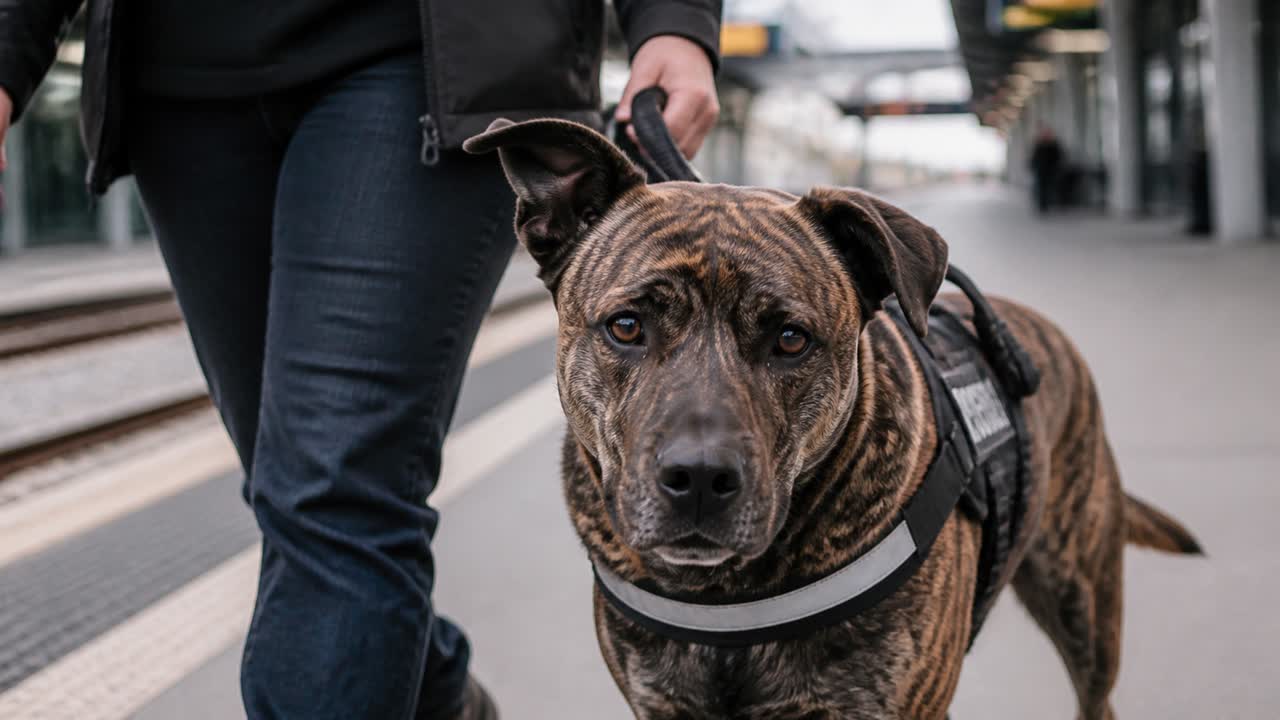
A service dog training log template can help you document what your dog is learning, where training happened, how the dog performed, and what still needs work. For many handlers, that kind of record is less about “proving” anything and more about staying organized, spotting patterns, and reducing friction when you need to explain your dog’s training history.
This article is about practical recordkeeping, not certification. A log will not replace the legal standard for a service dog in the United States. Still, it can support better training decisions, clearer conversations, and more consistent progress over time.
It also helps separate this topic from broader access questions. If you want a full overview of rules and terminology, the Knowledge Center covers the bigger picture. At the same time, this guide stays focused on building and using a training log that works day to day.
Quick Overview
- A training log helps track tasks, obedience, public behavior, distractions, and recovery.
- Good logs are simple enough to use after every session, not so detailed that you stop updating them.
- Your notes should focus on behavior you observed, not vague impressions.
- A useful template includes date, location, duration, task practiced, distractions, outcome, and next steps.
- Logs can support conversations about readiness, especially alongside a behavior check or structured review.
- Training records do not override the law, but they can make it easier to discuss handling, safety, and consistency.
1) What a Training Log Should Actually Do
The best log is a working tool, not a scrapbook. It should help you answer a few practical questions: What did we practice? Did the dog perform the task reliably? What happened around distractions? What needs more repetition?
That matters because public access depends far more on training and control than on paperwork alone. If you are preparing for busier environments, your notes should connect directly to real-world behavior and public access rules, not just whether a dog knows cues in a quiet room.
A strong log also creates a timeline. If your dog struggled in one setting but improved over several weeks, capture that trend. When handlers rely on memory alone, they often miss where training is stalling or where the dog is ready for the next step.
2) Service Dog Training Log Template: What to Include
A practical service dog training log template should stay short enough to complete in a minute or two. Most handlers do better with one repeatable format than with elaborate forms they abandon after a week.
Include these fields in each entry:
- Date and time: When the session happened.
- Location: Home, sidewalk, store entrance, medical office lobby, workplace, or other setting.
- Session length: How long you trained.
- Skill or task practiced: For example, tethered heel, settle under table, alert, retrieve, interrupt, or guide-to-exit.
- Distractions present: Noise, carts, children, food, dogs, automatic doors, waiting lines.
- Performance notes: What the dog did well and where the dog hesitated.
- Handler notes: What you changed, prompted, or need to clean up next time.
- Next step: Repeat, increase difficulty, shorten distance, change environment, or end on easier reps.
If you want a second layer of structure, pair the log with a periodic service screening so you can compare daily notes against bigger readiness milestones.
3) A Simple Format You can Reuse
Here is a plain-language format many handlers find manageable:
Date: ________
Location: ________
Duration: ________
Task or skill practiced: ________
Distractions present: ________
What went well: ________
What needs work: ________
Handler adjustments: ________
Next session goal: ________
You can keep this in a notebook, spreadsheet, or notes app. Paper works fine if you actually use it. Digital works well if you want searchable entries by location, task, or problem area.
The key is consistency. Five months of short, honest notes are more valuable than one “perfect” evaluation document created after the fact.
4) What to Write after a Good Session and a Bad One
Useful logs are specific. Instead of writing “did great,” write “held down-stay under café table for 12 minutes, startled once at dropped cup, recovered within five seconds after cue.” That tells you something real.
When a session goes badly, keep the notes neutral. Write “broke heel twice near sliding doors” or “missed alert in noisy checkout lane,” not “failed.” Neutral notes are easier to review and more helpful for future planning.
This is where the log becomes more than a diary. Over time, you may notice the dog performs well in quiet settings but struggles with transitions, crowd compression, or long waits. That pattern can tell you whether to repeat foundation work, schedule a formal behavior check, or pause harder outings until the dog is steadier.
5) When a Training Log Helps in Real-World Conversations
A training log is not a magic credential, but it can still be useful. In housing, workplace, school, or healthcare conversations, organized records often make discussions calmer because you can describe your dog’s training with specifics instead of broad claims.
For example, a landlord or employer may care about behavior, disruption risk, and how the dog works in shared spaces. Your log can help you explain your routine, task reliability, and how you manage exposure to distractions. That is often more persuasive than informal statements alone.
It can also help if you work with a trainer or program evaluator. Clear notes give outside professionals something concrete to review, rather than a rough summary from memory.
6) Common Mistakes that Make a Log Less Useful
The biggest mistake is overbuilding the template. If your form has twenty fields, color coding, scoring rubrics, and narrative essays, you may stop using it. Keep it simple.
Another mistake is logging obedience without tracking function. A service dog log should not read like a generic pet class notebook. It should show whether the dog can perform trained work reliably and stay under control in relevant environments.
Finally, do not treat the log as a substitute for the legal standard. In the U.S., the question is still whether the dog is individually coached to do work or perform tasks for a person with a disability and whether the dog is under control in the setting involved. A tidy log supports that story; it does not replace it.
For related guidance, see our Knowledge Center and service screening.
For related guidance, see our behavior check and public access rules.
FAQs
Do I legally need a service dog training log template?
No. A service dog training log template is not universally required by law. It is a practical recordkeeping tool that can help you stay organized and show a consistent training history.
Can a training log replace certification or registration?
No. A log is simply documentation of your training process. It does not create legal status by itself, and you should not treat it as a substitute for task training, control, or applicable disability-related standards.
How often should I update my log?
Ideally after each session or outing while details are fresh. Short, regular entries are usually better than infrequent long write-ups.
Should I log public outings as well as home practice?
Yes. Home sessions show foundation skills, while public outings show how the dog handles distractions, transitions, and recovery in more realistic settings.
What if my dog has inconsistent days?
That is exactly why logging helps. Patterns across time are often more useful than one strong or weak outing, especially when you are deciding whether to increase difficulty.
Can a trainer use my notes?
Absolutely. Clear logs can help a trainer, evaluator, or other professional spot recurring issues and recommend better next steps.
Sources
- ADA.gov: Service Animals
- ADA.gov: Service Animals FAQ
- CDC: Dogs
- CDC: Pet Travel Safety
- HUD: Information for Persons with Disabilities
Takeaway
A good training log is a simple, honest record of what your dog practiced, how the dog responded, and what you plan to do next. It works best as a practical training tool that supports consistency, communication, and better decisions over time.
- Keep entries short, factual, and tied to real tasks and environments.
- Track patterns in distraction response, recovery, and handler adjustments.
- Use the log to support training conversations, not as a shortcut around legal or behavioral standards.