
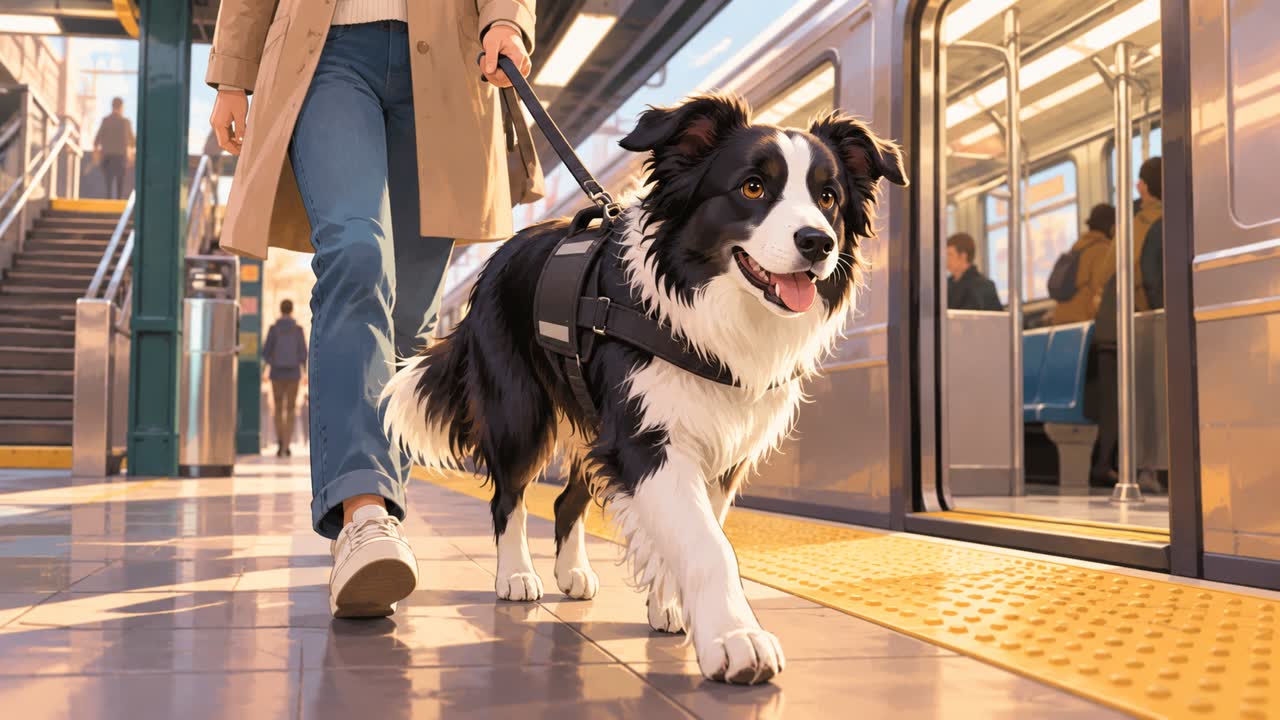
A service dog on subway systems may generally accompany a handler when the dog meets the applicable service-animal standard and remains under control. A subway trip has practical challenges that differ from a restaurant or store: crowded platforms, escalators, turnstiles, sudden noise, moving trains, narrow aisles, and rapid boarding decisions.
The safest approach is to plan the route, choose a controlled position for the dog, and practice the skills needed for stations and trains before relying on the system during a high-pressure trip.
This guide addresses U.S. subway and rapid-transit trips. It does not replace route-specific instructions from a transit agency or individualized veterinary or training advice.
Quick Overview
- A qualifying service dog may generally travel with its handler on public transit.
- Plan the station entrance, fare gate, elevator, platform, and transfer ahead of time.
- Keep the dog close and clear of platform edges, doors, escalators, and crowded aisles.
- Use elevators instead of escalators when the dog cannot safely use an escalator.
1) Plan a Service Dog on Subway Trips before Leaving Home
Check the transit agency’s current station information, elevator status, planned service changes, and accessible-route notices. A route that works on an ordinary day may become difficult if an elevator is out of service, a platform is closed, or construction redirects passengers through stairs or narrow corridors.
Plan the full trip, including the entrance, fare-payment area, platform, transfer stations, destination exit, and relief opportunities before and after travel. Build extra time into the schedule so the handler doesn’t need to rush the dog through a crowded gate or board a closing train door.
Carry only what the dog needs: appropriate control equipment, water when conditions warrant it, waste bags, needed medication, and a small resting mat only if it will not create clutter. General information about service-animal access is available through the site’s regulations, but route planning should account for the specific transit system and the dog’s readiness.
2) Use Safe Station Entrances and Fare Gates
Subway stations may have stairs, escalators, elevators, turnstiles, swing gates, low ceilings, wet flooring, and temporary barriers. Choose an entrance that gives the team enough space and avoids forcing the dog through a crowded or narrow path.
Escalators can catch paws, nails, fur, leashes, or equipment. If an elevator is available and safe to use, it is usually the better choice for a service-dog team. If elevator access is unavailable, ask transit staff about an accessible alternative rather than attempting a route that could injure the dog.
At fare gates, keep the dog close beside or slightly behind the handler. A wider accessible gate may be safer than a narrow turnstile, especially when the handler uses mobility equipment or the dog needs extra clearance to move without being squeezed by closing barriers.
For a commute that begins in an apartment building, condominium, or other shared residence, the path from the home to the station can involve separate housing guidance considerations. Those issues are distinct from the transit agency’s own access process.
3) Position the Dog Safely on the Platform
On the platform, keep the dog away from the edge and behind any warning strip. Avoid allowing the dog to face or investigate the tracks, where moving trains, electrical hazards, dropped items, and strong air pressure can create danger.
Choose a waiting location that leaves room for other riders to pass. Avoid stopping directly in front of stairs, elevators, platform signs, emergency equipment, or the area where train doors will open. If the platform is crowded, consider waiting farther from the boarding zone until the train arrives.
Watch for hazards such as slick floors, litter, food, spilled drinks, broken glass, sudden announcements, service carts, and people moving quickly toward the doors.
A voluntary service screening may help organize task and readiness information, but it is not government approval or a substitute for safe, reliable handling around transit hazards.
4) Board and Ride without Blocking Others
When the train arrives, let exiting passengers clear the doorway before boarding when possible. Guide the dog through the door promptly but without pulling, and remain alert for the gap between the platform and train.
Once inside, choose a position that keeps the dog close to the handler and clear of doors, aisle traffic, accessible seating areas, emergency equipment, and other riders’ feet.
Do not let the dog occupy a seat, climb on benches, sniff bags, approach food, or greet other riders without an invitation. If the train is too crowded for the dog to settle safely, waiting for the next train can be safer than forcing the team into a dangerous position.
Before the destination station, prepare early enough to avoid a last-second rush. Keep the dog close, move toward the exit when it is safe, and use extra caution as the train slows and riders begin shifting toward the doors.
5) Respond to Questions, Fear, and Distractions
If the dog’s service role is not apparent, authorized staff may generally ask whether the dog is required because of a disability and what chores it has been trained to perform. The handler can provide a short answer without disclosing a diagnosis or private medical history.
A vest, purchase certificate, registry entry, or ID card is generally not required for ordinary service-animal access. Optional identification may help with organization or recognition, but it does not replace trained disability-related work and controlled behavior.
Other riders should not pet, call, photograph, feed, or distract the dog. If another passenger has an allergy or fear, transit staff can consider practical options such as distance, a different place in the car, or another boarding location.
The public access guide offers general context about service dogs and public settings. A transit agency may still enforce neutral safety rules that apply to all riders, including directions during emergencies or service disruptions.
6) Prepare for Delays, Emergencies, and Changing Conditions
Subway delays can be uncomfortable for both handler and dog. Carry water when weather or trip length makes it appropriate, know where the nearest exit is, and avoid taking the dog onto tracks or restricted areas to leave a stalled train unless trained transit personnel direct the evacuation.
During an emergency, follow staff instructions promptly. Tell responders that the dog is a service animal and explain any immediate handling need in short, practical terms. If the handler cannot maintain control temporarily, a trusted companion may need to help, but do not leave the dog unattended.
Have a backup surface route or rideshare plan for elevator outages, severe weather, major delays, or crowd levels that make subway travel unsafe. Save the transit agency’s customer-service contact information before the trip so it is available if accessibility equipment fails.
Review each difficult trip afterward. If the dog struggled with crowds, train doors, loud announcements, or prolonged standing, work with a qualified trainer or veterinarian as appropriate before increasing the difficulty of the next outing.
FAQs
Can I bring a service dog on subway trains?
Generally, a qualifying service dog may accompany its handler on public transit. Check the local transit agency’s current accessibility and safety information before the trip.
Does my service dog need a vest or certificate for the subway?
No particular vest, purchased certificate, registry entry, or ID card generally determines service-dog access. The dog’s trained disability-related work and controlled behavior matter more.
Can my dog ride an escalator?
Escalators can create serious paw, leash, and equipment hazards. Use an elevator or another safe route when available, and ask transit staff about alternatives if accessible equipment is unavailable.
Where should the dog sit on a subway train?
The dog should remain close to the handler, usually on the floor, without blocking doors, aisles, accessible seating, or emergency equipment.
What if the platform is too crowded?
Move away from the platform edge, wait in a less congested area, or take a later train if the dog cannot safely settle and board.
Sources
- ADA.gov: Businesses Open to the Public
- ADA.gov: Service Animals
- ADA.gov: Service Animals FAQ
- CDC: Dogs
- CDC: Pet Travel Safety
- U.S. DOT: Service Animals
Takeaway
A successful subway trip depends on route planning, calm boarding, safe positioning, and a realistic backup plan for crowds, outages, and emergencies.
- Use elevators or another safe route instead of risking escalator hazards.
- Keep the dog away from platform edges, doors, aisles, and moving equipment.
- Follow transit staff instructions during delays and evacuations.