
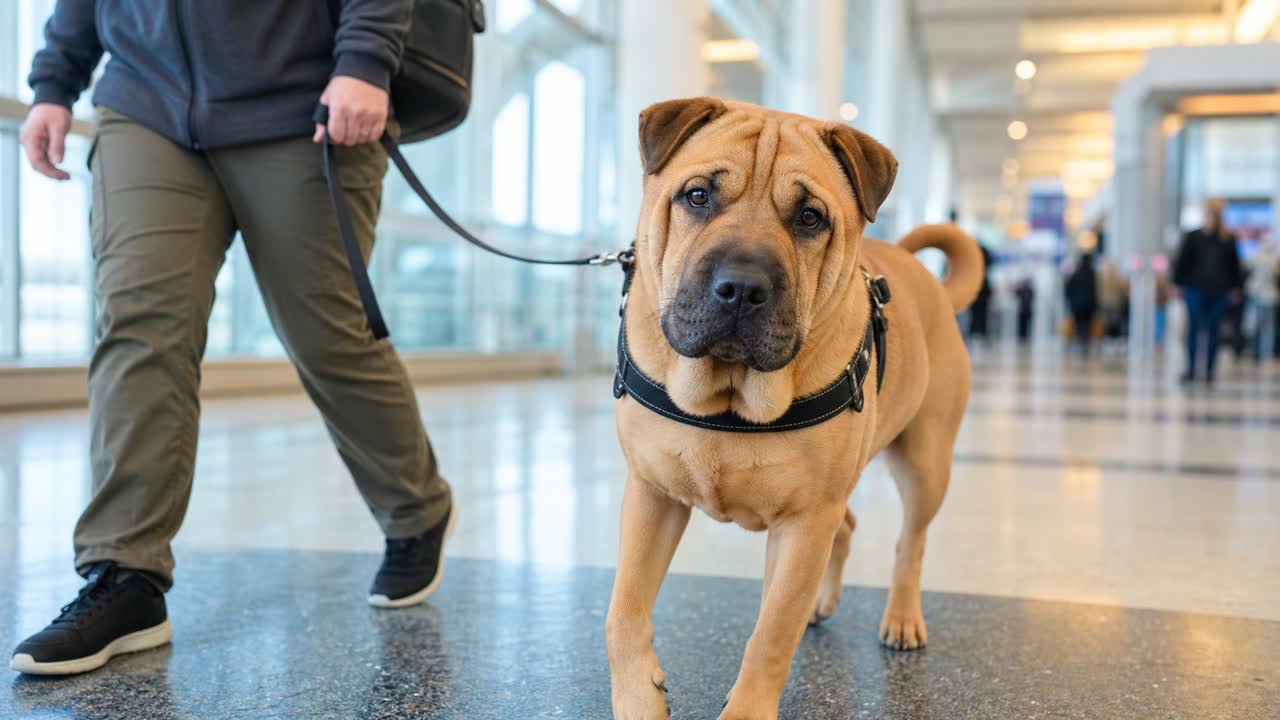
If you are planning to bring a service dog on commuter rail, the practical answer is usually yes: a trained service dog is generally allowed to travel with a person with a disability on public-facing rail systems. It depends on whether the animal qualifies as a service dog and can stay under control in a crowded transit environment.
Commuter rail can be harder than a short errand because it combines platforms, noise, tight seating, rush-hour crowds, and sudden stops. A dog that works well in calmer places still needs to handle moving trains, station announcements, escalators, and people stepping around the team in narrow aisles.
This article is about everyday rail access, not airline forms or housing accommodation paperwork. If you want the broad baseline first, it helps to review the general public access rules before you travel.
Quick Overview
- A service dog is usually allowed on a commuter rail when the dog is trained to perform disability-related work or tasks and remains under control.
- Transit staff may address safety issues, obstructions, or disruptive behavior, but they should not treat a working service dog as an ordinary pet.
- Rush-hour crowding, narrow aisles, and sudden train movement make positioning and leash control especially important.
- Optional documents may help you stay organized, but a certificate or registry generally does not determine access.
1) When a Service Dog is Usually Allowed on a Commuter Rail
In general, commuter rail systems serving the public must allow a legitimate service dog to accompany its handler in passenger areas. The basic standard is familiar: the dog should be individually trained to do work or perform tasks for a person with a disability.
This is different from a pet policy. A rail line may ban pets, restrict pet carriers, or limit non-service animals during certain hours, but those rules do not automatically cancel access for a trained service dog. The transit system can still expect safe conduct, but it should not collapse service-dog access into a general “no dogs” rule.
If you are unsure whether your dog meets the public-facing standard before a busy rail trip, a simple service screening can help you assess readiness in practical terms.
2) What a Commuter Rail Staff can Focus on During the Trip
Rail staff are usually concerned with movement, safety, and passenger flow. In real life, that means they are more likely to care about whether the dog is blocking the aisle, creating a tripping risk, interfering with doors, or reacting to other passengers than whether the handler has a special card.
Some staff may ask basic questions if they are unsure about the dog’s role, especially if the dog is not wearing obvious work gear. A certificate may provide peace of mind, but it generally isn’t what makes commuter-rail access valid.
Handlers also benefit from staying flexible. If a conductor asks you to move slightly so the dog is safer near a seat base or away from the doorway, that is usually a traffic-management issue, not a denial of access.
3) Platforms, Boarding, and Seat Positioning
The hardest part of commuter rail is often not being on the train. Platforms can be noisy and crowded, with people rushing, trains arriving quickly, and limited space to reset if the dog gets overstimulated. A close heel and a strong waist cue matter more here than in many other settings.
Boarding takes planning, too. The dog should be able to step across the train gap cleanly, avoid tangling near other passengers’ bags, and move out of the doorway without hesitation. Once on board, the best position is usually tucked under or beside the handler’s seat rather than stretched into the aisle.
For many teams, the biggest friction comes from poor positioning, not from the access rule itself. A quiet dog that fits neatly into the team’s footprint often travels with very little attention, even on a busy line.
4) Common Problems and How to Reduce Friction
Commuter rail brings together several triggers at once: food smells, wet floors, rolling suitcases, children, mobility devices, public announcements, and abrupt braking. A dog that startles, vocalizes, or tries to greet strangers can turn a routine trip into a tense one very quickly.
The best preparation is behavioral, not bureaucratic. Practice close-quarters settling, calm boarding, ignoring food scraps, and waiting while passengers pass by. If your dog still struggles with crowded transit conditions, consider quieter travel times before assuming the busiest commute is the right next step.
This is also where article scope matters. Travel by rail is a public-access issue. It is not the same as landlord accommodations or home-entry questions, even if readers sometimes mix them together. If you also need to compare how those topics differ, the separate housing rules can help keep those conversations distinct.
5) When a Rail Operator may Ask a Dog to Leave
Being a legitimate service dog does not mean every behavior has to be tolerated. If the dog is out of control, repeatedly barking, lunging, relieving itself on the train or platform, blocking safe movement, or creating a direct safety problem, transit staff may have a reason to intervene.
The important distinction is that removal should be tied to actual behavior or immediate safety concerns, not to assumptions that all service dogs need a registry, vest, or official ID. A dog that works quietly and stays controlled is usually a much easier case than one whose behavior poses a risk to other riders.
If a problem starts, step off at the next safe opportunity if you can, reset the dog, and decide whether continuing the trip is realistic. Calm problem-solving usually protects access better than arguing in the middle of a crowded car.
6) Planning Ahead for Longer or Repeated Trips
If commuter rail is part of your daily routine, small habits make a big difference. Know which car layouts work best for your team, allow extra time for elevators if needed, and think about weather, wet platforms, and peak-hour congestion. Repeated trips expose small training gaps fast.
Some handlers also keep notes on station challenges, transfer timing, and routes that are easier for the dog. The goal is a steady, predictable routine that helps the dog work comfortably and helps other passengers move around the team without conflict.
Most commuter-rail trips go smoothly when the dog is ready for transit conditions, and the handler treats the ride like real public-access work rather than a casual outing.
For related guidance, see our regulations, service screening, public access rules, and housing rules.
FAQs
Is a service dog on the commuter rail usually allowed?
Yes, in most cases. A trained service dog is generally allowed in stations and train cars where passengers normally go, as long as the dog is under control.
Do I need a certificate or registration to ride?
Not usually. Optional documents may help some handlers feel more organized, but access generally depends more on the dog’s training and behavior than on a certificate-led approach.
Can rail staff move me to another part of the train?
They may sometimes ask you to reposition for safety or traffic flow, especially if the dog is near a doorway or blocking movement. That is usually different from outright denial of access.
.
What is the safest place for the dog on the train?
Usually beside your legs or tucked near your seat base, where the dog is least likely to block the aisle or get stepped on during boarding and exits.
Can my dog be excluded from certain areas of the station?
Passenger areas are usually the main access zones. Staff may still restrict entry to employee-only or unsafe operational spaces that are not open to the public.
Sources
- ADA.gov: Service Animals
- ADA.gov: Service Animals FAQ
- CDC: Dogs
- CDC: Pet Travel Safety
- HUD: Information for Persons with Disabilities
Takeaway
A service dog on a commuter rail is usually allowed when the dog meets the service-animal standard and can work safely in a crowded transit setting. Most problems come from positioning, overstimulation, or confusion about the rules rather than from the basic access principle.
- Prioritize close control during platforms transfer, boarding, and crowded cars.
- Keep access conversations practical instead of paper-centered.
- Train for real transit conditions before relying on busy commuter service.