
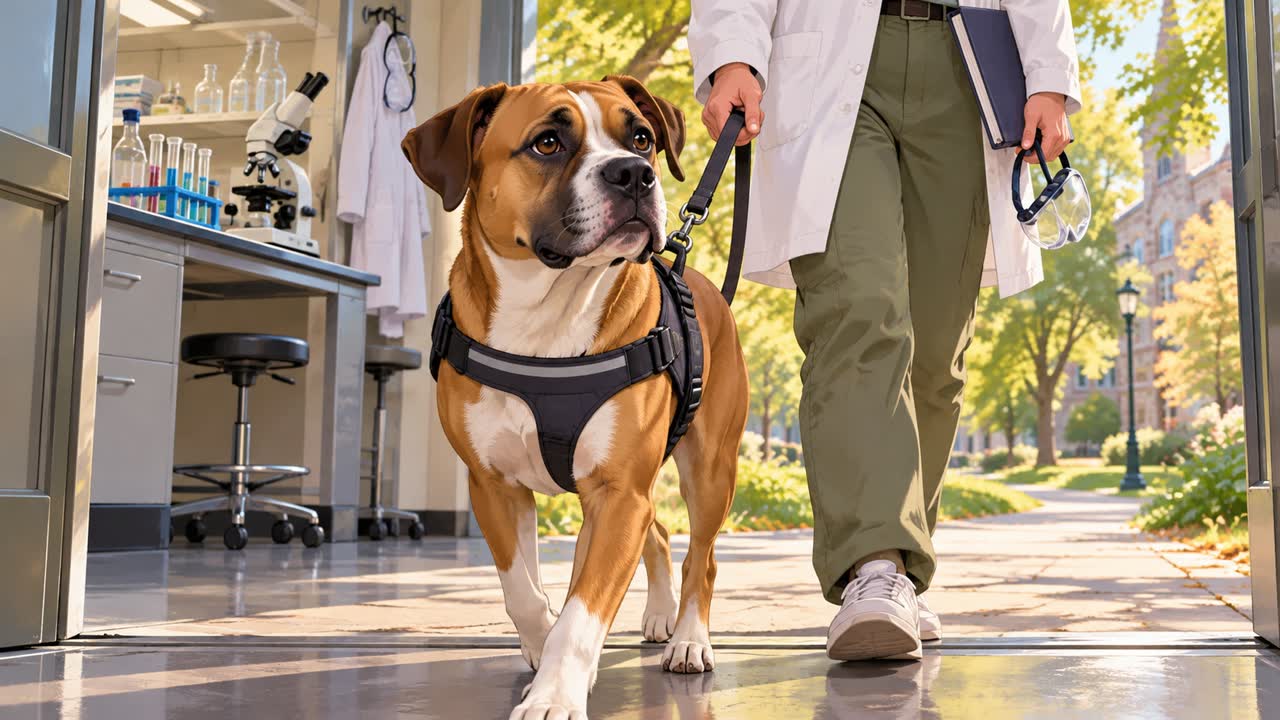
A service dog in a science lab class may require planning because laboratories can contain chemicals, heat sources, glassware, moving equipment, biological materials, and restricted work zones. A school should consider the student’s disability-related access needs alongside the specific lab’s safety conditions.
The answer is rarely a simple yes-or-no rule. A general classroom, dry lab, lecture room, or computer-based activity may differ greatly from a chemistry bench, anatomy lab, machine shop, clean room, or laboratory using hazardous materials.
This guide offers practical information for U.S. students, families, instructors, and disability-services staff. It does not replace school policy, laboratory safety procedures, veterinary advice, or individualized disability-accommodation guidance.
Quick Overview
- Contact the disability-services office and instructor before the lab begins.
- Review the specific lab activities, chemicals, equipment, and emergency procedures.
- Identify a safe resting location outside active work zones and travel paths.
- Keep the dog away from food, chemicals, specimens, flames, glassware, and sharps.
1) Plan for a Service Dog in Science Lab Class
Start the conversation before the first lab meeting, ideally when the student receives the syllabus or lab schedule. Contact the school’s disability-services office, instructor, laboratory manager, or safety officer and explain that the student uses a service dog because of a disability.
Ask for the course schedule, room layout, laboratory rules, safety data, and a description of each activity type. A safe arrangement for a physics demonstration may not work for a chemistry experiment involving fumes, open containers, corrosive substances, or a crowded shared bench.
Keep the request focused on practical access: a safe position for the dog, an accessible route, enough space for the student to work, advance notice of unusual activities, and a plan for any emergency evacuation. General service-animal information is available through the knowledge hub, but the school must assess the actual course environment.
2) Identify Hazards before the First Experiment
Review every lab for hazards that could affect the dog, the student, classmates, and staff. Ask about chemicals, fumes, allergens, open flames, hot plates, lasers, electrical equipment, glassware, compressed gases, biological samples, animal specimens, moving machinery, and loud or sudden demonstrations.
The dog should not enter an area where it could contact hazardous materials, obstruct an emergency shower or eyewash station, interfere with a fire extinguisher, or create a trip hazard during an urgent response.
Consider the room’s traffic pattern. A crowded teaching lab may have stools, backpacks, rolling carts, open cabinet doors, and students carrying glassware. A wall-side location or a designated position near the student may be safer than placing the dog beneath a central worktable.
If an activity introduces a new hazard, the student should not have to discover it after class begins. The instructor or disability-services office can discuss advance notice, a different workspace, modified timing, remote observation, or another effective way to participate.
3) Choose a Safe Location for the Dog
The dog needs a controlled resting place that remains clear of lab benches, stools, aisles, exits, safety equipment, and classmates’ work areas. A clean mat may help define the dog’s position when it is permitted and does not interfere with laboratory procedures.
In many settings, the safest spot is beside or slightly behind the student, outside the active work zone. The dog should remain close enough to perform trained tasks but far enough from chemicals, glassware, heat, liquids, and people moving between benches.
Do not place the dog on a lab stool, chair, counter, table, or floor area used for storage or equipment setup. The dog should not wear loose gear that could catch on stools, drawers, carts, or machinery. Keep the leash and harness controlled to avoid entanglement hazards.
The public access guide offers general background on service-dog access. In a lab, however, access decisions should also account for the exact activity, the room’s safety plan, and whether a proposed arrangement is genuinely safe.
4) Keep Laboratory Hygiene and Handling Rules Clear
The handler should follow the same hygiene and safety expectations as other students, including handwashing, protective clothing where appropriate, and cleanup procedures. The dog should remain clean, controlled, and free from contact with lab materials.
Keep food, treats, water bowls, toys, and personal supplies out of any area where they could cause contamination or conflict with lab rules. Plan feeding, water, and relief breaks before or after class unless the school identifies a safe, appropriate alternative.
Classmates should not pet, call, feed, photograph, or distract the dog. An instructor can state this briefly at the start of the term without sharing the student’s diagnosis or private information. A simple reminder that the dog is working and needs clear space is usually sufficient.
A voluntary service check may help organize task and readiness information, but it is not government approval and does not replace school safety planning, training, or veterinary care.
5) Create Alternatives for Restricted Activities
Some labs may include a specific activity or location that cannot safely accommodate the dog. For example, a sterile environment, hazardous chemical procedure, animal facility, industrial machine area, or room with controlled contamination rules may require an alternative arrangement.
An alternative should aim to provide meaningful participation rather than simply excluding the student from the course component.
The school should consider the individual student, dog, activity, and available alternatives. A broad statement that “dogs are not allowed in labs” may not address whether the particular course can make a safe, effective arrangement for a service-dog team.
If the class includes field travel, overnight work, or a conference, address those plans separately. For example, air travel rules may apply to a flight, but they do not determine the school’s laboratory accommodation process.
6) Prepare for Emergencies and Changing Conditions
Before the first class, review evacuation routes, shelter locations, emergency alarms, and who will assist if the student cannot safely manage the dog during an evacuation. The dog should not block exits or be left behind in a lab during an emergency.
Tell the instructor if the dog performs a task that may become visible during class, such as an alert, interruption, retrieval, or response to a medical change. A short operational explanation can reduce confusion while protecting the student’s privacy.
Update the plan when the course moves to a new room, begins a new unit, adds a field component, or changes from lecture to active laboratory work. A workable plan for an introductory lab may not be sufficient for a later experiment with different equipment or hazards.
If the school restricts access, ask for the specific safety concern, the activity involved, and whether another effective arrangement is available. If the concern remains unresolved, consider guidance from the school’s disability-services office, an appropriate disability-rights organization, or qualified counsel.
FAQs
Can I bring a service dog in science lab class?
You may request the dog as an accommodation, but the school should evaluate the specific lab environment, hazards, and available safety arrangements. Planning is especially important for hands-on science courses.
Can a school ban service dogs from every science lab?
A blanket rule may not account for differences between labs or individual safety conditions. The school should consider the particular activity, the dog’s role, and whether a safe, effective arrangement or alternative is available.
Where should the dog stay during an experiment?
The dog should remain in a controlled position outside active work zones, emergency routes, equipment paths, and areas where chemicals, glassware, heat, or biological materials are handled.
Can the dog sit under a lab bench?
Only if the location is genuinely safe and does not expose the dog to spills, equipment, chemicals, moving stools, or blocked access. A wall-side position may be safer in many labs.
Does the dog need a vest or certificate for class?
No particular vest, purchased certificate, registry entry, or ID card by itself determines access. The important issues are trained disability-related work, controlled behavior, and a safe accommodation plan.
Sources
- ADA.gov: Businesses Open to the Public
- ADA.gov: Service Animals
- ADA.gov: Service Animals FAQ
- CDC: Dogs
- CDC: Pet Travel Safety
- U.S. DOT: Service Animals
Takeaway
A successful science-lab arrangement protects access while addressing real laboratory hazards before class begins.
- Review each lab activity, room, and hazard in advance.
- Choose a controlled location away from chemicals, equipment, and emergency routes.
- Use meaningful alternatives when a specific activity cannot safely accommodate the team.