
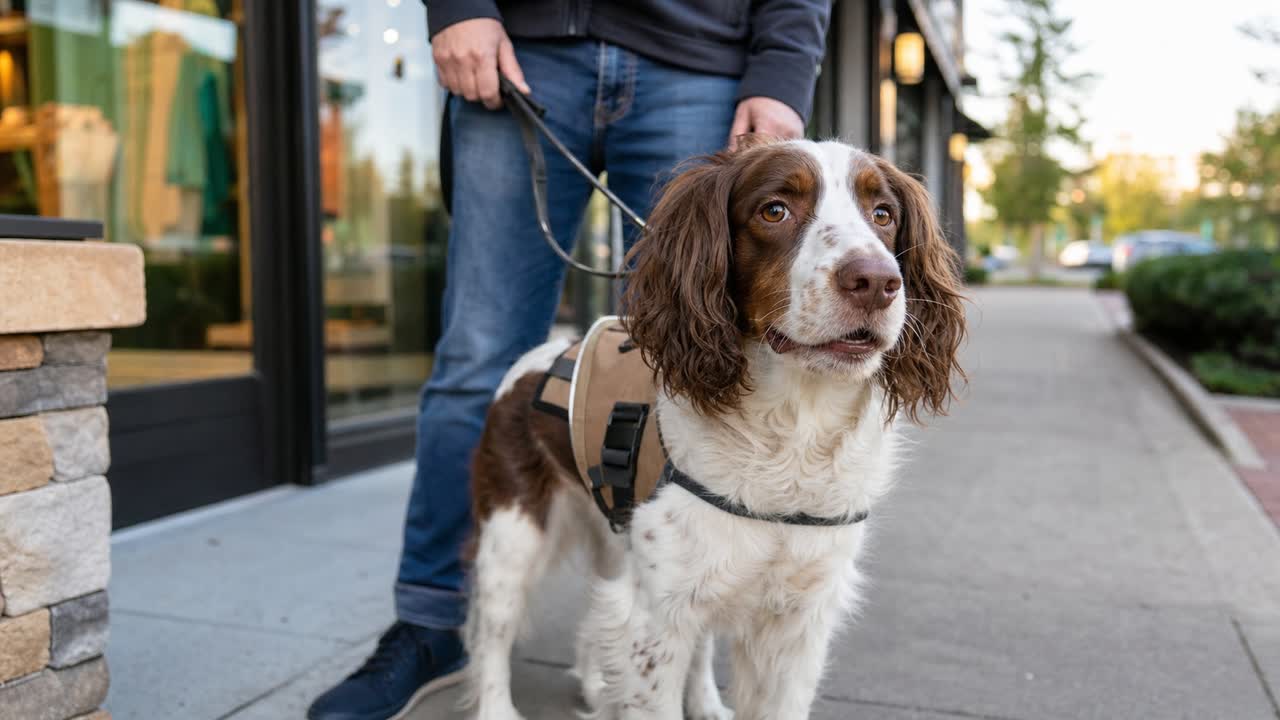
A service dog in college dorm housing is usually handled as a disability accommodation, but the exact process depends on the school, the housing setup, and whether the dog is a task-trained service dog or another type of assistance animal.
In practical terms, a college generally should focus on your disability-related accommodation request, not on whether you bought a certificate, ID card, or registry listing. General housing guidance can help, but dorms bring their own roommate, sanitation, and community-living issues.
This article stays focused on residence halls, student apartments, and campus-managed living spaces. It is not the same as a guide to classroom access or a general pet policy, and it is also different from emotional support animal requests that may involve separate paperwork or an ESA screening process.
Quick Overview
- A college should usually evaluate a service dog in dorm housing as a disability accommodation, rather than a regular pet request.
- For campus housing, schools may have a formal accommodation process, even when a service dog is allowed in other public areas without advance approval.
- A certificate, vest, or registry is generally not the main legal issue.
- What matters most is disability-related need, whether the dog is task-trained, and whether the dog can live safely in shared housing.
1) What a Service Dog in College Dorm Housing Usually Means
A service dog is a dog specially instructed to do work or perform tasks for a person with a disability. That definition matters because schools sometimes use “assistance animal” as a broad term, while the legal handling of a task-trained service dog differs from that of an emotional support animal.
In a dorm setting, the core issue is not just whether the dog can enter a building. The school also has to consider where the dog will sleep, how the student will manage daily care, and how the arrangement accommodates shared bathrooms, common areas, elevators, fire drills, and overnight safety.
For students trying to prepare for routines like feeding schedules, relief breaks, and quiet hours, practical daily living tips can be more useful than chasing optional identification items.
2) How Dorm Housing Rules Differ from Classroom or Public-Access Rules
This is where many students get mixed messages. A college classroom, library, or student center may raise public-access questions under ADA-style rules. A dorm, by contrast, is housing. Housing offices often work through disability services, accommodation forms, and residence-life policies because the school is managing a living environment, not just a public building entrance.
That does not mean a school can impose random barriers. It does mean the school may ask for the information needed to process a housing accommodation, coordinate room assignments, and address legitimate health and safety issues.
If staff sound inconsistent, it often helps to ask one simple question: is this request being handled as campus housing accommodation, as public access, or as both? That keeps the conversation focused and reduces policy confusion.
3) What Schools may Ask for, and what They Should not Overemphasize
Schools may ask for information relevant to the housing accommodation process. That can include whether the student has a disability-related need for the animal in campus housing and, depending on the context, whether the animal is a service dog or another kind of assistance animal.
What they generally should not do is treat a paid certificate, registry entry, or ID card as the deciding factor. Those items may feel helpful for personal organization or peace of mind, but they are not the same as an analysis of disability accommodations.
A better approach is to keep responsible records: veterinary care records, behavior notes, task information you can explain clearly, and any housing communications in writing. Some students also like using a simple tracking app for routines, records, and reminders, especially during the first semester when schedules change fast.
4) Roommates, Allergies, Noise, and Shared-Space Concerns
Most dorm problems are not really about legal definitions. They are about close living. Roommates may worry about allergies, barking, cleanliness, or shared floor space. Residence staff may worry about waste disposal, damage, or the dog’s ability to be controlled in crowded halls.
A school usually should not deny an accommodation just because another student is uncomfortable around dogs. At the same time, schools can often make practical adjustments, such as a different room assignment, a single-room review when appropriate, or separation measures if a documented allergy exists.
Students can help a lot by being proactive. Explain your routine, confirm how you handle feeding and relief breaks, and be realistic about your dog’s temperament in a noisy dorm. If your dog struggles with constant hallway traffic, late-night noise, or long periods alone, that needs attention before move-in, not after complaints begin.
5) How to Prepare before Move-in Day
Start early with disability services and housing. Ask what forms are required, who reviews them, and whether housing assignments can be adjusted if your dog needs a certain layout or easier outdoor access. Keep copies of all emails and approvals in one place.
It also helps to prepare the dog for dorm life itself. Elevators, automatic doors, strangers in close quarters, food smells, and sudden alarms can all challenge an otherwise solid working dog. Practice settling in tight spaces, ignoring dropped food, and staying neutral around constant foot traffic.
Bring only practical supplies: leash, cleanup tools, food storage, water bowl, bedding that fits the room, and veterinary records. Think through who helps if you are sick, hospitalized, or off campus longer than expected. A backup care plan is part of responsible housing readiness.
6) When a School may Lawfully Deny or Limit the Request
Colleges do not have to ignore real safety or housing problems. If a dog is out of control, not housebroken, destructive, or creating a direct threat that cannot be reduced through reasonable measures, the school may have grounds to act. That decision should be based on actual behavior and risk, not stereotypes about breed, size, or student housing culture.
Schools may also distinguish between what is allowed in housing and what requires additional coordination in specialized settings such as labs, food-prep areas, or athletic facilities. That is a separate issue from whether the dog can live in the dorm.
If a request is denied, ask for the reason in writing. A clear written explanation makes it easier to understand whether the issue is documentation, process, behavior, or a misunderstanding about the law. Many disputes are easier to solve when the conversation shifts from emotion to specific housing facts.
FAQs
Do I need special approval for a service dog in college dorm housing?
Often, yes, in the sense that campus housing usually has an accommodation process. That is different from saying you need a certificate or registry. The school may still require housing coordination even when the dog qualifies as a service animal.
Can a college require a service dog certificate?
Generally, that should not be the deciding requirement. Schools may request information relevant to the accommodation process, but a paid certificate or ID card is not typically the core legal standard.
Can my roommate refuse to live with my service dog?
A roommate’s preference alone usually does not decide the outcome. Schools may still work on room changes or other adjustments if there are documented allergy or disability concerns on both sides.
Is this the same process as an emotional support animal request?
Not always. A task-trained service dog and an emotional support animal are not identical categories, and schools may use somewhat different review steps depending on the request.
Can the school ask for vaccination records?
Usually yes. Practical health and safety records are common in campus housing and differ from the requirement to provide proof through a registry or certificate.
Sources
- HUD: Information for Persons with Disabilities
- ADA.gov: Service Animals FAQ
- ADA.gov: Service Animals
- CDC: Dogs
Takeaway
A service dog in college dorm housing is usually less about providing proof and more about navigating the accommodation process well, maintaining practical records, and demonstrating that the dog can live safely in a shared campus environment.
- Start early with disability services and housing staff.
- Focus on documentation, behavior, and daily management instead of optional status items.
- Plan for roommates, routines, and emergency backup care before move-in day.