
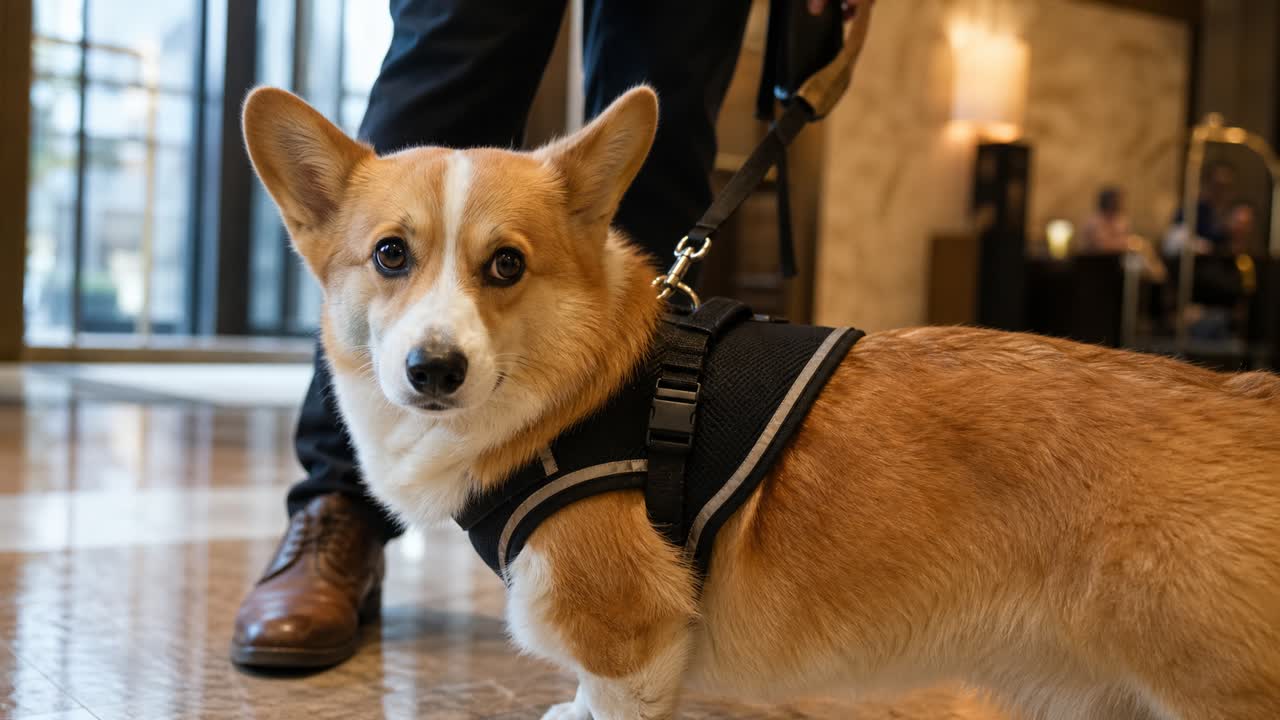
If you are planning for a service dog for bankruptcy court visits, the short answer is usually yes: a trained service dog can generally accompany a person with a disability into public-facing court spaces used for hearings, check-in, waiting, and related courthouse visits, as long as the dog is under control and the area is one the public normally uses.
This topic is narrower than general courtroom access debates. It is not mainly about trial strategy, witness handling, or private legal meetings. It is about what happens when someone needs to enter a courthouse, pass security, wait for a calendar call, meet with staff, or attend a bankruptcy-related proceeding while relying on a working service dog.
In real life, a service dog for bankruptcy court visits often raises practical questions about screening, seating, elevators, long waits, and how court staff handles accommodations without turning the dog into a certificate issue. The baseline public access guide matters, but courthouse logistics matter just as much.
Quick Overview
- A service dog is usually allowed in public-facing courthouse areas used for bankruptcy court visits.
- Security officers and court staff may focus on screening, safety, and room logistics, not on paid registries or ID cards.
- Long waits, quiet rooms, and formal procedures make steady leash handling especially important.
- Some restricted staff-only or highly controlled areas may be handled differently from public waiting and hearing spaces.
1) What Service Dog for Bankruptcy Court Visits Usually Means
Bankruptcy court visits often involve more than one step. You may need to enter through security, check a posted calendar, sit in a waiting area, speak with a clerk, attend a meeting or hearing, and move through hallways or elevators with other visitors.
This is important because many people assume all court-related settings work the same way. They do not. A bankruptcy court visit is a structured government setting, but it still includes public access areas where people with disabilities may need to function safely and independently.
If you are still sorting out whether your dog fits the core standard for these settings, a simple service screening can help you think through the basics before your visit.
2) Security Screening and Courthouse Entry
For many handlers, the first stressful point is the entrance. Courthouses often use metal detectors, X-ray belts, security officers, line control, and bag checks. That can create pressure even for a well-trained team, especially if the building is crowded or the handler is already anxious about the legal matter.
In practice, security staff are usually trying to keep the line moving and maintain safety. If your dog gets overstimulated in narrow queues or around sudden noise, that is worth addressing before court day rather than hoping the environment will be forgiving.
If you expect problems because of mobility issues, psychiatric symptoms, or the dog’s size, it can help to call ahead. A short conversation about entry procedures can prevent a lot of confusion at the door.
3) Waiting Areas, Calendar Calls, and Quiet Behavior
Bankruptcy court visits often involve waiting. Even a short appearance can turn into an hour or more of sitting quietly in a hallway, courtroom, or overflow room. That means the dog needs to settle near your chair, avoid blocking walkways, and ignore papers, briefcases, food wrappers, and strangers passing close by.
This is one reason behavior matters so much in a courthouse. If you are unsure whether your dog is ready for a quiet, tightly managed room with long idle periods, a quick behavior screening can help identify rough spots before they become stressful in court.
Small choices help too. Arriving a little early, choosing a seat with reasonable floor space, and keeping the leash short and tidy can reduce friction for everyone around you.
4) Hearings, Clerk Interactions, and Space Management
If you are called into a courtroom, clerk window, or meeting area, the dog will usually need to remain unobtrusive while you speak, listen, or wait for instructions. Court staff may need you to move to a certain side of a room, step forward, or sit in a designated area.
This is also where the topic can drift into other article families if you are not careful. A bankruptcy court visit is not mainly a housing documentation question, and it is not a travel issue. It is a government-building access and courtroom-behavior question. Keeping that scope clear helps you prepare for the right problems: seating, timing, silence, and controlled movement.
If you need an accommodation such as extra space, a particular seat, or a simpler route through the room, raise that early and practically. A workable setup is usually easier to arrange before the room is full than after proceedings begin.
5) What Staff can Focus on and What Usually Matters More than Paperwork
Court staff may properly focus on logistics: whether the dog is blocking a path, whether you can follow instructions during seating changes, or whether the room can function without disruption. Those are real concerns in a courthouse. What usually matters less is whether the handler can produce a certificate, registry listing, or ID card.
Some handlers carry optional records because they like being organized. That is fine for peace of mind. But a service dog for bankruptcy court visits is usually not validated by purchased paperwork. In practice, the strongest signal is a dog that behaves predictably and a handler who communicates clearly and briefly.
That calm tone matters. Court environments are formal and time-sensitive. A short explanation and a steady dog will usually do more than trying to litigate the issue in the hallway.
6) What to Do If Problems Come Up on the Day
Sometimes the setting becomes the problem rather than the dog itself. A packed hallway, a delayed calendar, an unexpected room change, or a nervous nearby visitor can create stress. If your dog starts to struggle, the smartest move is usually to simplify the situation fast instead of forcing the team to stay in the middle of it.
Ask whether you can step into a quieter area for a minute, move to a different seat, or wait where the dog can settle more easily. If another person objects, let staff focus on space and behavior rather than turning the conversation into a debate about personal opinions about dogs.
Most courthouse problems are practical. Planning, calm handling, and realistic expectations solve more than extra paperwork ever will.
For related guidance, see our rules guide, service screening, behavior screening, and public access guide.
FAQs
Can I bring a service dog for bankruptcy court visits?
Usually, yes. A trained service dog is generally allowed in public-facing courthouse areas used for hearings, check-in, and waiting, as long as the dog is under control and does not create a direct problem.
Can courthouse security ask for a certificate or registration?
Not usually as the basis for access. Security and staff are more likely to focus on screening, safety, and whether the dog can move through the building appropriately.
What if the courtroom or waiting area is crowded?
Ask early for a workable seating arrangement. A little extra floor space or a better chair position can make a big difference for the dog and for people moving around you.
Can the court limit where my dog goes inside the building?
Public-facing areas are the main issue for most visits. Some staff-only or controlled spaces may be handled differently, but that does not automatically cancel access in the areas the public normally uses.
Do I need to notify the court in advance?
It is often a good idea if you need a particular seating setup, extra space, or a clearer entry plan. Advance communication can make a formal environment much easier to navigate.
Sources
- ADA.gov: Service Animals
- ADA.gov: Service Animals FAQ
- CDC: Dogs
- CDC: Pet Travel Safety
- HUD: Information for Persons with Disabilities
Takeaway
A service dog for bankruptcy court visits is usually workable when the dog is ready for screening, quiet waiting, close seating, and formal courthouse movement. In this setting, solid behavior and clear planning matter more than paperwork.
- Think ahead about entry screening, seating, and long waiting periods.
- Use early communication if you need a more workable room setup.
- Rely on calm handling and dependable public behavior to reduce friction.