
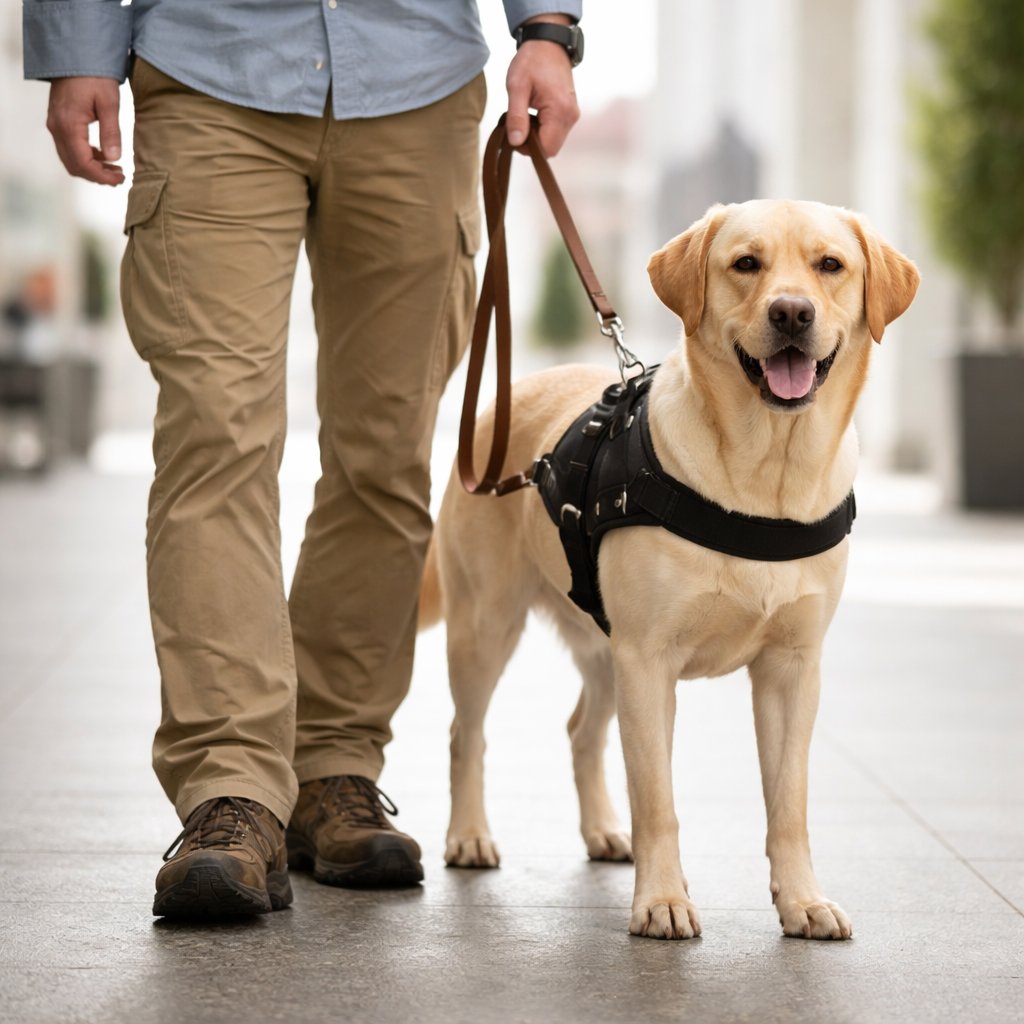
Seeing a working service dog in public is becoming more common in stores, airports, restaurants, and community spaces. Knowing service dog etiquette helps protect the dog’s focus, supports the handler’s independence, and keeps shared environments comfortable for everyone. This guide offers practical, everyday guidance for the general public.
Quick overview (at a glance)
- Don’t distract: No petting, talking to, or making noises at the dog unless invited.
- Give space: Allow extra room in aisles, lines, and doorways.
- Speak to the handler: Address the person, not the dog.
- Ask before helping: Offer assistance respectfully and accept “no” graciously.
- Keep your pets under control: Leash, shorten distance, and move aside if needed.
- Respect privacy: Avoid personal questions about disability or the dog’s tasks.
1) Understand what “Working” Looks Like
A service dog is trained to give assistance to someone with a disability by performing specific tasks. In public, a service dog may look calm and “just sitting there,” but that can still be active work—monitoring, waiting for cues, or maintaining position.
- Do: Assume the dog is working unless the handler clearly indicates otherwise.
- Don’t: Treat the dog as a public attraction or assume it’s okay to interact because it seems relaxed.
2) Don’t Distract the Dog (even “friendly” attention can interfere)
Distractions can break the dog’s concentration and may reduce its ability to respond quickly to the handler. Common distractions include eye contact, calling the dog, whistling, kissing noises, or reaching out “just for a second.”
- Do: Keep your voice and body directed toward the handler if you need to communicate.
- Don’t: Pet, feed, or offer treats to the dog without an explicit invitation.
- Tip: Teach children a simple rule: “Look, don’t touch—ask the person, not the dog.”
3) Give the Team Space in Lines, Aisles, and Doorways
Handlers and service dogs often need a bit more room to navigate safely and comfortably. Crowding can make it harder for the dog to maintain position and for the handler to move confidently.
- Do: Leave extra distance behind them in line and avoid stepping over the dog or its leash.
- Do: If you’re passing in a tight space, slow down and give a wide berth.
- Don’t: Block doorways or pinch the team between carts, strollers, or displays.
4) Communicate Respectfully with the Handler
Good service dog etiquette centers on treating the handler like anyone else—politely, directly, and without assumptions.
- Do: Speak to the handler, not the dog.
- Do: Keep questions brief and neutral. If they seem busy or prefer not to chat, let it go.
- Don’t: Ask intrusive questions about someone’s medical history, diagnosis, or why they “need” the dog.
5) Offer Help the Right Way (and accept “no”)
Sometimes you may notice a situation where help could be useful—such as crowded spaces, a dropped item, or a difficult door. Assistance can be welcome, but it should be offered carefully.
- Do: Ask first: “Would you like a hand with that?”
- Do: Follow instructions if they accept.
- Don’t: Grab the handler, the dog’s harness, leash, or handle without permission.
- Don’t: Insist. If they decline, a simple “Of course” is enough.
6) Manage Your Own Pets and Children
Even calm pets can react unpredictably to a working dog. Children may also rush up out of excitement. Preventing unplanned interactions is one of the most helpful things the public can do.
- Do: Keep your dog on a short leash and move to the side to create space.
- Do: Redirect your child and explain that the dog is working.
- Don’t: Allow your pet to approach “to say hi,” even if your pet is friendly.
- Don’t: Let children hug, crowd, or chase the dog.
7) Be Considerate in Food and Seating Areas
Restaurants, cafés, and food courts can be tight and busy. A service dog may tuck under a table or lie beside the handler’s chair. Small actions by others can reduce stress for everyone.
- Do: Avoid stepping toward the dog’s space or placing bags where the dog is settled.
- Do: Keep food to yourself—spilled snacks and “just one bite” offers can distract the dog.
- Don’t: Comment loudly or draw attention that encourages others to approach the dog.
FAQs
- Can I pet a service dog if it comes up to me?
Usually, it’s best not to. If the dog approaches, look to the handler and ask first. Some dogs are trained to seek help in specific situations, so avoid engaging the dog directly unless the handler indicates it’s okay. - Is it okay to take a photo of a service dog in public?
It’s more respectful to avoid photographing or filming without permission. If you want a picture, ask the handler first and accept a “no” without debate. - What should I do if a service dog is in my way in a narrow aisle?
Pause, give the team a moment, and politely ask the handler if they’d like space or if you can pass. Move slowly and avoid stepping over the dog or getting too close to it. - What if I’m afraid of dogs or I have allergies?
Create distance calmly—step aside, change lanes in an aisle, or choose a different seat if available. If you’re in a shared setting, a staff member may be able to help with practical adjustments without involving the handler in an uncomfortable exchange. - Should I tell someone if I think the dog is “misbehaving”?
If there’s an immediate safety issue (growling, snapping, running loose), alert staff or a manager rather than confronting the handler. If it’s minor (sniffing, shifting position), it may not be a problem—avoid assumptions. - What’s a polite way to explain service dog etiquette to my child?
Try: “That dog has a job helping its person. We can look quietly, but we don’t touch or talk to the dog.” If your child wants to learn more, encourage them to ask the handler respectfully from a distance.
Related Reading
- Service Dog Distractions in Public: A Simple Public Access Plan (What to o When People Interrupt)
- Public Access Training for Service Dogs: Skills Checklist, Practice Plan, and Common Mistakes
- Service Dog vs Emotional Support Animal (ESA): The Practical Difference
Takeaway
Good service dog etiquette is simple: Don’t distract the dog, give the team space, communicate respectfully with the handler, and manage kids and pets to prevent unwanted interactions. Small, considerate choices help service dog teams move through public spaces safely and with dignity.