
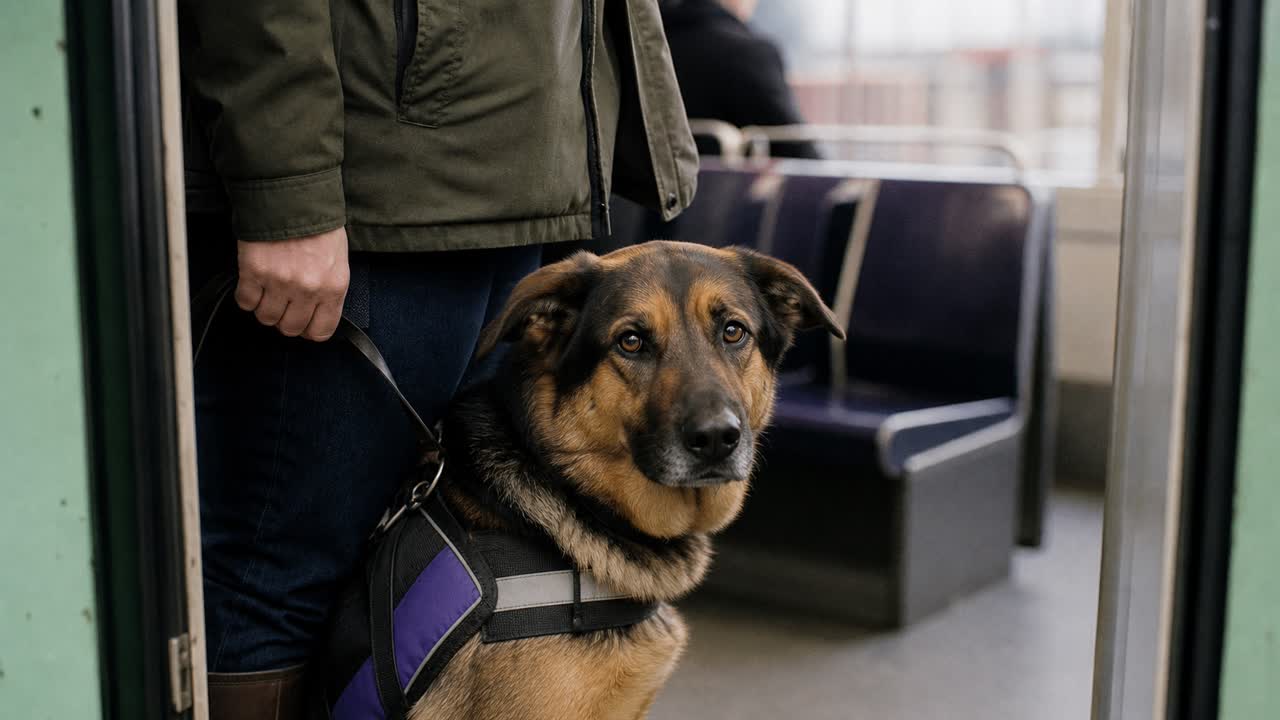
If you are planning to bring a service dog to MRI appointments, the short answer is usually this: your dog may be able to accompany you through parts of the visit, but not into the MRI scanner room itself, where the magnetic field poses a safety risk. It is whether the environment is safe for the dog, staff, and patient.
This topic is narrower than general hospital access. An MRI suite has equipment, screening rules, noise, and metal-related hazards that can justify access limits in specific areas while still requiring the provider to consider reasonable ways to support you during the appointment.
That means it helps to plan ahead. A calm conversation with the imaging center, a clear description of your dog’s tasks, and a backup strategy for the scan itself can reduce stress and avoid last-minute conflict.
Quick Overview
- A service dog can often accompany a handler in public areas of a medical facility, subject to safety and behavior rules.
- The MRI scanner room may be restricted if the magnetic environment creates a legitimate safety concern.
- Staff should focus on safety and access, not demand certificates or registry paperwork.
- Calling ahead is usually the best way to arrange support and avoid delays.
1) Can You Have a Service Dog During MRI Appointments?
Sometimes yes, but not in every part of the visit. Under ADA rules, service animals are generally allowed in areas where the public is allowed unless a specific safety requirement or fundamental alteration applies. MRI settings are unusual because the scanner uses a powerful magnet, which can affect access analysis for certain rooms.
In practice, a facility may allow your dog in reception, hallways, consult areas, or pre-scan spaces, then restrict access to the MRI room itself. It is closer to how a provider applies a site-specific safety rule within a larger access obligation. If you need a broader refresher on the legal framework, a rules guide can help you organize the conversation.
2) Why are MRI Rooms Different from Other Medical Spaces
MRI environments are not just ordinary exam rooms. Metal objects, some equipment, and even small items can become dangerous in or near the scanner area. The loud noise and confined setting can also be hard on a dog that has not been conditioned for that exact environment.
Because of that, the question is usually not “Is your dog legitimate?” but “Is it safe for the dog to be in this zone?” A facility can set screening procedures and restrict access to hazardous areas when the rule is based on real operational safety, not on assumptions or discomfort around service animals.
This is also why calm public behavior matters so much. A dog that can settle quietly in waiting and prep areas is easier for staff to accommodate, which is one reason many handlers review a public access guide before high-friction appointments.
3) What to Tell the Imaging Center before the Appointment
Call ahead and explain that you use a service dog, what task or tasks the dog performs, and what part of the visit you expect the dog to assist with. Keep it practical. For example, you might explain that the dog performs grounding tasks, mobility support, or medical alert work before and after the scan.
Ask specific questions:
- Which areas of the imaging center can the dog enter?
- Will staff need MRI-specific screening for the dog’s gear?
- Can a support person hold the dog during the scan if the dog cannot enter the MRI room?
- What alternative accommodation is available if separation during the scan is necessary?
It can also help to bring a simple written summary of your dog’s tasks and routine needs. That is not the same as trying to prove access with a certificate. It is just practical preparation. Some handlers also use a quick self-check, similar to service screening, before medical visits to spot issues early.
4) What Staff can Ask, and What They Usually Should not Demand
In many public-access situations, staff may be limited to asking whether the dog is required because of a disability and what work or task the dog has been trained to perform. They generally should not require special ID, registration papers, or a certificate just to start the conversation.
That said, MRI appointments can involve additional safety screening related to the environment, not your mobility status. Staff may reasonably need to know whether the dog has metal gear, whether the animal can remain under control near equipment, and whether another safe arrangement is needed during the scan.
If your dog’s behavior is a concern, address that honestly. A strong settle, quiet waiting, and predictable leash manners are often more helpful than extra paperwork. A quick review of behavior screening standards can be useful before a noisy or crowded medical visit.
5) Practical Documentation that may Reduce Friction
For MRI visits, the most helpful records are usually practical rather than flashy. Consider keeping a short task list, veterinary records, emergency contacts, feeding and relief timing notes, and a basic plan for who handles the dog if you are separated during the scan.
If your disability-related needs affect how the facility should schedule or support you, you may also want documentation from a qualified clinician about your functional limitations and accommodation needs. The goal is to support a real conversation with the provider, not to wave a document and expect it to answer every issue.
This is one place where the topic overlaps with broader access planning, but it is not the same as general housing paperwork or routine public-entry questions. MRI appointments are about safe coordination in a medically controlled environment.
6) What to Do If Your Dog cannot Go into the Scan Room
If the MRI room is off limits, ask for a workable alternative instead of treating the visit as all or nothing. You might request extra support during transfer, permission for your dog to stay with you until the last safe point, a private waiting space, or a short handoff plan to a trusted person during the scan.
For some handlers, the most useful solution is sequencing: the dog assists with arrival, check-in, and recovery afterward, while the scan itself is handled through a brief alternative support plan. That can still preserve meaningful access to the appointment.
If you feel the facility is refusing too broadly, ask for the reason in plain language and whether a narrower safety-based solution is possible. A good discussion usually focuses on the specific room, specific hazard, and specific accommodation options.
FAQs
Can a service dog during MRI appointments stay in the scanner room?
Often no. The MRI room may be restricted due to magnetic-field hazards, noise, and equipment safety considerations. A facility may still need to consider access in other parts of the appointment.
Can a hospital ask for service dog paperwork before an MRI?
They usually should not rely on certificates or registry papers as a blanket requirement for access. They may, however, ask practical safety questions tied to the MRI environment.
Should I remove the metal gear from my dog before the visit?
Ask the imaging center in advance. MRI screening is highly specific, and staff should tell you what is and is not safe near the scanner area.
What if my dog helps with anxiety or grounding during medical appointments?
Tell the provider exactly how the dog helps before and after the scan, and ask what support can be offered during any period of separation. Specific functional information is more useful than vague statements.
Can the imaging center deny my dog just because another patient is uncomfortable?
General discomfort is not usually enough by itself. A legitimate safety concern tied to the MRI environment is different and may justify limits in certain spaces.
Sources
- ADA.gov: Service Animals
- ADA.gov: Service Animals FAQ
- CDC: Dogs
- CDC: Pet Travel Safety
- HUD: Information for Persons with Disabilities
Takeaway
A service dog can still be part of an MRI visit even if the scanner room itself is restricted. The best approach is early planning, practical documentation, strong behavior, and a clear backup plan for the scan portion of the appointment.
- Focus on room-specific safety, not certificate-style proof.
- Call ahead so the imaging center can explain its MRI screening process.
- Ask for alternative accommodations if temporary separation is necessary.