
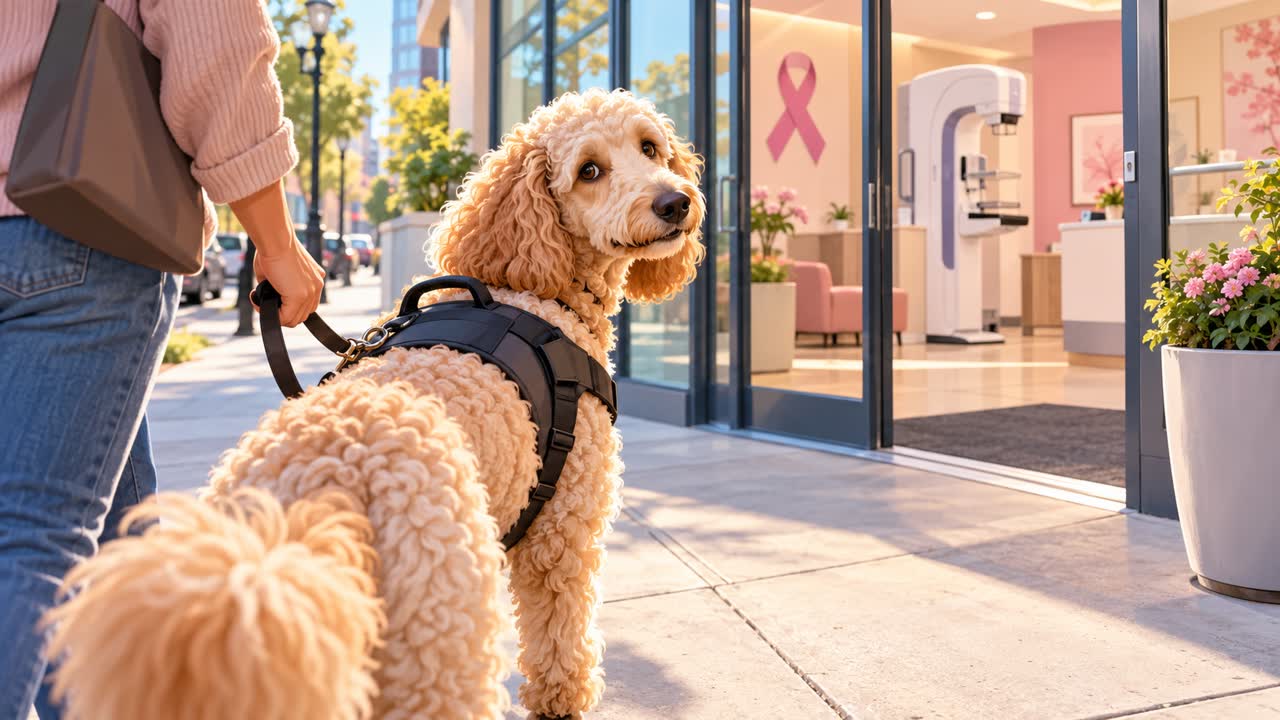
A service dog during a mammogram appointment may require advance coordination with the imaging center because the visit can include registration, a changing area, positioning equipment, X-ray procedures, and short periods when the patient must stand still without holding the dog.
The best arrangement depends on the facility, the dog’s trained tasks, the imaging room layout, and the patient’s disability-related needs.
This guide provides practical planning information for U.S. patients. It does not replace instructions from the radiology facility, mammography technologist, ordering clinician, or other healthcare professional.
Quick Overview
- Call the imaging center before the appointment and request an accommodation discussion.
- Explain the practical support the service dog provides without sharing unnecessary medical details.
- Ask where the dog can settle during registration, changing, imaging, and any wait for results.
- Plan for the dog’s care if the patient must be positioned away from the dog.
1) Plan for a Service Dog During Mammogram Appointment
Call the imaging center after scheduling the mammogram, not only when arriving for the appointment. Ask to speak with the accessibility contact, office manager, patient advocate, or mammography department about bringing a service dog.
Keep the request focused on what the patient needs. For example, explain that the dog performs trained disability-related work and may need to remain close during check-in, waiting, changing, and recovery from anxiety, dizziness, mobility limitations, or another disability-related barrier.
Ask practical questions in advance: Is there a private or low-traffic place for the dog to settle? Can the dog remain with the patient while changing? Where is the nearest relief area? Will the patient need to stand alone during imaging? Is a support person allowed to manage the dog if needed?
General information about service animals is available through the Knowledge Center, but the imaging provider should assess the specific room, equipment, and appointment process.
2) Separate Waiting-Room Access from Imaging-Room Safety
Waiting rooms, registration areas, hallways, and patient-accessible spaces may be different from the imaging room itself. A service dog may be able to accompany the patient through parts of the visit while a particular procedure or safety zone requires a different arrangement.
The facility should identify the reason for any restriction and discuss an effective alternative. Depending on the setting, that may involve having the dog settle in a designated safe location, asking a trusted support person to hold the leash, arranging a nearby waiting space, or adjusting the workflow.
Do not assume that a general “no animals” policy answers the question. The relevant issue is whether the dog can remain safely in the particular location without interfering with imaging equipment, staff movement, patient positioning, infection-control procedures, or emergency access.
The public access guide provides general context for service dogs in public-facing settings. It does not replace the imaging center’s responsibility to make an individualized safety assessment.
3) Prepare for Positioning and Temporary Separation
A mammogram usually requires the patient to stand in a specific position while the technologist adjusts the imaging equipment. The patient may need both hands free, may be asked to remain still, and may not be able to maintain physical contact with the dog during each image.
Discuss the dog’s best position before the appointment begins. A wall-side location, a mat outside the active equipment area, or a nearby space managed by a support person may be safer than placing the dog directly beside the patient during imaging.
If the dog performs a task that may be needed during the appointment, explain the task in practical terms. For example, staff may need to know that the dog is trained to retrieve a phone, interrupt a disability-related behavior, guide the patient to a safe area, or get another person’s attention.
Do not leave the dog unattended in a hallway, waiting room, vehicle, or treatment room. If the facility cannot safely accommodate the dog during a particular part of the procedure, arrange a reliable caregiver or support person before the appointment date.
4) Keep the Dog and Equipment Safely Separated
Imaging rooms can contain specialized equipment, cables, movable panels, foot pedals, stools, privacy curtains, and staff work areas. Keep the dog clear of the technologist’s route, emergency equipment, patient-positioning areas, and any place where the leash or harness could become entangled.
Bring only essential dog supplies. A leash or harness, water for before or after the appointment, waste bags, medication, and a compact resting mat may be useful. Avoid extra bags, toys, food, or loose equipment that can create clutter in a small clinical space.
Keep the dog clean, dry, housebroken, and under control. The dog should not approach other patients, sniff bags or medical supplies, jump on furniture, enter staff-only areas, or interfere with cleaning procedures.
A voluntary service check may help organize task and readiness information. It is not government approval and does not replace a clinic’s safety planning or the patient’s healthcare needs.
5) Communicate with Staff While Protecting Privacy
When the dog’s role is not apparent, staff may generally ask whether the dog is required because of a disability and what work or task it is trained to perform. A short answer is enough.
A purchased certificate, registry entry, vest, or ID card does not itself determine access. Optional identification may provide organization or peace of mind, but it does not replace trained disability-related work, controlled behavior, and a safe appointment plan.
If the facility raises a concern, ask for the specific reason and whether an alternative arrangement is available. Keep the conversation factual: identify the trained role of the dog, the practical barrier, and the adjustment needed for safe participation.
Staff can help reduce distraction by asking others not to pet, feed, photograph, or call to the dog. A quiet, controlled appointment benefits the patient, the dog, and other people receiving care.
6) Plan for Delays, Follow-Up Imaging, and Transportation
Imaging appointments can run late, require additional views, or lead to a same-day discussion about next steps. Bring enough supplies to keep the dog comfortable if the visit runs long, and confirm whether a support person can take the dog outside if needed.
If the patient is likely to feel dizzy, fatigued, anxious, or unwell after the appointment, arrange transportation and a backup plan for the dog. Do not expect the dog to compensate for a medical emergency or replace appropriate clinical support.
Follow-up imaging, ultrasound, biopsy, MRI, or another procedure may involve different equipment and safety rules. Do not assume the original mammogram plan applies automatically; contact the facility again and ask about the exact procedure.
If the appointment involves air travel to another city, travel requirements are separate from clinic access. Review current flight rules early enough to coordinate the dog’s care, the patient’s medical needs, and the travel schedule.
FAQs
Can I bring a service dog during a mammogram appointment?
You can request an accommodation for the appointment. Contact the imaging center in advance because waiting areas, changing areas, and imaging rooms may have different safety and workflow considerations.
Can the dog stay in the mammography room?
That depends on the room layout, equipment, safety requirements, and the dog’s ability to remain controlled without interfering with the imaging procedure. Ask the center to identify a safe arrangement before the appointment.
Does my service dog need a certificate or registration?
No particular purchased certificate, registry entry, vest, or ID card determines access. The relevant issues are the dog’s trained disability-related work, controlled behavior, and the facility’s individualized safety plan.
What if I cannot hold the leash during imaging?
Discuss this before the appointment. A designated resting location or trusted support person may be needed to keep the dog safely controlled while the patient is positioned.
Can a mammography center require my diagnosis?
Staff may need practical information to arrange safe access, but the discussion should focus on the accommodation need and the dog’s trained role, not unnecessary personal medical details.
Sources
- ADA.gov: Businesses Open to the Public
- ADA.gov: Service Animals
- ADA.gov: Service Animals FAQ
- CDC: Dogs
- CDC: Pet Travel Safety
- U.S. DOT: Service Animals
Takeaway
A successful mammogram appointment plan balances disability access with the imaging center’s specific safety and positioning requirements.
- Call ahead and discuss the exact imaging workflow.
- Arrange a safe, controlled place for the dog during each stage of the visit.
- Use a support person or backup plan if temporary separation is necessary.