
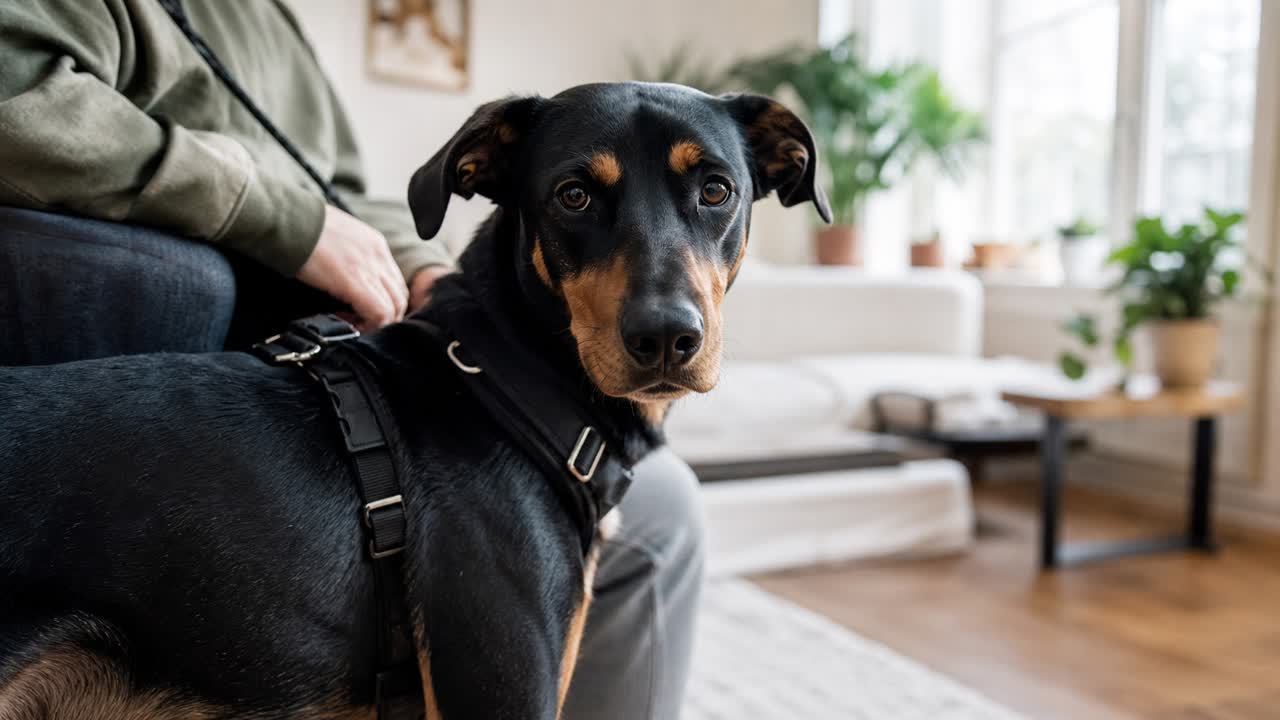
If you rely on a service dog during home inspections, the practical answer is usually simple: keep the dog with you if it is needed to perform disability-related tasks and it can remain under control during the visit. A home inspection is still a real-world interaction with a third party inside your space, so the goal is to lessen friction while protecting safety, access, and the inspection process.
This topic is narrower than the general housing accommodation rules. It is not mainly about pet fees, lease language, or moving in with an assistance animal. It is about what to do when an inspector, appraiser, contractor, or buyer-related professional needs to enter the home and your service dog is part of your daily functioning.
In most cases, the best approach is to prepare in advance, explain only what is necessary, and make sure your dog can work calmly around strangers, tools, noise, and room-to-room movement. If a visit may be crowded or stressful, a short plan matters more than paperwork hype.
In most cases, the best approach is to prepare in advance, explain only what is necessary, and make sure your dog can work calmly around strangers, tools, noise, and room-to-room movement. If a visit may be crowded or stressful, a short plan matters more than paperwork hype.
Quick Overview
- You can usually keep your service dog with you during a home inspection if the dog is needed and remains under control.
- A home inspector is not automatically entitled to separate you from a task-trained dog just because the visit is inconvenient.
- Safety matters: if ladders, open doors, exposed wiring, or chemicals are involved, think through where the dog should stand or settle.
- Give notice before the appointment so the inspector is not surprised and knows the dog is working.
1) Planning for a Service Dog During Home Inspections
Start by telling the inspector or scheduling contact that you use a service dog and that the dog will be present during the appointment. Keep it short and practical. You do not need a dramatic explanation. A simple note that the dog is task-trained, will stay with you, and may need a little space is often enough to prevent awkwardness at the door.
This is also the moment to think through the inspection route. If the inspector needs access to the attic, basement, utility closet, crawlspace access, or backyard gate, decide where your dog should heel, settle, or wait between tasks. A service dog that can quietly move room to room with you is usually less disruptive than a dog that is repeatedly repositioned at the last second.
If you want a quick refresher on whether your dog’s role still meets the core standard for public-facing situations, a simple service check can help you organize your thoughts before the visit.
2) What Inspectors can Reasonably Ask and What They Usually cannot Demand
Home inspections do not work exactly like a restaurant or store visit, so the conversation is often more informal. Even so, practical boundaries still matter. An inspector may ask for what is necessary to complete the job safely, such as whether the dog can be moved away from a ladder setup or whether a gate can stay closed. That is different from demanding unnecessary credentials.
In everyday U.S. service-dog conversations, a certificate, ID card, or registration is generally not the deciding issue. What matters more is whether the dog is task-trained, under control, and able to stay safely in the environment. If you keep optional records for peace of mind, use them as backup organization, not as the center of the interaction.
It can help to understand the usual two-question framework and behavior expectations behind public access rules, even though a home inspection is a distinct setting. The same trust-building principle carries over: calm behavior solves more problems than a stack of printed items.
3) Safety and Workflow Inside the Home
The strongest argument for keeping your dog present is not abstract legal language. It is a practical, safe setup that lets the inspector work. If your dog performs mobility, psychiatric, alert, or other tasks, consider how those tasks will be carried out without blocking doors, sniffing tools, or crossing into unsafe areas.
Good options include a solid down-stay near you, a mat at the edge of the room, or a controlled heel while the inspector moves first. If the visit involves multiple people, loud testing, or areas with sharp debris, you may briefly reposition the dog without giving up access altogether. That is a workflow choice, not a surrender of your needs.
Routine basics matter here too: current veterinary care, parasite prevention, clean paws, and reliable house manners. Those details are not legal magic, but they reduce tension and make the visit easier for everyone.
4) Documentation that Helps without Overselling Paperwork
For this topic, the most useful documentation is the kind that helps you stay organized if questions come up. That might include a short task list for your own reference, training logs, vaccination records, emergency contact information, and notes about triggers or positioning needs during in-home visits.
If your disability-related situation involves separate housing paperwork, keep that separate from the inspection itself. The inspector usually needs a workable plan more than personal records. Focus on what the dog does, where the dog should be during the visit, and what adjustments help the appointment run smoothly.
This is one place where a calm, organized folder can be helpful for peace of mind, even though formal proof is not always required. Think practical readiness, not official-looking extras.
5) What to Do If Someone Objects to Your Service Dog During Home Inspections
If an inspector seems uncomfortable, stay calm and move the discussion toward concrete concerns. Ask whether the issue is space, safety, timing, or a specific part of the inspection. Many objections can be solved by changing position, closing one room at a time, or scheduling a second adult to be present.
If the objection is based on a mistaken idea that all service dogs need special papers, avoid an argument spiral. A brief explanation that the dog is a working service animal and that you are prepared to keep the dog controlled and out of the way is usually more effective than debating internet myths.
Make the scope clear, too: this article is about access inside the home during an inspection, not air carrier policy. If you are also managing a trip around the same time as a move or sale, the air travel guide covers a different set of rules and logistics.
For related guidance, see our knowledge hub, service check, public access rules, and air travel guide.
FAQs
Can I have a service dog during home inspections?
Usually, yes. If you need the dog for disability-related tasks and it can stay under control, keeping it with you is generally the most practical arrangement.
Can a home inspector require me to remove my service dog?
They may raise legitimate safety concerns, but that does not automatically mean you must remove the dog entirely. Often, the better solution is controlled positioning, short pauses, or adjusting how the inspection moves through the home.
Do I need a certificate or ID card for this situation?
Not usually. Optional documents may help you stay organized, but calm behavior, clear communication, and a workable safety plan matter more than a certificate-led approach.
Should I tell the inspector in advance?
Yes. Advance notice is one of the simplest ways to prevent confusion. It also gives you a chance to discuss entry points, closed rooms, and any task-related needs before the visit starts.
What if my dog is stressed by strangers entering the home?
Practice ahead of time if possible. If the dog struggles with noise, movement, or unfamiliar people, consider whether another adult can assist, whether the appointment can be shorter, or whether the dog needs a safer settle location while still remaining available to you.
Sources
- ADA.gov: Service Animals
- ADA.gov: Service Animals FAQ
- National Association of the Deaf: Public Accommodations
- CDC: Dogs
- CDC: Pet Travel Safety
- HUD: Information for Persons with Disabilities
Takeaway
A service dog during home inspections is usually manageable when you prepare early, keep the dog controlled, and focus on practical safety rather than paperwork theater.
- Give advance notice and set expectations before the inspector arrives.
- Use training, positioning, and calm communication to reduce friction.
- Keep optional records for organization, but let behavior and planning do most of the work.