
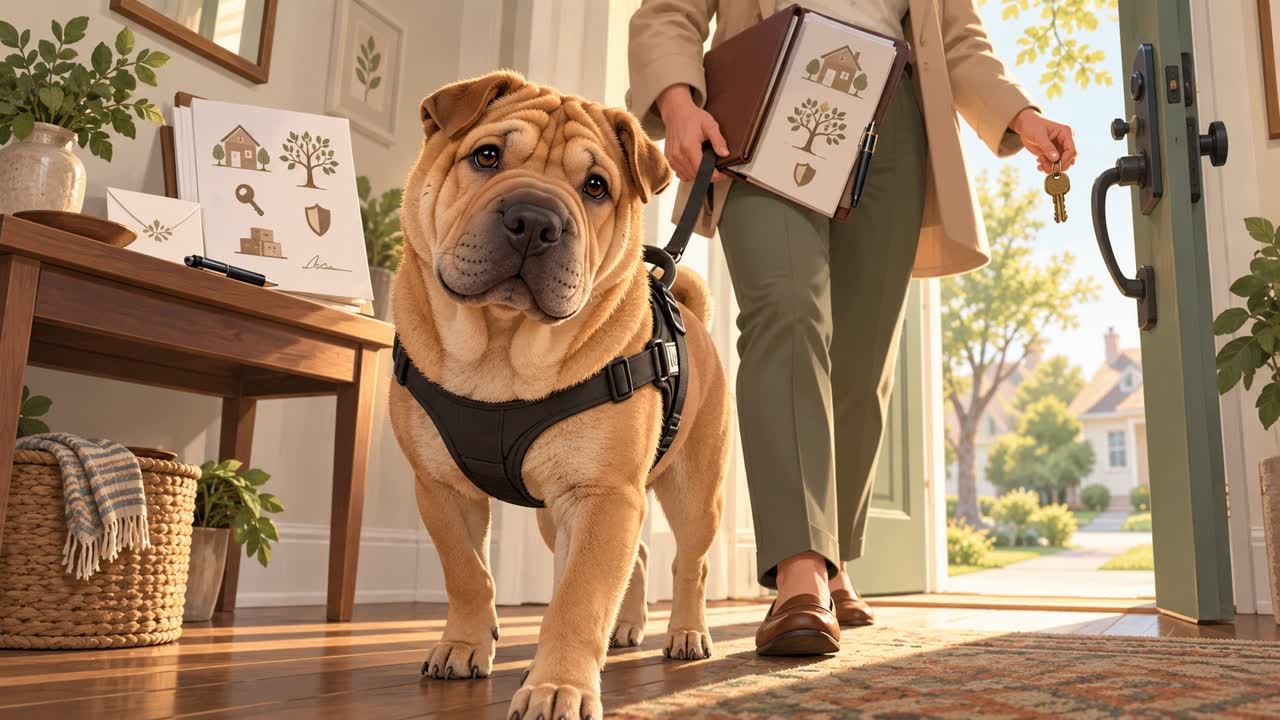
Bringing a service dog during estate planning meetings is generally permitted when a law office or financial-services location is open to clients, and the dog performs trained disability-related work or tasks. The dog may usually remain with the handler during consultations, document reviews, and signing appointments.
Estate planning meetings can be lengthy, private, and emotionally demanding. Advance coordination can help with accessible seating, relief breaks, confidentiality, document signing, and a safe place for the dog to settle without disrupting the meeting.
This guide addresses access and meeting logistics. It does not provide legal advice about wills, trusts, powers of attorney, guardianship, taxes, or the property disposition.
Quick Overview
- Tell the office about accessibility needs when advance planning would be helpful.
- A qualifying service dog may generally accompany its handler in client areas.
- A vest, purchase certificate, registration, or ID is generally not required for ADA public access.
- Choose seating that keeps the dog close without blocking exits or document handling.
1) Plan for a Service Dog During Estate Planning Meetings
Ask how long the appointment is expected to last and whether it will involve multiple rooms, witnesses, a notary, family members, or financial professionals. Confirm an accessible entrance, parking, an elevator, a restroom, and the nearest suitable relief area.
Useful items to bring include:
- A leash, harness, or other normal working equipment.
- A portable water bowl and a small amount of water.
- Waste bags and basic cleanup supplies.
- Medication or task equipment needed during the appointment.
- A resting mat if the dog reliably uses one.
- Emergency caregiver and veterinary contact information.
If the dog is unfamiliar with quiet professional offices, practice settling near a table while papers move and several people speak. Broader service-animal information is available through the knowledge hub.
2) Handle Access Questions at the Office
When the dog’s service role is not apparent, staff at a covered public accommodation may generally ask whether the dog is required because of a disability and what assignment it has been trained to perform. The client can answer without naming a diagnosis or sharing detailed medical information.
Staff generally should not require the dog to demonstrate its task or condition entry on a particular vest, purchased certificate, registry record, or ID card. Optional identification may help some handlers feel organized, but it does not replace task training and controlled behavior.
A concise response might be: “Yes, this dog is required because of a disability and is trained to [brief task description].” A voluntary service screening may help organize task information, but it is not government approval or an access guarantee.
Distinguish the office’s ordinary public access rules from workplace accommodations for an employee or housing rules affecting a meeting held in a residence.
3) Arrange Seating, Privacy, and Document Review
Choose a seat that lets the dog remain close enough to perform its tasks while staying clear of doorways, rolling chairs, cables, and the path used by witnesses or staff. A wall-side or end position can reduce interruptions.
The handler should be able to review documents without the dog’s equipment catching on bags, table legs, or stacks of paper. If the dog retrieves items or creates space as a trained task, explain any movement that could otherwise surprise the attorney or other participants.
Everyone present should avoid petting, calling, photographing, or feeding the dog. The attorney’s office can protect privacy by discussing the dog’s access needs only with personnel who need that information.
The presence of a service dog should not be treated as evidence about the client’s legal capacity. Questions about capacity, voluntariness, or undue influence belong to the attorney’s professional assessment and applicable state law, not assumptions about disability or service-dog use.
4) Plan for Long Meetings and Signing Appointments
Ask for breaks during a lengthy consultation rather than waiting until the dog or handler is uncomfortable. A practical schedule may include a relief opportunity before entering, a quiet break between major topics, and another break before a formal signing session.
Offer water according to the dog’s ordinary routine and veterinary guidance. If a meal or medication falls during the appointment, plan a private, suitable location and allow enough time for safe administration.
Signing appointments can involve repeated movement as witnesses and a notary enter or leave. Keep the dog settled away from foot traffic and preserve a clear exit route. If the client needs additional communication or mobility accommodations, coordinate those separately so the dog is not expected to solve every access barrier.
If fatigue affects concentration, the client can request shorter sessions or divide planning and signing into separate appointments. That decision should reflect the client’s needs and the attorney’s process, not pressure to finish in one sitting.
5) Include the Dog in Practical Continuity Planning
An estate plan may need to address who will care for the dog if the handler dies, becomes hospitalized, or can no longer provide daily care. This is different from deciding whether the dog qualifies for public access.
Prepare factual care information for the attorney, including:
- Primary and backup caregivers who have agreed to help.
- Veterinary, feeding, medication, and handling instructions.
- Training history and disability-related tasks.
- Ownership records and microchip information.
- Equipment, food, and medication locations.
- Plans for retirement or placement if the dog cannot continue working.
The attorney can explain which legal tools are available under state law. Avoid assuming that an informal promise alone will create an enforceable arrangement or that the dog can directly own inherited property.
6) Coordinate Housing and Emergency Details
If the handler lives in an apartment, assisted-living community, or another managed property, the continuity plan should identify who can enter the home, collect the dog, and retrieve supplies during an emergency. Written authorization, keys, and current contact information can reduce delays.
Housing access for a successor caregiver or a temporary placement may require a separate review. The housing guidance offers general background, but the caregiver should confirm requirements with the relevant housing provider.
Keep one concise care sheet with the emergency kit and provide copies to authorized caregivers. Review it after a move, a veterinary change, a medication update, or a caregiver change.
If an office access problem occurs, ask for the specific reason, request a manager or attorney review, and document what happened. An alternative such as a video meeting may be useful when the client prefers it, but it should not automatically replace equal in-person access.
FAQs
Can I bring a service dog during estate planning meetings?
Generally, yes, when the office is covered by applicable public-access law and the dog performs trained disability-related work or tasks. Advance notice may help with logistics but is not ordinarily required for routine ADA access.
Can the law office ask for certification?
A purchased certificate, registration, vest, or ID card is generally not required for ADA public access. When the dog’s role is not apparent, staff may ask the two limited questions about disability-related need and trained work.
Can the dog stay during document signing?
Generally, the dog may remain with the handler if it is controlled and positioned safely. Plan around witnesses, a notary, document movement, and any needed breaks.
Does using a service dog affect legal capacity?
Do not conclude legal capacity based solely on service-dog use. Attorneys evaluate capacity and voluntariness under professional standards and applicable state law.
Should the estate plan name a caregiver for the dog?
It is prudent to identify primary and backup caregivers who have agreed to serve. An attorney can explain how to document care instructions and funding under state law.
Can the office charge a cleaning or animal fee?
A covered business generally should not charge an automatic service-animal surcharge. The handler may still be responsible for actual damage under policies applied consistently to clients.
What if another client has allergies or fears dogs?
The office should consider separation, scheduling, seating, cleaning, or another practical arrangement rather than automatically excluding the service dog.
Sources
- ADA.gov: Service Animals
- ADA.gov: Service Animals FAQ
- ADA.gov: Businesses Open to the Public
- CDC: Dogs
- CDC: Pet Travel Safety
- U.S. DOJ/HUD: Reasonable Accommodations Under the Fair Housing Act
Takeaway
A well-planned estate meeting protects equal access, confidential communication, and the service dog’s welfare while creating practical continuity arrangements for the future.
- Coordinate seating, breaks, and access without unnecessary medical disclosure.
- Keep legal-capacity decisions separate from assumptions about service-dog use.
- Name willing caregivers and keep care instructions current for emergencies.