
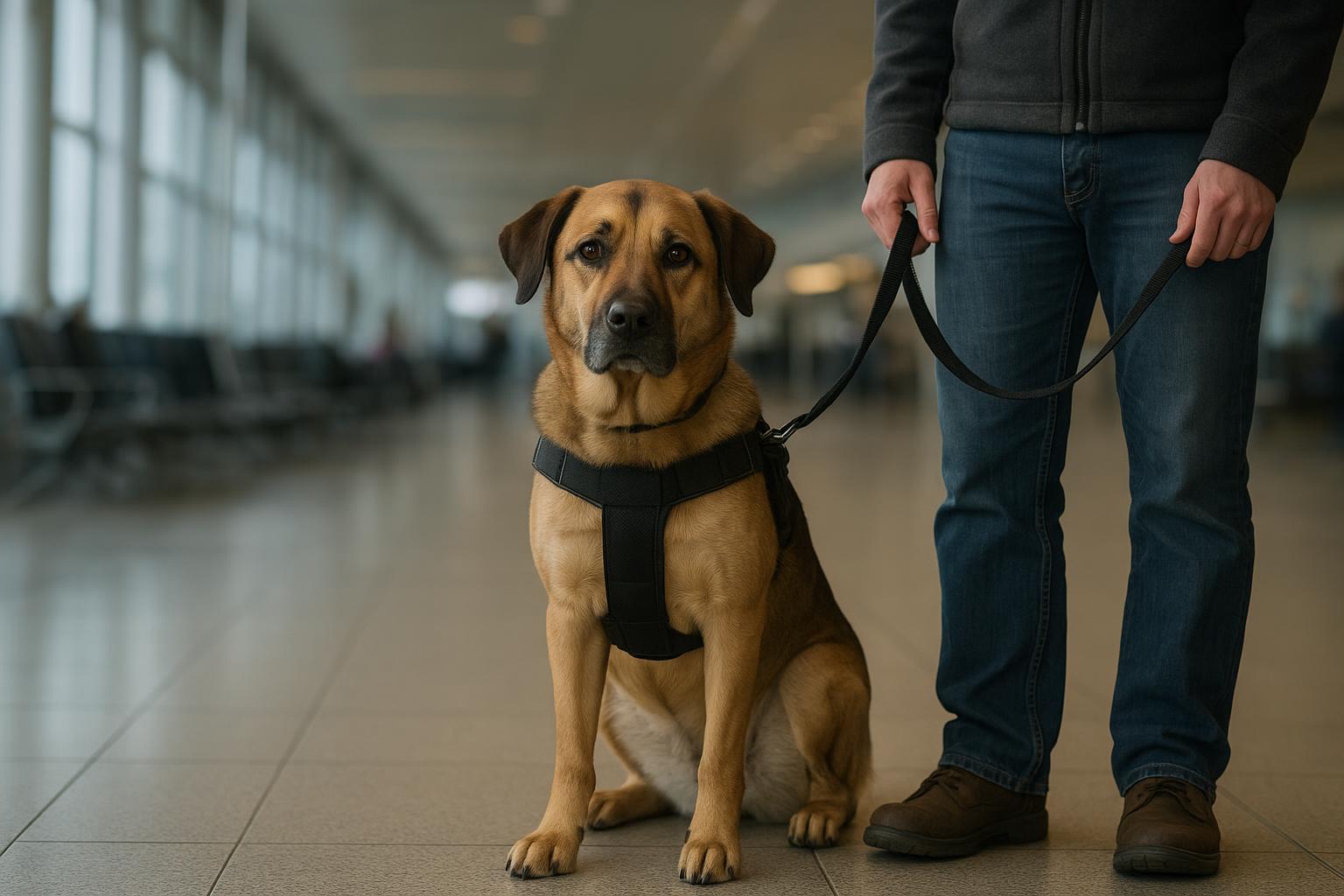
Traveling or living in Canada with a service dog is absolutely doable—but it goes more smoothly when you prepare the right paperwork, training proof, and travel plan ahead of time. Canada’s rules can vary by province, airline, and the specific place you’re trying to access (hotel, restaurant, workplace, landlord, etc.).
Quick Overview
- Know the difference: Canadian rules often treat service dogs (and guide dogs) differently from emotional support animals.
- Plan for proof: Even when a “certificate” isn’t legally mandated, practical documentation (training records, letters, ID/gear) can reduce friction and delays.
- Travel adds layers: Airlines, border entry, and accommodations can each ask for different info.
- Start here: Read our Canada travel guide and Canada laws & regulations overview.
1) What Counts as a Service Dog in Canada?
In practical terms, a service dog in Canada is trained to perform tasks that mitigate a person’s disability and to behave safely in public. The exact terminology and acceptance criteria can vary by province and by organization, so it’s smart to treat “service dog” as a functional standard: trained tasks + public-access-ready behavior.
If you’re new to the category labels, it helps to ground yourself in a clear definition of what a service animal is (and is not). Start with our plain-language explanation – service animal definition.
2) Documentation: What’s Smart to Carry (even when not strictly required)
Here’s the reality on the ground: many access situations come down to an employee, landlord, or staff member making a quick decision. The faster you can demonstrate credibility, the smoother your day tends to be. That’s why we strongly recommend building a simple “service dog packet” you can show (or email) on short notice.
- Training proof: Training log, trainer notes, or a course completion record (especially for public-access skills).
- Medical support letter (when applicable): A clinician’s letter that explains you have a disability-related need for a trained service dog can reduce repeated questions.
- Clear recognition gear: A well-fitted harness/vest and ID can reduce interruptions and help staff understand your dog is working (without turning it into a debate).
- Behavior expectations: Short “public access rules” you follow (leash control, no aggression, no uncontrolled barking, toilet trained, etc.).
This is not about “winning an argument”—it’s about avoiding delays, misunderstandings, and unnecessary escalation. In many cases, being ready matters as much as being “right.”
3) Province-by-Province Reality: Why One-Size-Fits-All Advice Fails
Canada is not a single-rulebook environment. Some provinces have more formal identification programs; others rely more on a functional definition and public behavior standards. If you’re moving, studying, or working in a specific province, focus on that province’s practical expectations first.
Use our Canada laws & regulations hub as your starting point, then make a short checklist for:
- Housing (leases, condo bylaws, documentation expectations),
- Public access (restaurants, stores, taxis/rideshare),
- Work or school accommodations (HR/student services forms),
- Travel (airline policies and advance notice windows).
4) Flying to/within Canada with a Service Dog
Air travel is usually where people run into the most friction—because airlines often have specific forms, notice periods, and handling requirements. Treat airline travel as its own project, not an afterthought.
- Confirm accepted documentation (what they want, and when they want it submitted).
- Confirm the cabin’s size and space rules, and what happens if the dog can’t fit safely.
- Confirm behavior rules (leash, control, no disruption) and consequences for non-compliance.
- Plan the airport day: bathroom plan, early arrival, screening expectations, and water/food timing.
If you want fewer surprises, send your “service dog packet” to the airline ahead of time and keep a copy accessible on your phone.
5) Hotels, Rentals, and Housing in Canada: What to Prepare
Housing and accommodation issues often come down to (a) whether the dog is understood as a working animal and (b) whether the decision-maker feels confident you have a trained, controllable dog. To make approval smoother, we recommend you prepare:
- Short written description of your dog’s trained tasks and public behavior standards (1 paragraph).
- Trainer or course evidence (a public access training record is a big credibility boost).
- Recognition gear that signals “working dog” clearly in common spaces.
- House rules plan: where the dog sleeps, bathroom routine, and how you prevent barking/disruption.
Even when a landlord or hotel shouldn’t be asking for a specific “certificate,” offering clear, practical proof often reduces conflict and speeds up approvals.
6) Training Standards that Matter Most (the “public access” checklist)
If you’re building or polishing a Canada-ready service dog, focus your training on the behaviors that reduce risk and complaints:
- Stable leash manners in crowds and narrow aisles,
- Quietly settling under a table or at your feet,
- No sniffing/soliciting attention,
- Reliable recall and emergency “leave it,”
- Calm behavior around other dogs and food.
When your dog’s public behavior is strong, everything else becomes easier: travel, rentals, and everyday access. Documentation helps—but training is what keeps access sustainable.
FAQs
Can I bring a service dog into stores and restaurants in Canada?
In many situations, yes—but the practical experience depends on the province and the business. The smoother your access tends to be when your dog is calm, under control, and you can quickly show credible training/documentation if questioned.
Do I need an official service dog certificate in Canada?
In practice, what helps most is having strong training proof and a simple documentation packet ready. Some places have formal programs; many access situations are handled on a case-by-case basis. Being prepared typically prevents delays and misunderstandings.
What’s the best way to avoid airline problems?
Submit documentation early, confirm the airline’s exact requirements, and keep backups on your phone. Also, plan your airport routine (bathroom, timing, security screening) so your dog stays comfortable and calm.
Sources
- Government of Canada — Travelling with animals (general guidance)
- Provincial/territorial service animal resources (province-specific)
- Airline accessibility/service animal policies (carrier-specific)
Takeaway
If you’re handling “service dog Canada” the smart way, focus on two things: public-access-ready training and practical documentation. That combination usually makes travel, housing, and daily access dramatically smoother—especially when policies vary by province or by airline.