
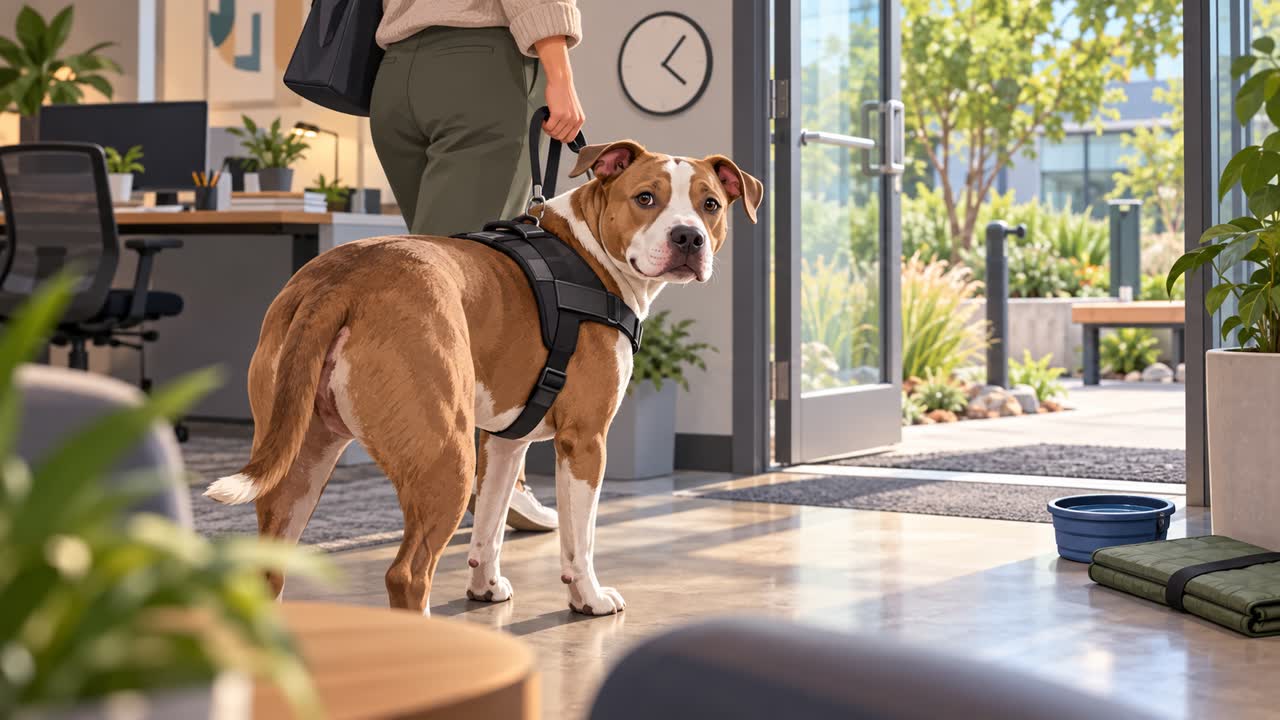
A practical service dog break routine during a full workday should include predictable opportunities for relief, water, movement, quiet rest, and any scheduled meals or medication. The exact timing depends on the dog’s health, age, duties, workplace conditions, commute, and veterinary guidance.
Break planning is part of a workable employment accommodation, but it should not assume that every dog needs the same schedule. The goal is to protect the dog’s welfare and task reliability while helping the employee perform essential job duties.
This guide focuses on routine care during an employee’s workday. It is separate from ordinary customer-facing public access, and it does not replace veterinary advice or the employer’s accommodation process.
Quick Overview
- Plan relief, water, movement, and quiet rest before the first full shift.
- Use the dog’s established home routine as the starting point.
- Identify a safe relief route and backup location.
- Build flexibility around heat, illness, medication, overtime, and workload changes.
- Keep breaks long enough for care without encouraging unnecessary workplace disruption.
- Record recurring problems and revise the accommodation when needed.
1) Build a Service Dog Break Routine During Full Workday
Map the entire day, including the commute, arrival, meetings, lunch, shift changes, overtime, and trip home. Place the dog’s normal relief and care times on that schedule first, then identify where work demands could interfere.
A typical plan may include a relief opportunity before entering the workplace, one or more brief breaks during the shift, a longer midday break, and another opportunity before the commute home. This is a planning framework, not a universal timetable.
Ask the dog’s veterinarian about appropriate water, feeding, exercise, and relief intervals when the dog has a medical condition, takes medication, is very young or older, or works in demanding temperatures. The rules guide provides broader legal context, but the workday routine should remain individualized.
2) Include Breaks in the Workplace Accommodation
Discuss the routine with the employer through the designated reasonable-accommodation process. Explain the expected frequency, approximate duration, and location of breaks, as well as how urgent needs will be handled.
A concise request might state:
I am requesting a reasonable accommodation that allows brief breaks to provide relief, water, and necessary care for my service dog during the workday. I propose using the designated outdoor area at approximately [times], with flexibility for an urgent need. I would like to coordinate coverage so these breaks do not disrupt essential dutiesThe employer may discuss how the request interacts with staffing, existing breaks, timekeeping, safety, and essential job functions. The parties can consider combining dog-care needs with ordinary breaks when effective, without assuming that every urgent need can wait.
A voluntary service screening may help organize task and readiness information, but it is not government approval or a substitute for an individualized employment decision.
3) Choose a Safe Relief Route and Location
The relief area should be reachable within the available break time and safe for both team members. Consider stairs, elevators, security doors, vehicle traffic, snow, ice, extreme heat, lighting, construction, pesticides, and encounters with other dogs.
Identify a backup location for severe weather, maintenance closures, or inaccessible routes. The alternative must still meet sanitation and property rules. Keep waste bags and cleanup supplies immediately available, and dispose of waste in the assigned container.
If leaving a secure work area requires an escort, key, or screening procedure, include that step in the plan. A nominal five-minute break may not work if reaching the relief area takes most of that time.
The dog should remain controlled while moving through common areas. The public access guide offers general background on control, although the employment accommodation process governs workplace access.
4) Plan Water, Meals, Medication, and Rest
Provide clean water according to the dog’s normal needs and veterinary guidance. Do not withhold needed water merely to reduce relief breaks. Temperature, activity, diet, health, and stress can all affect water requirements.
If a meal falls within the shift, bring the dog’s familiar food in a measured portion. Feed in a quiet, appropriate place away from food-preparation surfaces, machinery, and heavy foot traffic. Account for training rewards when considering the dog’s total daily intake.
When practical, keep medication in its original labeled container and store it according to veterinary instructions. If refrigeration or precise timing is required, arrange storage and access before the first shift.
A break does not always need to involve exercise. Many working dogs benefit from quiet, uninterrupted rest near the handler. Provide a safe settling space where the dog can lie down without blocking aisles, exits, equipment, or coworkers.
5) Adjust the Routine to Workload and Environment
A desk-based shift in a climate-controlled office differs from work in a warehouse, hospital, school, outdoor site, or moving vehicle. Review noise, temperature, surfaces, protective equipment, crowds, food, chemicals, machinery, and the availability of quiet space.
Long meetings, production deadlines, customer queues, and travel between sites can disrupt the usual routine. Arrange coverage or schedule breaks before high-demand periods when possible. Keep an emergency plan for unexpected overtime, building lockdowns, severe weather, or transportation delays.
Watch for panting unrelated to normal activity, repeated restlessness, slowed responses, reluctance to settle, vomiting, diarrhea, limping, unusual drinking, or changes in task performance. These signs can reflect stress, fatigue, pain, or illness rather than a training problem.
When the dog cannot safely continue working, prioritize welfare and follow the established backup plan. That may involve ending the shift, contacting a caregiver, or seeking veterinary advice.
6) Track Patterns and Revise the Plan
Record actual break times, relief success, water intake concerns, missed meals or medication, environmental conditions, and task disruptions. Short factual notes are more useful than vague labels such as “difficult day.”
A tracking app can help organize recurring patterns, although records do not replace veterinary evaluation or employer approval. Keep private medical and accommodation information separate from routine workplace logs.
Review the plan after a schedule change, a move to a different workstation, a medical change, a recurring accident, a safety incident, or repeated difficulty reaching the relief area. Seasonal weather may also require different routes or more frequent checks.
If the employer raises concerns, focus on observable issues and possible adjustments. A revised schedule, an alternate relief location, a coverage plan, or a different settling position may resolve the problem without removing the dog from the workplace.
FAQs
How often should a service dog receive breaks at work?
There is no universal interval. Use the dog’s established routine, health, age, diet, medication, workload, environment, and veterinary guidance to develop an appropriate schedule.
What belongs in a service dog break routine during full workday shifts?
Include relief opportunities, water, necessary meals and medication, quiet rest, movement when appropriate, a safe route, a backup location, and procedures for urgent needs.
Must an employer allow extra breaks?
An employee may request service-dog care breaks as a reasonable accommodation. The employer should evaluate the request individually, considering effectiveness, essential duties, workplace operations, and applicable law.
Can dog-care breaks be combined with regular breaks?
Yes, when the arrangement meets the dog’s needs and works for the employee. The plan should still address urgent or unpredictable needs that cannot safely wait.
Who cleans up after the dog?
The handler is ordinarily responsible for routine care and cleanup. The accommodation plan should identify an appropriate relief area, disposal point, and accessible route.
Should water be limited to prevent accidents?
Do not withhold needed water for convenience. Ask a veterinarian about appropriate intake when medical conditions, medication, heat, or unusually demanding work affect the dog’s needs.
What if the dog has an accident indoors?
Clean the area promptly and review the cause. A route delay, illness, schedule disruption, inaccessible exit, or insufficient break plan may require correction rather than punishment.
Sources
- ADA.gov: Service Animals
- ADA.gov: Service Animals FAQ
- CDC: Dogs
- CDC: Pet Travel Safety
- HUD: Information for Persons with Disabilities
Takeaway
A reliable workday routine combines predictable care with enough flexibility for weather, health, workload, and urgent needs.
- Start with your dog’s established routine and your vet’s guidance.
- Document break timing, routes, coverage, and backup arrangements.
- Review the plan when conditions or the dog’s needs change.