
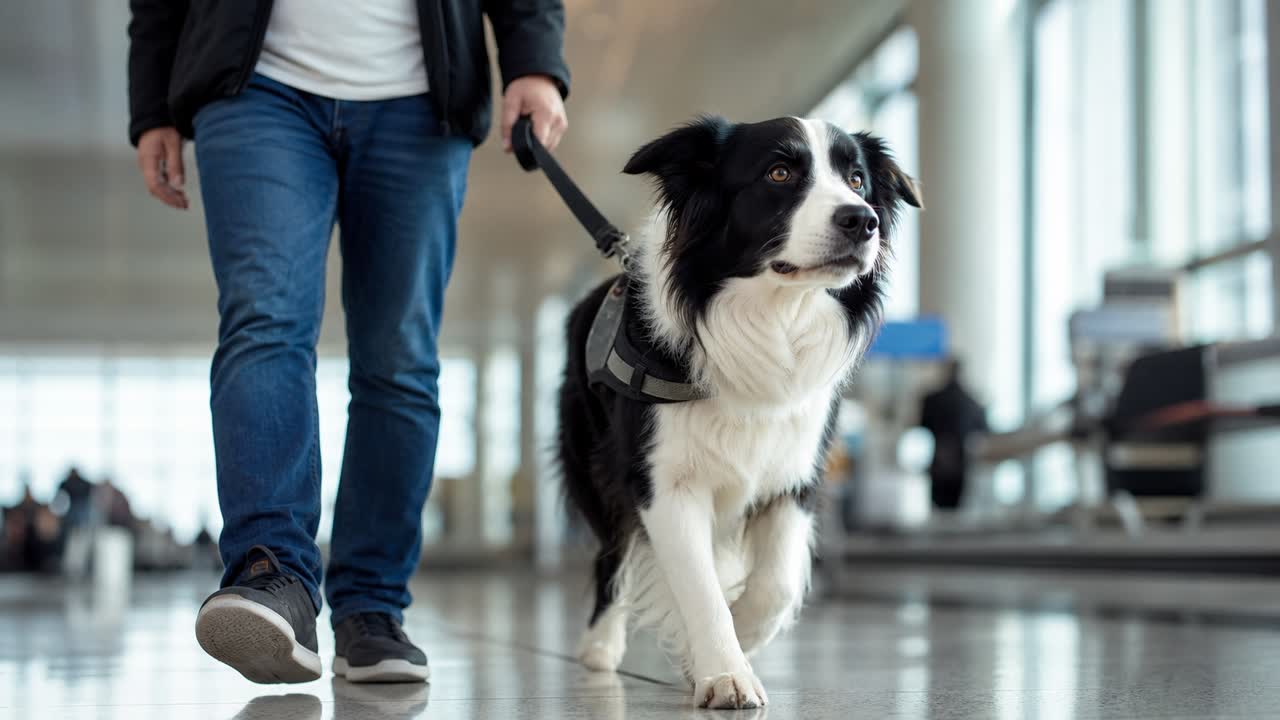
Service dog automatic door training teaches a dog to help open an automatic entrance by locating the activator, positioning safely, and moving through the doorway without blocking traffic. For many handlers, this task can reduce strain, improve independence, and make everyday access more predictable.
This topic is different from general obedience or public-access manners alone. The goal is not just teaching a dog to touch a button. It is teaching a reliable, disability-related task that works in real environments while staying calm around people, mobility devices, carts, and changing door timing.
If you are building service dog automatic door training into a larger task plan, it helps to pair the skill with strong leash handling, impulse control, and doorway safety. Practical recordkeeping, a clear task list, and periodic evaluations can also help you stay organized alongside broader resources in the Knowledge Center.
Quick Overview
- Automatic door work should start with body positioning and safety before targeting the buttons.
- The task is most useful when it directly mitigates a handler’s disability.
- Dogs should learn to avoid stepping into the door swing or crowding the threshold.
- Training usually progresses from home practice to quiet public spaces, and then busier entrances.
1) What this Task Actually Involves
Automatic door work usually means the dog learns to identify an activation plate or button, touch it on cue, wait for the door to open, and move with the handler through the entrance in a controlled way. In some cases, the dog may also be trained to target a paddle switch at an accessible height or to guide the handler toward the correct activation point.
That is why this skill overlaps with, but is not identical to, a general public access guide. A dog can be quiet and well-behaved in stores and still need specific task training before working around moving doors, crowds, and narrow entryways.
2) Start with Safety before Touching the Button
Safety comes first because automatic entrances vary. Some slide open. Others swing outward or inward. Some stay open for only a few seconds. Before asking for the button press, teach your dog to stop at the threshold, hold position, and wait for permission to move.
Useful foundation skills include nose or paw target, rear-end awareness, loose-leash movement, and a stable wait. The dog should also learn not to forge ahead when the door starts moving. A reliable pause protects both the handler and nearby pedestrians, especially in medical buildings, grocery stores, and office entrances.
Good health habits matter too. Since this task often involves frequent public contact, keep grooming, paw care, and routine wellness in mind, using basic CDC dog-safety guidance. If you want a more structured check of work readiness, some handlers use a behavior screening as an organizational tool while continuing hands-on training.
3) Build the Skill in Small, Repeatable Steps
Most teams do better when the task is broken into short pieces. First, teach the dog to target the button or plate at home with a sticky note or portable target. Then move to a mock wall setup. After that, practice approaching, targeting, backing out of the way, and waiting for a release.
Once that sequence is clean, move to a quiet, accessible entrance during an off-peak time. Keep sessions short — reward correct touches, calm waiting, and thoughtful positioning. If the dog starts anticipating, vocalizing, or bouncing toward the plate, reduce the difficulty and reset the picture.
Documenting progress can help you see whether the dog understands the full task or only the target behavior. A simple task list and training log often tell you more than gear does. Some handlers also keep a brief service-screening checklist to ensure consistency across locations.
4) Practice Body Position and Traffic Awareness
A button press alone is not enough in public. The dog should know where to stand before and after activation so the team does not block other people or get caught by the door. That may mean teaching a side position, a slight pivot, or a back-up cue after targeting.
Traffic awareness matters because door areas can be noisy and unpredictable. People may step around the team, carts may appear suddenly, and another automatic panel may open nearby. Your dog should remain neutral, avoid sniffing, and stay focused on the next cue rather than trying to greet others or investigate the doorway.
This is also where scope matters. Automatic door work is a specific access task, not a substitute for full public behavior training. If your dog still struggles with entrances in general, go back to foundations before expecting dependable task performance.
5) Understand the Legal and Practical Context
Under the ADA, a service animal is generally a dog individually trained to carry out tasks for a person with a disability. An automatic door task can fit that framework when it is trained to mitigate the handler’s disability, and the dog remains under control in public.
At the same time, no special ID, certificate, or registry is automatically required just because the dog performs this task. What tends to matter most in real life is whether the dog behaves appropriately, performs the task reliably, and can work safely in the environment. Practical records such as training notes, a task description, veterinary records, and program evaluation paperwork may be useful for organization and peace of mind.
Housing and employment settings can raise different questions than public access settings do, so keep those conversations separate. If you need broader context on rights and expectations, the Knowledge Center can help you keep training, documentation, and public behavior in the right lanes.
6) Know when the Task is Ready for Real-World Use
A dog is ready for real-world automatic door work when the sequence is consistent across different entrances, the handler does not need constant prompting, and the team can recover calmly if the door timing changes. The task should look boring in the best possible way: approach, target, wait, move through, and continue.
If the dog startles at door motion, crowds the opening, misses the plate repeatedly, or loses focus in busy settings, the answer is usually more practice at an easier level. Video review, training logs, and occasional third-party evaluation can be helpful. A mixed approach that combines real-world practice, safety review, and calm repetition is usually more effective than chasing shortcuts.
For related guidance, see our Knowledge Center and service screening.
For related guidance, see our behavior screening and public access guide.
FAQs
Is automatic door training for a service dog a real service task?
It can be, if the task is individually trained and directly helps mitigate the handler’s disability. The key is the disability-related function and the dog’s reliability, not the novelty of the skill.
How long does service dog automatic door training usually take?
It depends on the dog, the handler’s needs, and the dog’s foundation skills. A dog with strong targeting, waiting, and public neutrality may learn the sequence faster than a dog still working on entrances and impulse control.
Should a service dog use nose or paw targeting for automatic doors?
Either can work. Nose targeting is often precise and gentle, while paw targeting may be easier on some button layouts. The better choice is the one your dog can perform safely, cleanly, and consistently.
Do I need special paperwork for this task?
Not specifically for the task itself in ordinary public settings. Still, many handlers keep useful records, such as training logs, veterinary information, and a written task summary, to stay organized and reduce friction in situations where documentation is relevant.
Can a service dog open every type of automatic door?
No. Door height, timing, traffic flow, and button placement vary. Some entrances are appropriate for a team to use, and some are better handled another way for safety reasons.
Sources
- ADA.gov: Service Animals
- ADA.gov: Service Animals FAQ
- CDC: Dogs
- CDC: Pet Travel Safety
- HUD: Information for Persons with Disabilities
Takeaway
Automatic door work can be a practical service task when it is trained carefully, tied to a handler’s disability-related needs, and performed with steady public manners.
- Teach positioning and waiting before asking to activate the button in public.
- Measure success by safety and consistency, not by speed or appearance.
- Keep simple records so your training, task purpose, and readiness stay clear over time.