
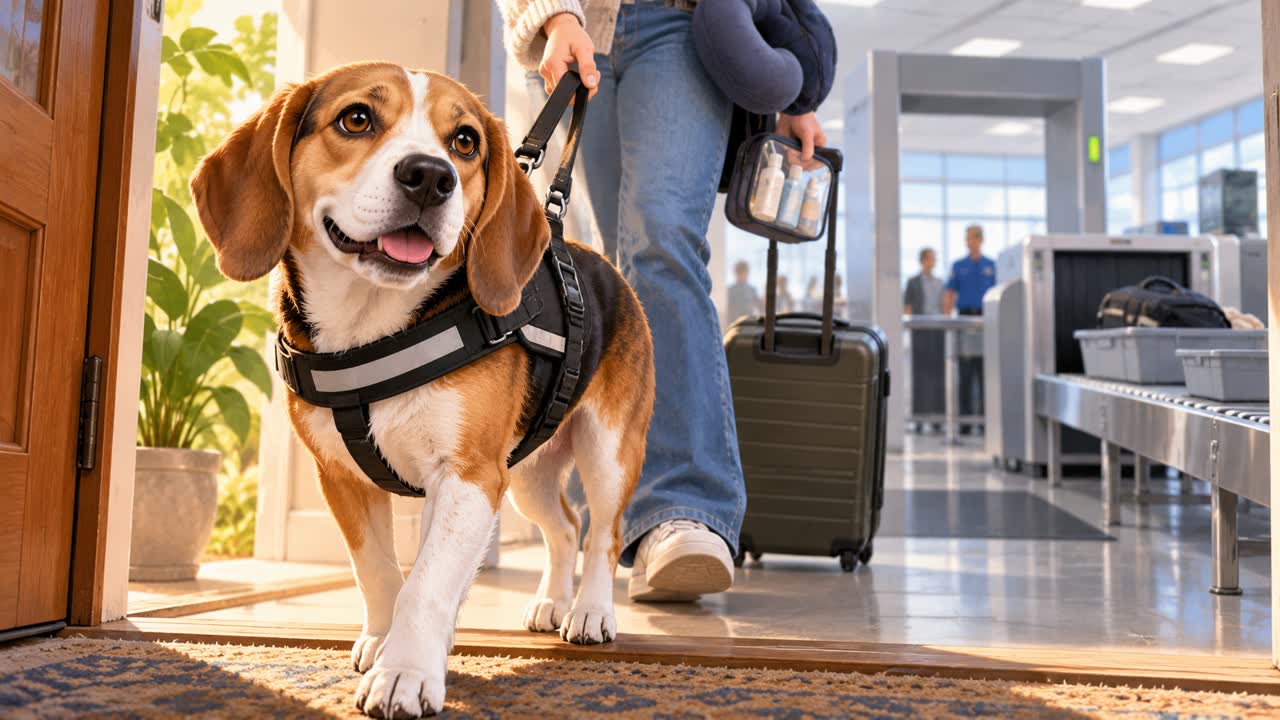
A service dog at a TSA checkpoint screening requires a little more time and coordination than traveling without an animal. The handler should expect security procedures, follow officer instructions, and keep the dog under control while moving through a busy checkpoint.
Airport screening is different from airline service-animal requirements. A service dog may need to complete security screening before reaching the gate, while the airline may have separate rules for the flight itself. Check current TSA, airport, and airline instructions before each trip because procedures can change.
This guide offers practical preparation for U.S. airport screening. It does not replace instructions from Transportation Security Administration officers, airport staff, airline personnel, or a veterinarian.
Quick Overview
- Arrive early enough to complete screening without rushing the dog.
- Tell the TSA officer that you are traveling with a service dog.
- Keep the dog leashed, harnessed, or otherwise under effective control.
- Follow the officer’s directions for screening the handler, dog, equipment, and belongings.
1) Prepare for a Service Dog at TSA Checkpoint Screening
Before leaving for the airport, review the current TSA guidance, airline requirements, airport accessibility information, and flight itinerary. Arrive earlier than usual if the dog is new to airport travel, the route involves a large airport, or the handler may need additional assistance.
Give the dog an appropriate relief opportunity before entering the terminal. Bring water, waste bags, needed medication, travel records, and a familiar leash or harness that the dog can wear safely during the trip. Keep essential items easy to reach rather than buried in checked baggage.
Plan how the dog will remain controlled while shoes, bags, electronics, mobility equipment, and other personal items are handled. A calm, predictable setup reduces the chance that the dog will become tangled in luggage, distracted by another traveler, or separated from the handler.
The rules guide provides general information about service-animal rules, but TSA screening is an operational security process that must follow the officer’s current directions.
2) Tell the Officer about the Dog and Your Needs
When you reach the checkpoint, tell the TSA officer that you are traveling with a service dog and briefly explain any disability-related need that affects how screening must be completed.
Keep the explanation practical. The officer may need to know that the dog is working and that the handler needs to maintain control. Still, the handler does not need to volunteer a diagnosis or detailed medical history unless it is necessary to address the screening process.
Suppose an instruction is unclear or would create a safety problem; ask how to comply safely. It is reasonable to ask an officer to explain the next step before the handler removes equipment, moves away from the dog, or enters the screening area.
A purchased certificate, registry entry, vest, or ID card is not the central issue at a TSA checkpoint. Optional identification may help with organization or provide peace of mind, but it does not replace the dog’s trained disability-related work, controlled behavior, or compliance with security procedures.
3) Prepare the Dog for the Screening Environment
Airport checkpoints can be crowded, noisy, and unpredictable. The dog may encounter rolling bags, bins, alarms, loudspeaker announcements, other animals, strong smells, children, and travelers moving quickly in close quarters.
Practice useful skills before travel, such as settling beside the handler, remaining calm around carts and bags, responding to a close-position cue, waiting while the handler handles personal items, and moving through narrow spaces without pulling.
Do not expect the dog to tolerate a stressful environment without preparation. If the dog becomes overwhelmed, reactive, ill, injured, or unable to remain under control, pause and ask for assistance rather than forcing the team through a crowded checkpoint.
A voluntary service screening may help organize task and readiness information before travel. It is not government approval, does not replace TSA procedures, and does not guarantee airline access.
4) Handle Equipment, Bags, and the Screening Process
Follow TSA instructions about what must be removed, placed in a bin, or screened separately. Depending on the situation, an officer may need to inspect the dog’s leash, harness, vest, carrier, supplies, food, medication, or other items.
Keep the dog close and prevent the leash, harness, or other equipment from becoming tangled in screening equipment, bins, belts, or other travelers’ bags.
If the handler uses a mobility device or has equipment that must remain nearby, explain that need before screening begins. Ask for clear instructions about how the dog will be managed while the handler and equipment are screened.
Keep liquids, medications, and other travel items organized in their original packaging when practical. If the dog needs medication or a special diet, pack enough for delays, missed connections, or overnight itinerary changes.
5) Move through the Terminal after Screening
Once screening is complete, move away from the checkpoint before reorganizing bags, shoes, equipment, and the dog’s supplies. Crowding the exit area can create a tripping hazard and make it difficult for other travelers to pass.
Find a quiet place to check the dog’s harness, leash, water, and comfort before heading to the gate. If the dog was patted, handled, or exposed to a stressful environment, give it a moment to settle before entering another crowded area.
A service dog should remain under control throughout the terminal. The dog should not approach other travelers, investigate luggage, eat dropped food, enter food-preparation areas, or interfere with airport operations. The public access guide provides general context for controlled service-dog behavior in public settings.
If a staff member or another traveler distracts the dog, use a short boundary statement such as, “The dog is working; please give us space.” Focus on moving the team safely rather than debating the dog’s status in a congested area.
6) Separate TSA Screening from Airline Travel Rules
Clearing TSA screening does not settle airline requirements for the flight. Airlines may have their own current procedures for service-animal travel, advance forms, seating, check-in timing, behavior, and international itineraries.
Review the airline’s instructions before the travel date and reconfirm them if the itinerary changes. A connection, codeshare flight, international destination, or aircraft substitution can create different logistical issues from the original booking.
Keep a written travel plan with the flight number, airline contacts, veterinary contacts, medication schedule, relief locations, and emergency caregiver information. A record app may help organize that information, but a printed backup is useful if a phone battery, signal, or app access fails.
If a problem arises at the checkpoint, ask for the specific instruction or reason, remain calm, and request a supervisor when appropriate. Document the time, location, staff involved, and any alternative offered after you resolve the immediate security issue.
FAQs
Can I bring a service dog at TSA checkpoint screening?
Yes, a service dog may travel with its handler through airport security, but the team must follow current TSA screening instructions. Arrive early and tell the officer about the dog when you reach the checkpoint.
Does my service dog need a vest or certificate for TSA?
No particular vest, purchased certificate, registry entry, or ID card replaces security screening. Optional identification does not determine whether the dog can pass through the checkpoint.
Will TSA separate me from my service dog?
Screening procedures depend on the situation and the officer’s instructions. Tell the officer about any disability-related need that affects how you can safely maintain control of the dog during screening.
Can my dog go through the X-ray machine?
Follow the TSA officer’s instructions. Do not place the dog on a conveyor belt or in a screening bin unless an officer specifically directs a safe procedure.
What should I do if my dog is anxious at the checkpoint?
Stay calm, maintain control, and ask for guidance if the dog cannot safely continue. Consider additional training, a quieter travel time, or a different travel plan before attempting another demanding trip.
Sources
- ADA.gov: Businesses Open to the Public
- ADA.gov: Service Animals
- ADA.gov: Service Animals FAQ
- CDC: Dogs
- CDC: Pet Travel Safety
- U.S. DOT: Service Animals
Takeaway
- Tell the officer about the service dog and any screening needs right away.
- Follow current security instructions while keeping the dog safely controlled.
- Check airline rules separately before the flight.