
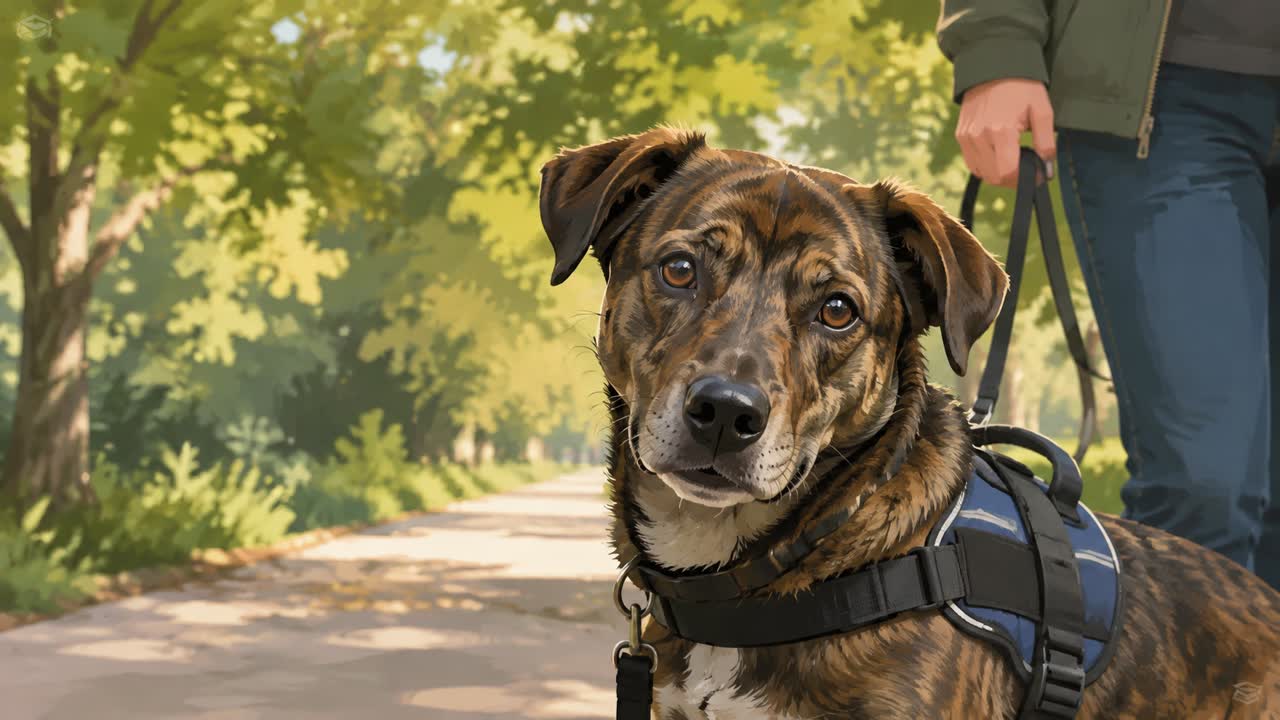
A service dog at public library study rooms is usually handled under the same public-access framework as the rest of a public library: the dog may accompany the handler in areas open to patrons, including reservable study rooms, as long as the dog is under control, housebroken, and not creating a valid safety or service-disruption issue.
The practical challenge is that study rooms are small, quiet, and often shared or reservation-based. That makes preparation matter.
This guide is for handlers, students, library patrons, and family members who want to use a study room without turning the visit into a confrontation. It is about access, behavior, records, and a simple plan that works in a quiet public setting.
Quick Overview
- Public libraries are commonly covered by ADA obligations when run by state or local government, and many library spaces are open to patrons with service dogs.
- A study room reservation policy can still apply if it is neutral and applied to all patrons, not used to exclude a service dog team.
- Staff generally may ask only the two ADA service-animal questions when the need is not obvious.
- Libraries usually cannot require a service dog certificate, registry card, ID, or vest as a condition of entry.
1) What Changes with a Service Dog at Public Library Study Rooms?
The study-room setting changes the practical details, not the basic public-access question. If the dog meets that definition, the team should generally be treated as a service dog team in public areas where patrons are allowed.
What makes study rooms different is the tight space. The best plan is boring: choose the least crowded room available, place the dog where it will not block the doorway, and keep the leash short enough to prevent wandering without creating tension.
If you are still clarifying whether your dog’s role fits the ADA service-animal definition, a careful service screening can help organize the facts before you walk into a high-friction setting.
2) What can Library Staff Ask?
If it is not obvious what the dog does, ADA guidance says staff may ask two questions: whether the dog is a service animal required because of a disability, and what work or task the dog has been trained to perform.
A calm answer is usually enough. He is trained to interrupt medical episodes and guide me to a safe seat. The task answer should be specific enough to show trained work, but it does not need to disclose private medical details.
It is also fair for library staff to enforce ordinary library rules. The key difference is that those rules should not become a disguised barrier for a service dog. For a broader access baseline, review the site’s public access rules before a visit that may involve staff questions.
3) How Should You Prepare before Reserving a Study Room?
Preparation starts before you enter the building. Check whether the library requires study-room reservations, time limits, student IDs, group minimums, or check-in at a desk. Those policies can apply to you like any other patron. What should not happen is an extra documentation demand only because you have a service dog.
Bring the basics: leash or harness, cleanup supplies, a small mat if your dog settles better on one, water if needed, and any ordinary records you personally use to stay organized. Optional identification can reduce confusion in some settings, but it does not replace training, behavior, or the ADA definition.
Good documentation for your own records is practical, not theatrical. If you keep these records digitally, our app can help keep them in one place without treating paperwork as a substitute for access behavior.
4) How do You Set Up the Room once You Arrive?
Enter the room with a plan. Put the dog in a down-stay or settled position before spreading out books, laptops, and bags. The dog should not be under a rolling chair, stretched across a walkway, blocking the door, or positioned where another patron must step over it.
If the room is shared, a short neutral sentence is enough: „This is my service dog. He will stay tucked beside my chair.“ You do not need to invite questions or defend your disability. You also do not need to let strangers pet, feed, distract, or photograph the dog.
If the dog alerts or performs a task, handle it quietly and return to the settled position when possible. If the task requires movement, keep it brief and controlled. A service dog that can work in a library should be able to recover after a task without creating ongoing disruption.
5) What If Another Patron Objects?
Another patron may be surprised, allergic, nervous around dogs, or simply unaware of service-animal rules. The handler does not have to debate the entire ADA in a study room. Keep the response short and move the issue to staff if needed.
A useful script is: „This is a trained service dog. We are using the room quietly. If there is a room assignment issue, library staff can help.“ That protects your privacy and avoids arguing with someone who may not understand the rules.
Staff may need to solve practical conflicts, such as separating patrons when possible or offering another available room. But a patron’s dislike of dogs is not the same as a valid reason to exclude a service dog team. Calm conduct is what keeps the conversation focused on access rather than disruption.
6) When can a Library Ask the Dog to Leave?
A library may have a valid reason to ask for removal if the dog is out of control and the handler does not get it under control, or if the dog is not housebroken.
If removal happens, the handler should still be offered access to library services without the animal when possible. The best prevention is honest readiness: if the dog cannot yet settle in quiet public spaces, start with shorter visits in lower-pressure parts of the library before booking a small shared room.
For broader legal context beyond one library visit, the general regulations page can help separate service-dog access rules from housing, travel, and workplace situations, which often follow different processes.
FAQs
Can I bring a service dog into a public library study room?
In many cases, yes. If the library is open to the public and the dog meets the ADA service-animal definition, the dog is generally allowed in public patron areas, including study rooms, unless a valid removal reason applies.
Can the library require a service dog certificate before I use a study room?
Under ADA guidance, staff generally cannot require documentation that the dog is registered, licensed, or certified as a service animal. Optional documents may help you stay organized, but they are not the public-access standard.
What should I say if staff ask about my dog?
Answer the two allowed questions calmly: confirm that the dog is required because of a disability, and describe the trained work or task without sharing private medical details.
Can a study room reservation policy still apply?
Yes. Neutral rules such as time limits, room capacity, check-in procedures, and reservation schedules can still apply. The issue is whether the policy is being applied equally rather than used to block a service dog team.
What if another student says they are allergic or afraid?
Ask staff to handle the room-management issue. They may be able to separate patrons or assign another available space, but another patron’s discomfort does not automatically remove a trained, controlled service dog from a public area.
Sources
- ADA.gov: Service Animals
- ADA.gov: Service Animals FAQ
- CDC: Dogs
- CDC: Pet Travel Safety
- HUD: Information for Persons with Disabilities
Takeaway
A service dog in a public library study room is mostly a preparation and behavior question layered on top of ADA public-access rules. The stronger your room plan, dog control, and staff script, the less likely the visit becomes a stressful access dispute.
- Know the two allowed ADA questions and answer them briefly.
- Set the dog up where it can work without blocking doors, aisles, or other patrons.
- Keep practical records, but do not rely on certificates or IDs as a substitute for training and control.